




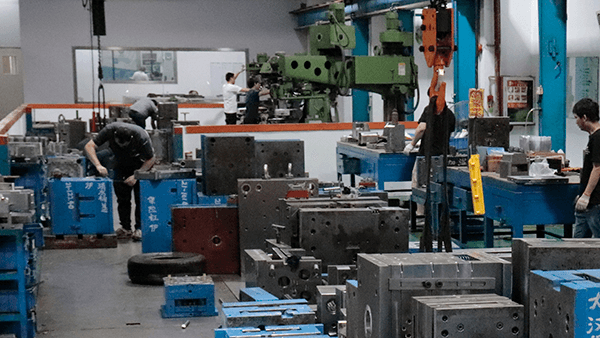
In Vietnamese injection molding factories, the application of new technologies is common in the molding process. One of the key issues is the formation of weld lines in plastic products. Weld lines occur when molten resin from different directions does not fully merge during the injection process. Since the resin flows do not mix at the weld points, the lower the temperature, the more visible the weld lines become, and the strength is reduced accordingly.
Conversely, higher temperatures result in stronger adhesion. In addition, the adhesion at the weld points depends on the pressure applied; lower holding pressure leads to weaker fusion and reduced strength. The weld point is not only where resin flows meet but can also be the end of the flow. If there is no proper venting at the weld line location, trapped gases can cause defects in both appearance and strength.
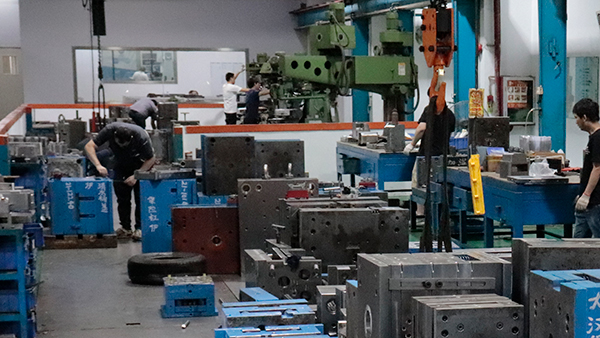
Improvement Measures:
- Increase resin temperature, mold temperature, as well as injection pressure and speed.
- Pay attention to venting on the parting surface, and add inserts or ejector pins at the weld line location to aid in venting.
- Select a reasonable gate location, and ideally, conduct a mold flow analysis before mold design.
- Add extra overflow channels for removing cold material, which can be cut off after molding.
- Widen and shorten the runner system as much as possible to improve resin flow.
- For matte surface products, choosing a rougher texture can help improve the appearance of weld lines.
DAYIN Plastic Products Co., Ltd. is a high-tech enterprise specializing in product research, design, manufacturing, and sales services, providing one-stop solutions. Founded in 1989, the company excels in mold making, injection molding, post-processing, and electronic assembly. In addition to contract manufacturing, we also develop proprietary products that support direct private label production for clients.
Weld Lines: The Vietnamese Shop’s Improvement Playbook
Weld lines — the seams where melt fronts meet — improve through a playbook, and Vietnamese shops have written a good one:
| Playbook step | What it improves | Cost of the step |
|---|---|---|
| Map every weld line in simulation | Locations known before steel | Software hours |
| Walk welds to low-stress geometry | Strength where lines must exist | Gate repositioning at design |
| Raise melt and mold temperature at the meet | Fronts fuse instead of butt | Energy and slight cycle time |
| Vent the meeting point | Air escapes, fronts join clean | Machining hours |
The mapping row is the playbook’s foundation: weld lines predicted in software become design decisions, while weld lines discovered in first articles become quality debates — the same information, priced differently by when it arrives. The temperature row is the process half of fusion: melt fronts that meet hot fuse molecularly, while fronts that meet cold stack visually, and the temperature difference at the meeting point is a settable, testable parameter. The venting row completes the chemistry — trapped air at the meeting point insulates the fronts and paints the seam, and a vent machined at the junction costs minutes and removes the defect class. Weld-line improvement is thus neither mystery nor luck; it is a sequence, and shops that run the sequence compete for cosmetic and structural parts their peers decline. The gate-position craft that moves welds is in gate selection techniques, and the system design in gating system design. Reference: weld line mechanics and fusion quality.