




Vietnamese injection molding manufacturers widely use extrusion plastic molds. However, if quality is not prioritized during selection, subsequent usage will be severely affected. Today, DAYIN Plastic’s Vietnam factory will share how to assess the quality of plastic molds.
- Mold Thickness: When selecting molds, thickness is a key factor. Although molds do not need to withstand excessive force during use, frequent molding and demolding can cause wear and deformation. Increasing mold thickness can effectively resolve these issues. Therefore, the reasonableness of thickness can be used as a basis for judging mold quality.
- Specification Standards: High-quality molds can control the dimensional error of extruded plastic products to within a fraction of a millimeter, while poor-quality molds may have errors of several millimeters or even centimeters. Therefore, it is crucial to check whether the mold specifications meet the required standards.
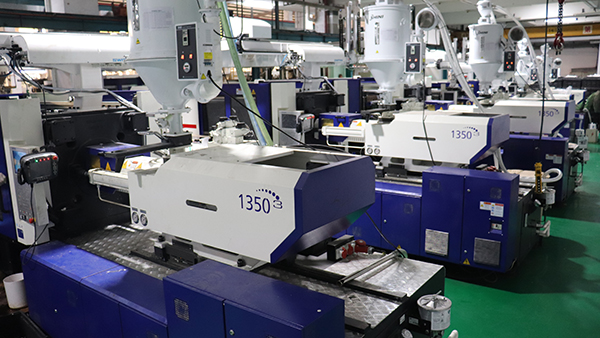
- Material and Workmanship: High-quality molds should have smooth and glossy surfaces both inside and out, with a slightly smooth and heavy feel to the touch. In contrast, poor-quality molds may have rough surfaces, burrs, or dents, making the difference between the two immediately apparent.
DAYIN Plastic Products Co., Ltd. specializes in home appliance mold manufacturing, offering OEM/ODM contract manufacturing services. The company is committed to providing integrated R&D and manufacturing solutions. With 30 years of mold development experience, over 50 R&D personnel, and more than 100 injection molding machines, DAYIN focuses on products such as robotic vacuum cleaners, plastic tableware, and electronic dartboards, aiming to deliver high-quality manufacturing services and create greater value for customers.
Mold Quality Assessment: The Checklist Professionals Run
Assessing a mold — new or used — is a checklist, not an impression. Six items cover the decision:
| Item | What to inspect | Pass looks like |
|---|---|---|
| Steel certificate | Material grade matches the PO | Mill cert on file |
| Hardness check | Cavity and core surfaces | Specified HRC, uniform |
| Dimensional report | Critical features vs drawing | CMM data within tolerance |
| Cooling performance | Flow and temperature uniformity | No dead channels; cycles stable |
| T1 samples | Full-cavity parts, not hand-finished showpieces | Dimensional report attached |
| Cycle time | Sustained, not best-ever | Quoted cycle ±10% |
The checklist protects both sides: buyers pay for documented capability, manufacturers get their quality judged on evidence rather than showroom samples. For cross-border purchases the habit is even more valuable — a third-party inspector running this list at the supplier’s floor costs a fraction of one rejected shipment. The design context behind the checklist is in mold design overview and the sourcing angle in choosing a tooling manufacturer. Reference: coordinate-measuring machines and injection moulding.
Remote Assessment When the Visit Is Not Possible
Travel budgets and schedules do not always allow a floor visit; the checklist still runs remotely with discipline. Ask for live video, not recordings: a walk from steel storage to molding floor, machine controls shown running with cycle counters visible, and a T1 sample held next to the dimensional report on camera. Request documents by name — mill certificate, CMM report, cooling test log — and check that titles, dates and part numbers are internally consistent; recycled paperwork rarely keeps its story straight across five documents. Payment terms can carry the risk too: a milestone tied to first-article approval shifts exposure away from the assessment gap. Remote assessment is not as strong as standing at the machine — but structured this way, it catches the failures that matter, which are almost always document failures.