




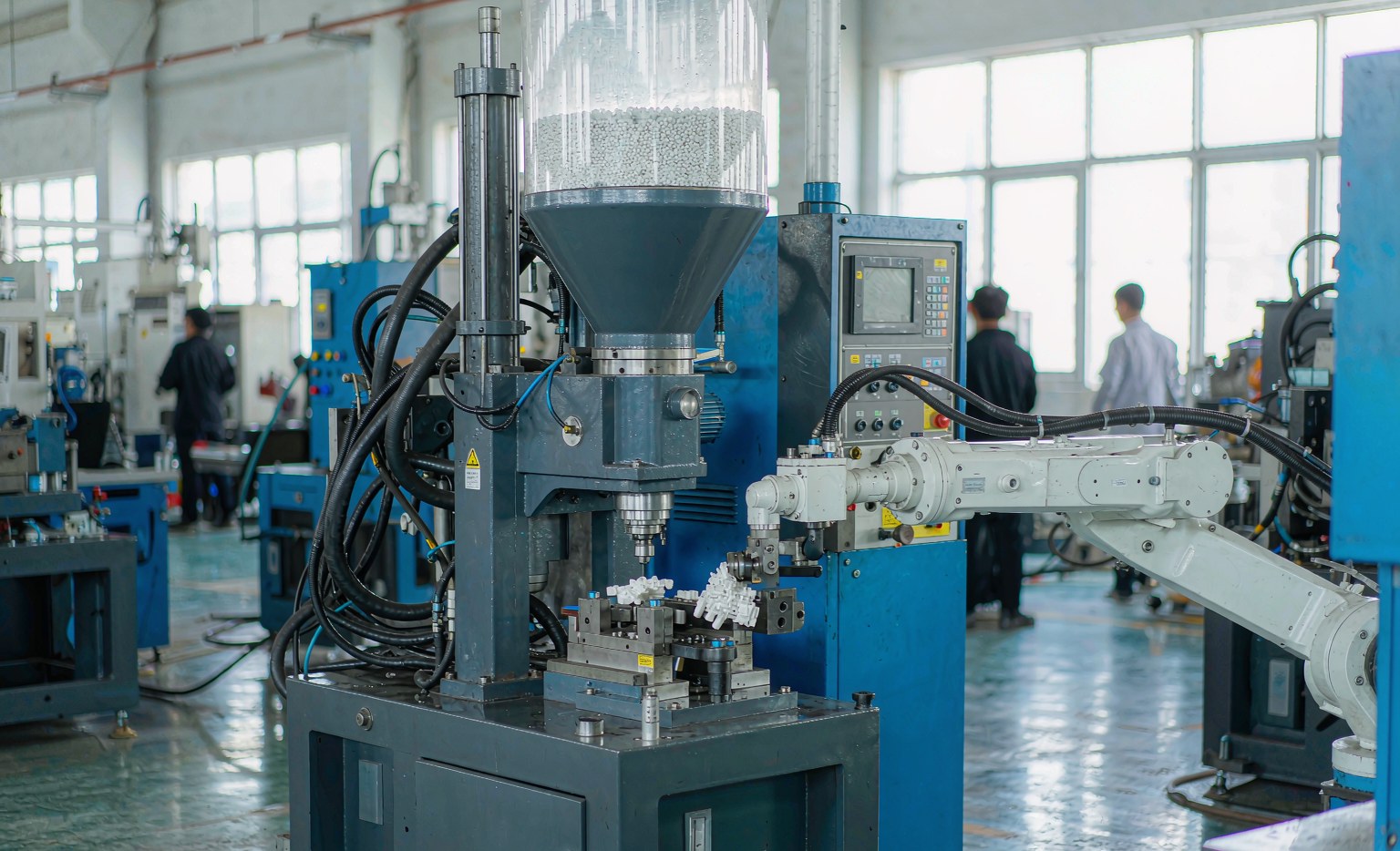
Plastic injection molding turns thermoplastic pellets into net-shape parts by melting the resin and injecting it under pressure into a precision steel mold. It is the dominant process for high-volume plastic components because each cycle produces an identical part with tight tolerances and a high-quality surface finish. This guide covers the process, material selection, machine sizing, design-for-manufacturability (DFM) rules, common defects, tooling lead times and how to source OEM/ODM production.
The injection molding process, step by step
Every cycle repeats five phases:
- Clamping — the mold closes and the clamping unit applies full tonnage, holding the cavity and core shut against injection pressure.
- 注射 — a reciprocating screw pushes the molten “shot” through the sprue and runner into the cavity. Injection typically takes 0.5–5 s.
- Packing (hold) — lower pressure compensates for shrinkage as the part cools, preventing sink marks (3–15 s).
- 冷卻 — the part solidifies; cooling usually accounts for 50–70% of the total cycle time (5–40 s, driven by wall thickness).
- 脫模 — the mold opens and ejector pins push the finished part out (1–3 s).
Process described from KunststoffWissen 和 LSY Plastic.
Choosing the right plastic: melt temperature, mold temperature and shrinkage
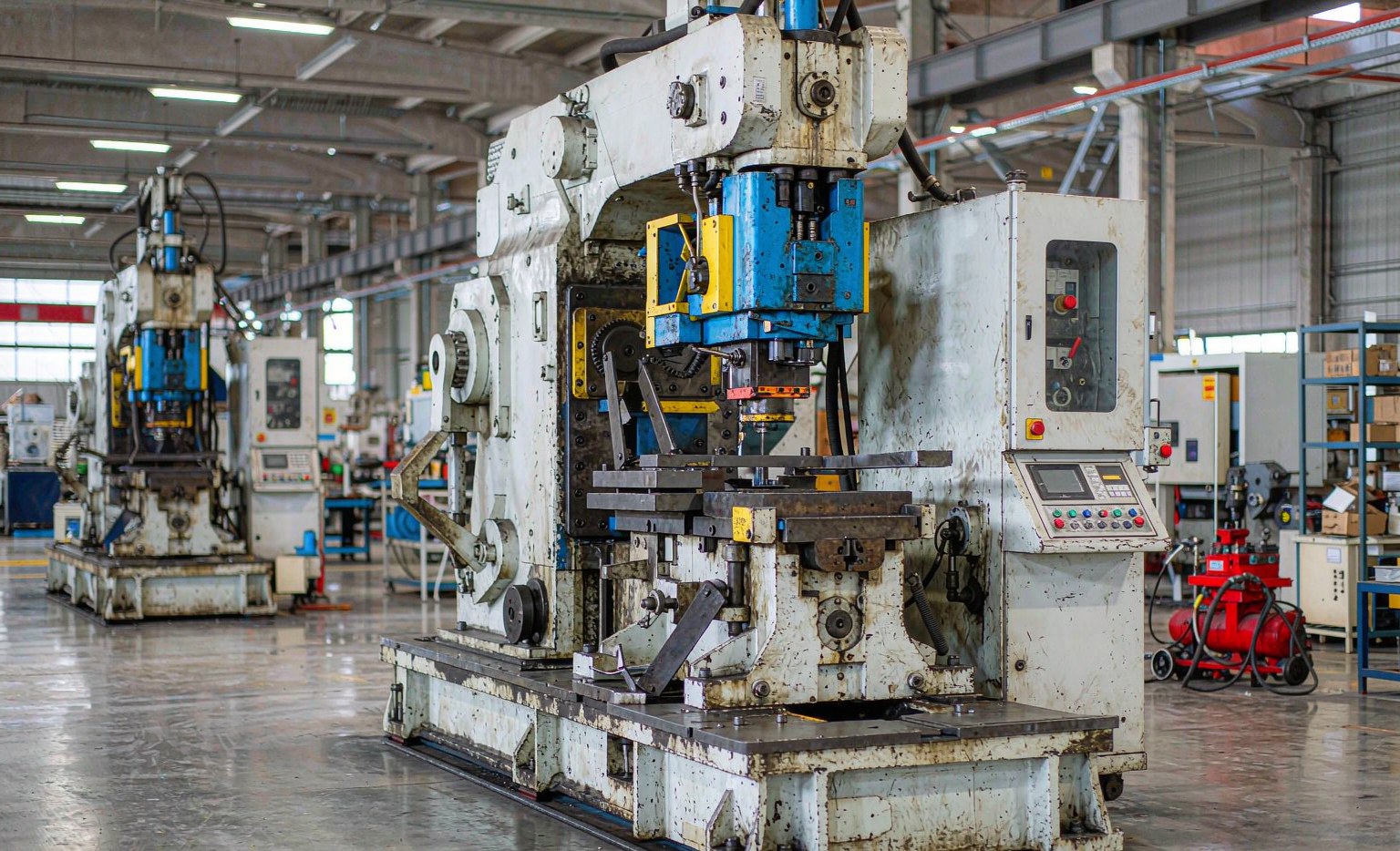
Material selection drives mechanical performance, surface finish and dimensional accuracy. The table below lists typical processing windows and shrinkage — the values engineers use to size the part and the mold.
| Polymer | Melt temp (°C) | Mold temp (°C) | Shrinkage (%) |
|---|---|---|---|
| PE-HD | 200–280 | 20–50 | 1.5–3.0 |
| PP | 200–270 | 20–80 | 1.0–2.5 |
| ABS | 220–270 | 50–80 | 0.4–0.7 |
| PA 6 | 230–280 | 60–100 | 0.5–1.5 |
| PA 66 | 270–305 | 80–110 | 0.8–2.0 |
| PC | 280–320 | 80–110 | 0.5–0.7 |
| POM | 180–215 | 60–120 | 1.5–2.5 |
| PEEK | 370–400 | 170–200 | 1.0–1.4 |
Common production materials also include PC for transparent, impact-resistant parts and TPE/TPR for soft-touch overmolding. Data from KunststoffWissen material tables.
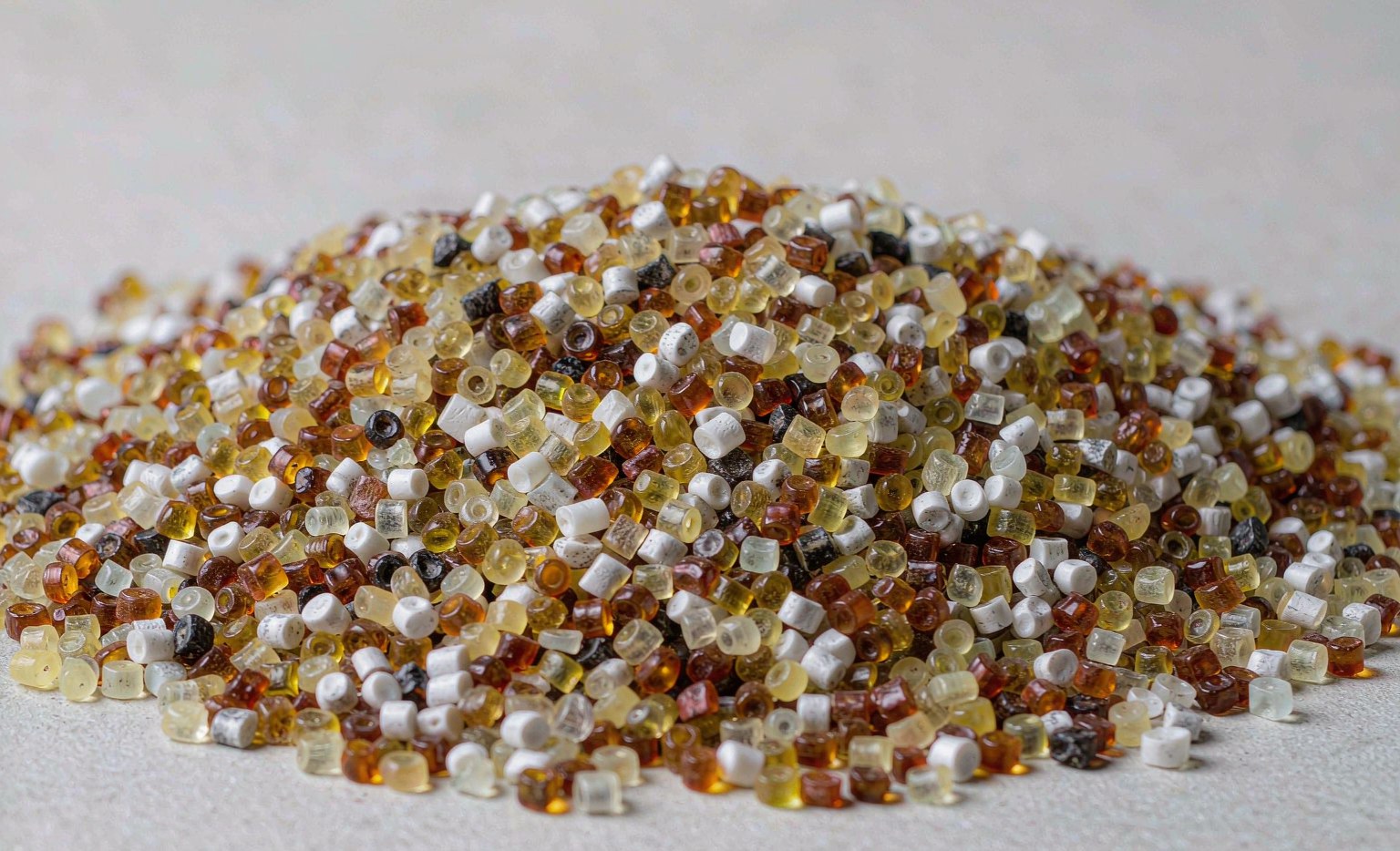
Machine sizing: clamping force and shot weight
Correct tonnage prevents flash (excess pressure pushing plastic out of the mold) without over-clamping. The required clamping force is:
F = A × p × S
where A is the projected area (cm²), p the cavity pressure (bar) and S a safety factor of 1.15–1.30. For example, a 200 cm² projected area at 500 bar with S = 1.2 needs F = 1,200 kN ≈ 122 metric tons. Injection pressure itself typically runs 800–2,500 bar. As a rule, shot weight should be 20–80% of barrel capacity to keep residence time in range (KunststoffWissen).
Machine sizes span roughly 90 T to 1,200 T for typical moulding shops, up to 2,500 T for large parts; shot volumes from ~10 g to 2,500 g. Tolerances commonly hold ±0.05 mm, with tighter control (down to ±0.02 mm) achievable by compensating resin shrinkage (Trumax).
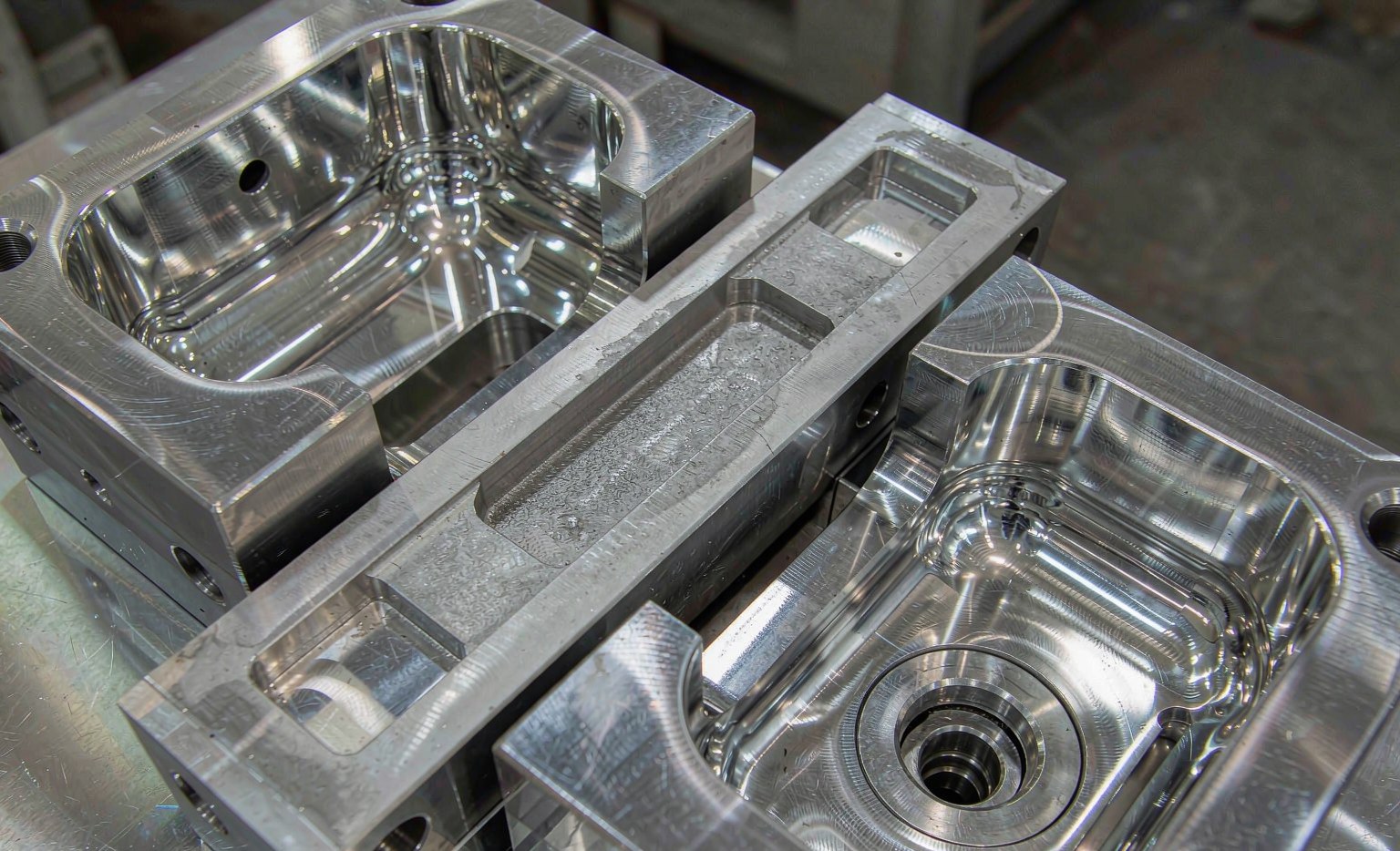
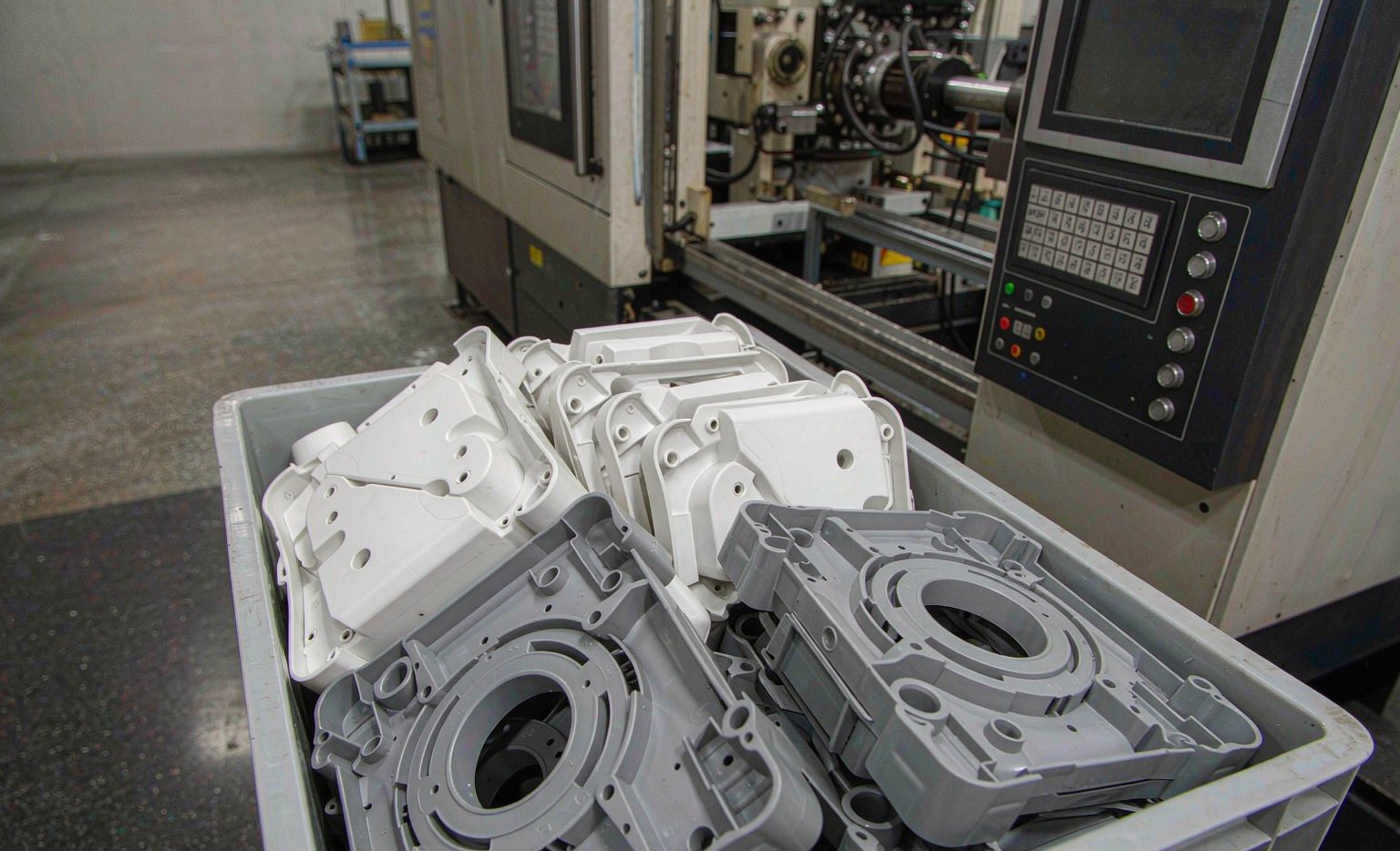
Design for manufacturability (DFM)
Molding success is decided at the design stage. Key rules:
- Uniform wall thickness — variations cause sink marks and warpage; aim for consistent thickness for even cooling.
- Draft angles — a minimum of 1°–2° on vertical walls for clean ejection without scuffing.
- Gate location — strategic placement optimises fill and minimises weld lines that weaken the part.
- Venting — release trapped air to avoid burn marks and short shots.
- Cooling channels — uniform layout (temperature within ±2 °C) reduces warpage and shortens cycle time.
Mold-flow simulation (e.g. CAE/Moldflow analysis) validates fill and cooling before the tool is cut (ABIS Mold).
Common defects and how to fix them
| Defect | Common cause | Fix |
|---|---|---|
| 縮痕 | Insufficient holding pressure/time | Increase pack pressure and time |
| Short shot | Low melt temperature, slow injection | Raise melt temperature, increase injection speed |
| Flash | Excessive injection pressure / worn mold | Reduce pack pressure, verify clamping force |
| Silver streaks | Wet material or burned polymer | Dry resin properly; reduce melt temperature |
| Warpage | Uneven cooling or post-shrinkage | Balance cooling channels, extend cooling time |
| Burn marks | Trapped air at the flow front | Add venting, slow injection near end of fill |
Advanced capabilities: insert and overmolding
Beyond single-material parts, two techniques solve assembly and ergonomics problems:
- Insert molding — a metal insert (threaded boss, electrical contact) is placed in the mold before injection, so the plastic flows around it to form one bonded unit. This eliminates secondary assembly and increases strength.
- Overmolding — a rigid substrate (e.g. PP) is combined with a soft-touch material (TPE/TPR) to create grips, seals and handles with a structural core.
Tooling, lead time and sourcing OEM plastic parts
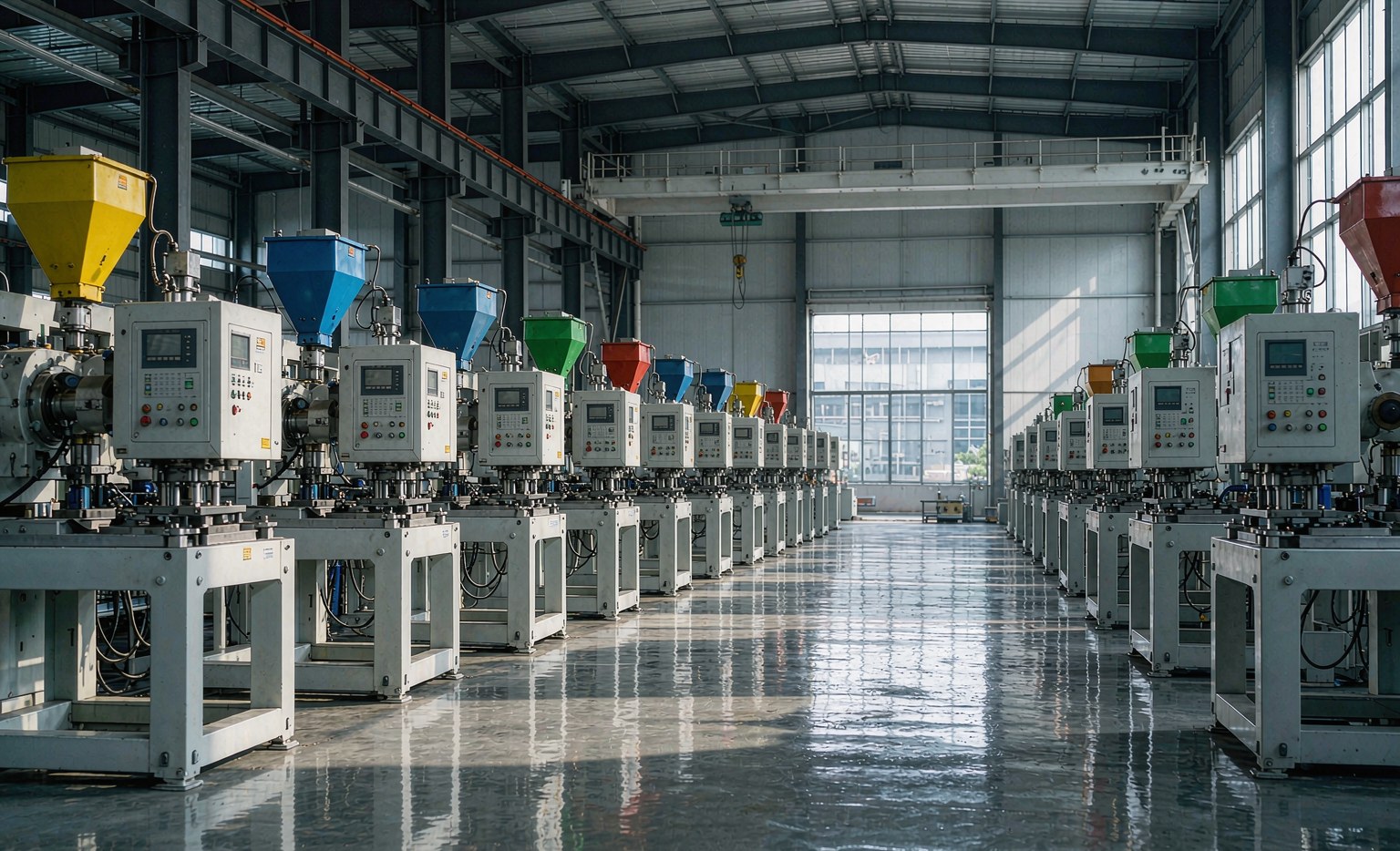
- Tooling lead time — standard molds take 15–30 days; complex, multi-cavity or side-action molds 30–60 days. An in-house mold workshop shortens turnaround versus outsourced tooling.
- MOQ — standard parts often 100–500 units; custom OEM projects depend on mold complexity and material.
- 材料 — virgin resin for food-grade and ESD applications; recycled PP/HDPE acceptable for non-food-grade.
- Certifications — look for ISO 9001, and FDA / UL94 V0 where relevant (medical, flame-retardant electronics).
- Cycle economics — cycle times from 15–120 s; thin-wall packaging can run under 5 s. Cooling efficiency is the biggest lever on unit cost.
Internal resources
DAYIN is a plastic injection molding and OEM/ODM manufacturer with 30+ years’ experience, 100+ machines and plants in China and Vietnam, offering mold design, molding and assembly. Related capabilities: