



雄心勃勃的投资者和嵌入本地制造业:创建的"下一个奇迹"在越南

九年之后,王威雅仍然认为,他迟到了在走向国外。

In the business circles of Hanoi, Vietnam, Wang is affectionately known as “Old Wang.” There’s a saying that has become quite popular among local entrepreneurs: “When heading to Vietnam, follow Old Wang’s lead.”

As Wang Weiya himself puts it, he’s spent his life “swimming” in the capital markets. His career in securities began in Henan in 1996, witnessing the volatile shifts of the securities market, establishing his private equity firm, surviving market crashes, and finally deciding to go overseas. Wang is convinced that beneath Vietnam’s long coastline, the ubiquitous motorbike traffic, the leisurely tropical lifestyle, and its market of over 100 million people lies a capital market brimming with untapped potential.

当胡志明市的指数,启动了在越南在千年,它开始在一个基准的100分。 今天,它已猛增了十倍多,达到又增至1 286起点。 当王的第一个抵达越南,在2015年,资本市场仍有巨大的,野性的荒野。 "这是具有挑战性的,甚至招募证券专业人员。" 然而,尽管这些早期的挑战,王,仍可感觉到他是晚游戏。

Before his arrival, several waves of Chinese manufacturing industries had already ventured into Vietnam, driven by policies like the Pearl River Delta’s “emptying the cage for new birds” strategy, favorable tariffs in Vietnam, and Chinese companies’ proactive “going global” initiatives. Against the backdrop of an accelerating restructuring of global supply chains, the trade symbiosis between China and Vietnam has only deepened.

最近,越南总统Vo Van Thuong访问了中国,与他的第一个停止在广东。 根据越南新闻社,总统Thuong建议,广东省和越南加强了他们的经济和贸易合作,鼓励广企业扩大高质量的投资在越南,特别是在数字转换、绿色增长、以及基础设施部门。

Today, Vietnam is striving to push forward with economic reforms, aiming to replicate the economic boom that China experienced. “If you go to Vietnam, you’ll find that many places are reminiscent of the Pearl River Delta cities from ten or twenty years ago,” several overseas entrepreneurs told Southern Finance All Media reporters. If Vietnam has offered Chinese, especially Guangdong enterprises, a valuable opportunity to “go global,” then Wang Weiya and the pioneering entrepreneurs from the manufacturing sector are undoubtedly among the crucial players riding this wave of globalization.

赚钱不容易

王威雅来自河南。 离开后,他的家乡州、河南、他的职业生涯跨越各种国内证券公司,使他第一次在中国得到的证券投资咨询的资格。 说话的时候王和他的同事、南部金融的所有媒体记者经常听到这样的短语"由的机会,我来到越南。"

But these so-called coincidences are underpinned by inevitability. “In 2015, the domestic stock market was turbulent, and many were ‘hurt.’ After discussing it with friends, I decided to look abroad,” Wang said. In his view, choosing Vietnam was straightforward: existing business ties, geographical proximity, and a significant demographic dividend.

When he first arrived in Vietnam, he was somewhat hesitant. Vietnam’s stock issuance system was different from China’s, and investors’ market awareness was relatively underdeveloped. While the barriers to entry seemed low, it was challenging to succeed. Doing finance here felt like “building a skyscraper on flat ground.”

However, looking back over the past nine years, Wang believes he made the right choice. At the age of 47, he came to Vietnam. The following year, he acquired a local securities firm, renaming it “Construction Securities.” This company later became one of the two Chinese-funded listed securities firms in Vietnam—the other being the long-established Guotai Junan Securities.

用他丰富的工业经验和所有权的一个上市的公司,南部金融的所有媒体记者提出一个简单的问题向王:九年后在越南,他做了很多钱吗?

After a moment’s reflection, Wang candidly replied that it wasn’t as easy as it seems.

王解释说,上市公司在越南的少得多具有挑战性比在中国。 然后回来,注册资本相当于不到10万人民币,一个公司可能达到的门槛清单。 然而,即使有实体在地点,航行的道路前进并不容易。 欠发达的金融基础设施,在越南是一个重大障碍和市场的了解的证券是难以改进,而使该行业在等待的突破时刻。
大银塑胶厂家

Initially, Construction Securities targeted clients across the Greater China region. However, when the pandemic hit, many business activities were disrupted. After adjusting to focus on local services, the firm introduced measures such as remote account opening. Although the number of clients increased, trading volumes remained stagnant. “In Vietnam’s securities ecosystem, it’s possible to sustain operations, but making big money is difficult,” Wang admitted.

在他看来,扩大规模,一个必须持续地增加投资,支持强劲的资本,稳步改善的市场份额。 这就是为什么他扩大进入主要市场在2022年,建立麒麟资本。

Wang is not alone in finding that “striking gold” in the South isn’t easy. As early as 2002, Chen Yongcong’s family-run joint venture, a factory producing industrial sewing thread in Dongguan, had already set up shop in Vietnam. Over the past 20 years, the Ho Chi Minh Index has soared more than tenfold. According to Chen, local workers’ wages have also increased more than tenfold.

Moreover, while labor costs in Vietnam remain lower than in China, worker efficiency is also relatively lower. This observation aligns with Wang’s. As global manufacturing companies increasingly set up factories in Vietnam, the local industry is accelerating its upgrade and transformation. However, the local workforce’s vocational training is relatively lacking, leaving much room for development in the labor market.

Over the past two decades, land costs in Vietnam have also been rising. Chen mentioned that the average rent for factory space in Ho Chi Minh City is now over $5 per square meter (equivalent to more than 35 RMB), which is even higher than in many parts of the Pearl River Delta. Currently, this industrial sewing thread company maintains a small office in Dongguan, while its factory is based in Vietnam. This aligns with Dongguan’s “dual transfer strategy” introduced in 2008. For manufacturing companies, even though “striking gold” isn’t easy and the cost of going abroad is rising, they must continue to expand internationally. Those that remain in China are striving to move up the “smiling curve” in the industry.

Vietnam’s “Golden Decade”

与成本不再为低之前,什么是吸引中国公司越南今天?

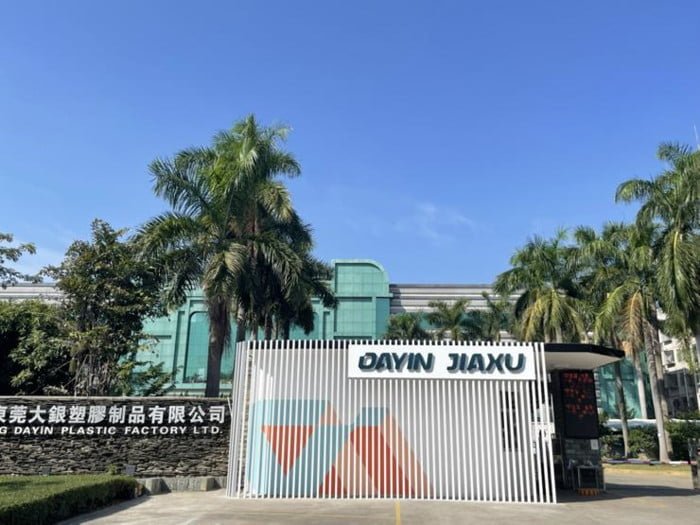
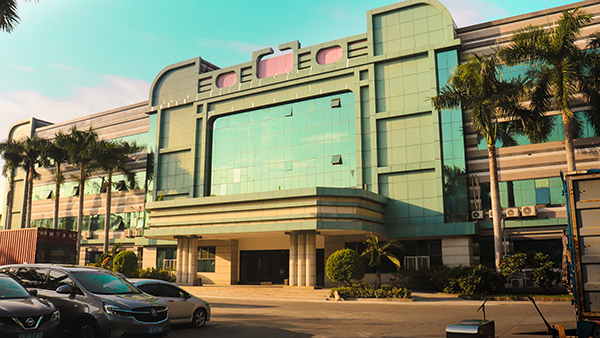
在八月20日, 东莞大銀塑料制品有限公司 (referred to as “DAYIN Plastic”) officially opened its Vietnam branch. General Manager Wu Xianda and his team traveled to Vietnam for the ribbon-cutting ceremony. He told Southern Finance All Media reporters that the Vietnam branch was established quickly: site selection in January, contract signing in February, factory completion in half a year, and now the 10,000-square-meter factory in Bac Ninh, Vietnam, is hiring staff and ready to commence operations.

大銀塑料是一个台湾的企业。 当它从台湾的东莞市,在1997年,只有五个喷射模塑机。 在过去20年中,该公司已转变成一个显着播放器有600多名员工、制造业产品,例如智能家用电器,体育产品和半成品,用于全球品牌。

快速的建设越南的工厂反映了一种紧迫感。 机器真空吸尘器 是的一个关键的产品线大銀塑料。 美国贸易代表办公室以前曾经宣布,关税豁免的家用电器喜欢真空吸尘器,机器人的真空吸尘器和空锅将到期,在六月14日,2024年。 在此日期之后,这些产品将面临一个25%的关税。

1720780150 1720780150 首页banner4

The increase in tariffs on some Chinese goods by the United States poses a significant challenge for DAYIN Plastic, which primarily exports to American and European customers. Additionally, the company’s revenue has declined over the past two years due to unstable global economic recovery, making it imperative to retain existing clients and actively seek new ones. “We have to go abroad,” Wu Xianda said.

Wu explained to Southern Finance All Media reporters that producing robotic vacuum cleaners in Vietnam is more expensive than in China. Firstly, compared to China, the savings in rent and labor costs are minimal. Secondly, Vietnam’s supply chain is not as developed as that in the Pearl River Delta. This means that additional costs for importing raw materials and transportation need to be factored into the cost structure. Therefore, DAYIN Plastic’s products exported from Vietnam are priced 5% to 10% higher than those exported from China.

在所有的探索,他们仍然需要进口组件珠江三角洲以他们工厂在越南。

之后,要探索选项,如墨西哥、菲律宾、印度尼西亚和泰国位置,已成为受欢迎的,中国企业设置的工厂在国外近年来,吴贤达和他的团队决定,他们没有满足他们的标准。 他们寻求一个位置靠近中国,具有较低的费用、友好外交关系,并有高度的开放性。

“There’s no place more suitable than Vietnam,” Wu said. Currently, Vietnam has signed 16 free trade agreements with countries and markets including ASEAN, the European Union, and the Americas, allowing it to benefit from preferential tariffs in over 60 countries/regions. Additionally, Bac Ninh in Vietnam is only about 900 kilometers away from Dongguan, and imported parts can be transported by road. “We import a lot of materials from the Pearl River Delta, so logistics costs are a crucial consideration.”

Wu Xianda, himself a “second-generation factory owner,” notes that DAYIN Plastic’s development is aligned with the restructuring of the global industrial and supply chains. The manufacturing base moved from Taiwan or Hong Kong to the Pearl River Delta, and then from the Pearl River Delta to western China or Vietnam. 今天,在中国的工厂都建立在越南,它不再仅仅是一个简单的转移的生产能力;这是关于融入当地市场,促进地方就业和促进出口的中间产品之间的中国和越南。

把大銀塑料作为一个实例,中国公司设置的工厂在国外通常驱动的增长的进口和出口的中间产品。 中国早已被越南最大的贸易伙伴,最大的进口来源,而第二大出口市场。 越南,反过来,是中国第四大贸易伙伴的全球性和最大的中东盟。 中国各省、广东省拥有最大的贸易量越南,约占五分之一的贸易总额之间的两个国家。

In the first seven months of this year, Guangdong’s imports of electronic components and LCD flat panel display modules from Vietnam surged by 2,084.9% and 17,346.2%, respectively, while its exports of mechanical and electrical products to Vietnam reached 72.08 billion RMB, an increase of 34.2% year-on-year. Against the backdrop of a global recovery in the electronics and information industry, the relationship between China and Vietnam in the global supply chain is more complementary than substitutive, with cooperation between the two regions becoming increasingly prominent in the global supply chain.

“According to the flying geese model, it’s perfectly normal for companies to relocate. Whether they can succeed abroad depends on the market, the companies, and the consumers,” said Liu Ying, a researcher and director of the Cooperation Research Department at the Chongyang Institute for Financial Studies, Renmin University of China. She noted that the global industrial and supply chains are undergoing restructuring, with China playing a central role. China, together with ASEAN countries including Vietnam, is committed to promoting regional economic integration.

在采访期间,刘英刚刚回到从研究前往马来西亚和泰国。 她共享与南部金融的所有媒体记者她的深刻观察 for a long time, Chinese enterprises venturing abroad have done so in an unstructured manner. “We need a standardized approach to going global, ensuring both internationalization and localization are well-executed, and we must work with our trade partners to navigate the next golden decade of the Belt and Road Initiative.”

As Wang Weiya enters his tenth year overseas, he has noticed a significant shift in Chinese investments in Vietnam, expanding from real estate to manufacturing and now to new sectors. Financial services, healthcare, education, and retail are currently the most favored categories among Vietnamese local capital. The seasoned securities professional, Wang Weiya, having tested the waters of Vietnam’s capital market, humorously remarks that he plans to steadily build up his company and expects to “keep swimming” in the capital markets for the foreseeable future.