




With increasing market competition and rapid technological advancements, injection molded part processing techniques are constantly evolving. Currently, injection mold manufacturing companies, both domestically and internationally, widely adopt advanced technologies such as CAD/CAM, 3D printing, high-speed cutting, and smart manufacturing, significantly enhancing the precision, efficiency, and flexibility of mold production. Additionally, the emergence of new materials and processes, such as innovative alloy materials and polymers, presents even more opportunities for the future development of injection molds.
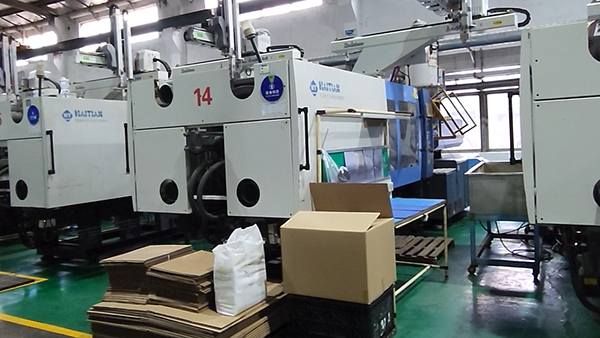
In the process of injection mold manufacturing, mastering key techniques is essential for improving production quality and efficiency. First, it is crucial to strictly control the heat treatment process of steel and the machining precision of aluminum alloys to ensure that the mold’s hardness, wear resistance, and other performance indicators meet the required standards. Second, choosing appropriate techniques such as cutting and electrical discharge machining (EDM) is important, along with fully utilizing CAD/CAM technologies to reduce the workload of manual mold polishing. Furthermore, strengthening communication and collaboration with the mold testing team and promptly addressing issues that arise during testing can significantly improve the efficiency and quality of mold adjustments.
DAYIN Plastic Products Co., Ltd. specializes in the manufacturing of home appliance molds, offering OEM/ODM services as an integrated provider of comprehensive manufacturing solutions. Our self-developed products include robotic vacuum cleaners, plastic tableware, and electronic dartboards. With 30 years of mold development experience, a team of over 50 R&D professionals, and more than 100 injection molding machines, we are dedicated to providing high-quality manufacturing services to our clients, striving to create greater value for them.
Process Windows: The Five Variables Operators Actually Tune
Behind every stable molding operation sits a documented process window with five live variables:
| Variable | Adjusts | Typical symptom when off |
|---|---|---|
| Temperature profile | Melt flow and degradation | Short shots or discoloration |
| Injection speed | Fill pattern, shear heat | Weld lines, burn marks |
| Pack/hold profile | Weight, sink, dimensional drift | Sink marks, flash |
| Cushion & position | Consistency shot to shot | Weight variation across cavities |
| Cooling time | Cycle cost, part stiffness | Warp on eject, or wasted seconds |
What turns five dials into a repeatable process is measurement: cavity-part weight, cycle time and critical dimensions tracked on charts, so drift is seen on the plot before it is felt in assembly. This is statistical process control in its simplest, most profitable form — no software required to start, just discipline. Techniques that support it are in tolerance accuracy and repeatability and the standards view in process standards in Chinese factories. Reference: statistical process control and injection moulding.
The Morning Sheet: SPC Without Software
Statistical process control can start on paper and still change a floor. The morning sheet: one page per machine per shift, recording shot weight, cycle time, and the part’s two most critical dimensions — five shots, five rows, five minutes. Plot the numbers as simple dots; the patterns arrive without any statistics course. A trend of rising shot weight at stable settings means the check ring is wearing; a dimension drifting with mold temperature means the cooling log needs a column; two cavities disagreeing means the tool, not the process. The sheet also disciplines change-making: any parameter adjustment gets a line on the same page, so the next shift inherits the reasoning, not just the setting. Plants that keep this habit for a quarter usually find they no longer need convincing about SPC software — they need it only to keep up with what the paper already taught them.