



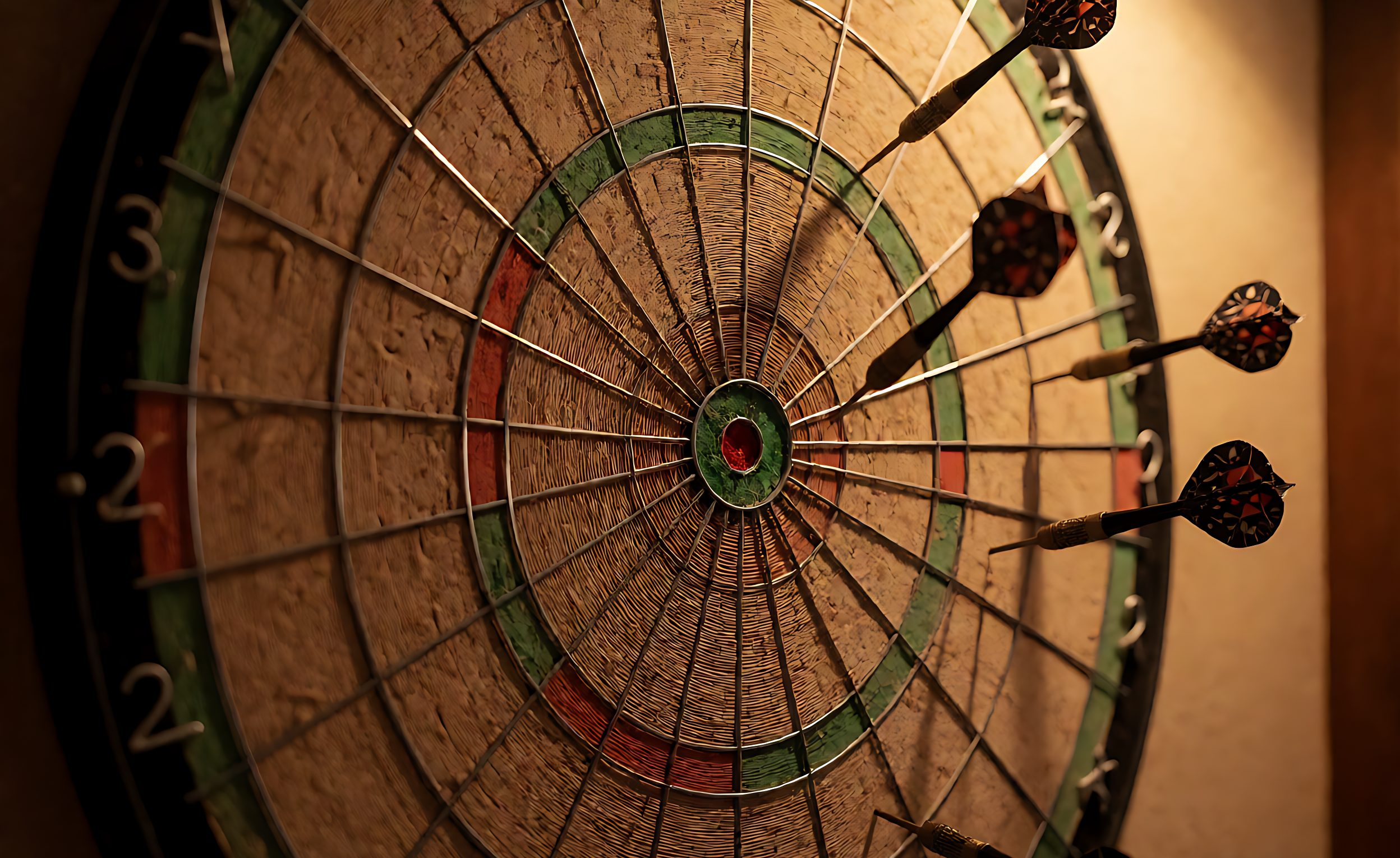
The playing surface is the part of a dartboard the customer actually experiences, and it is the part that decides whether a board looks tired after three months or after three years. For a buyer putting together a wholesale or bundled programme, the surface choice also determines price tier, shipping weight and the maintenance story on the packaging – all of which affect sell-through.
Three constructions dominate the market. They are not variations of one product aimed at the same buyer; they suit different channels, and mixing them up is a common and expensive sourcing mistake.
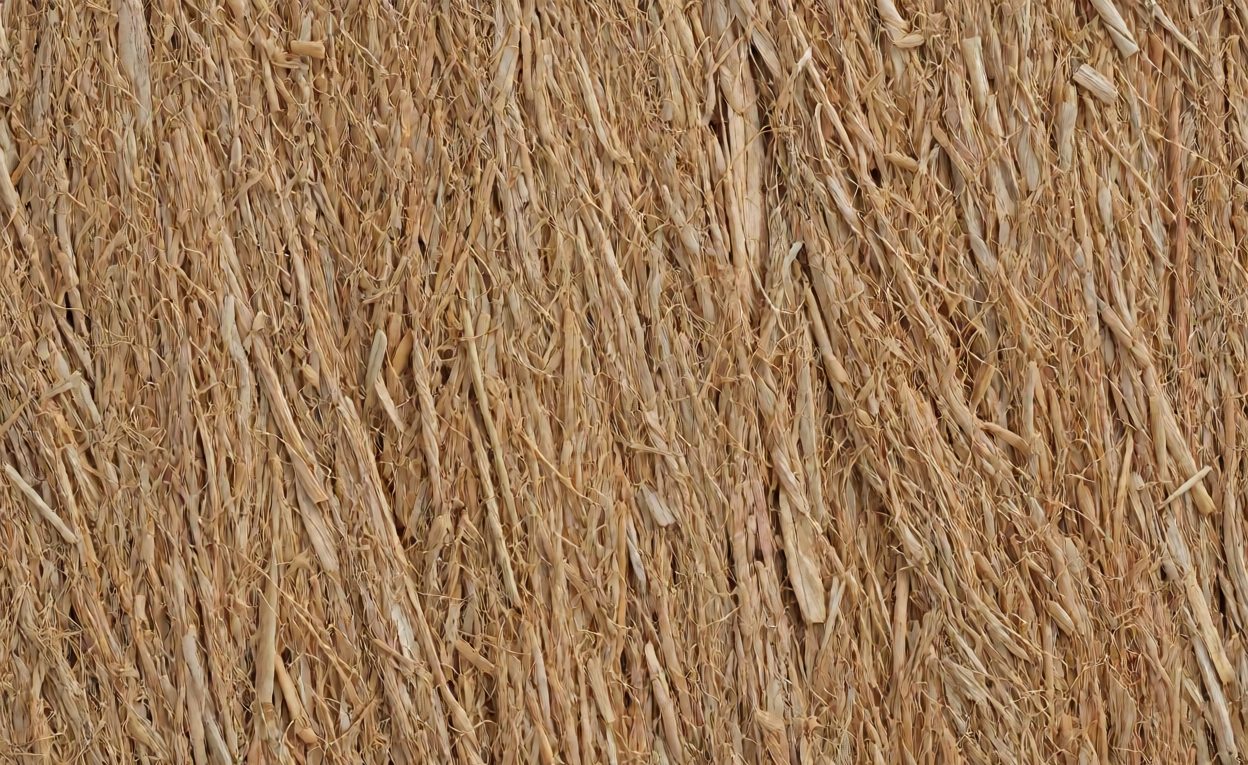
Sisal: The Self-Healing Standard
A sisal board is made from compressed natural fibre bundles, oriented so the darts land between fibres rather than through them. When a dart is withdrawn, the fibres close back over the hole. That self-healing behaviour is the reason sisal is the reference material for serious play, and it is the property buyers should test rather than assume.
Two specifications matter. Fibre density and compression, which drive both self-healing and weight – a heavier, denser board heals better and costs more to ship. And the mounting and rotation system, since a board that can be rotated distributes wear across the surface and materially extends its life.
Sisal has a maintenance implication worth stating on the packaging: rotating the board periodically. It also has a humidity sensitivity – fibre boards stored or shipped damp can swell, and a swollen face does not heal the same way.
Paper and Coiled Board: The Value Tier
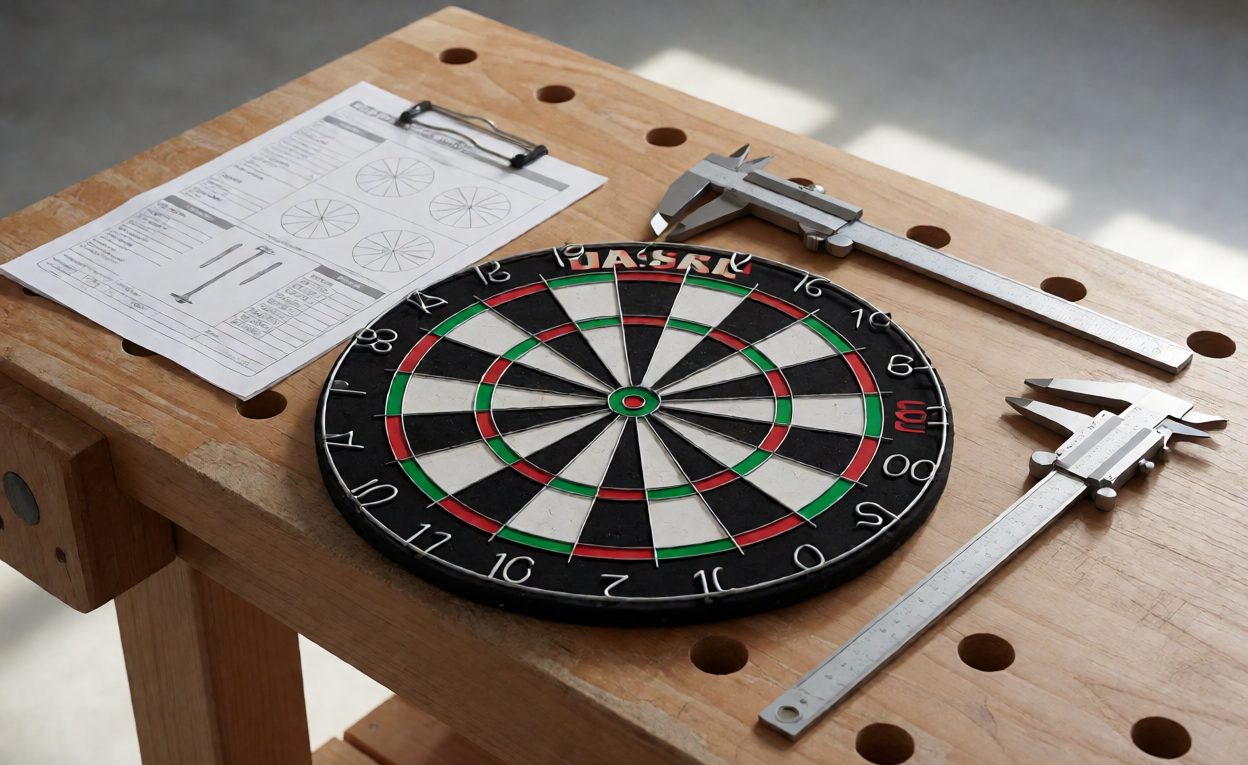
A coiled paper board is made from wound paper or paper composite. It is light, inexpensive and perfectly adequate for casual play, and it is the right choice for a price-driven channel or a first-time buyer. The trade-off is durability: holes do not close, so the scoring area degrades visibly with use.
For a wholesale programme this is a positioning decision rather than a quality one. A paper board sold as a family games product is honest; the same board marketed as a league-grade board generates returns. Where a catalogue carries both, the specification should say clearly which is which.
Plastic and Electronic Faces
Plastic faces – typically the segment plates on an electronic soft-tip board – are a different proposition again. They are engineered parts with defined segment geometry, and what matters is impact durability, dimensional stability and how consistently a dart registers. A segment plate that flexes or wears changes scoring behaviour, which is a product complaint rather than a cosmetic one.
Electronic boards also carry a sensor and electronics assembly, so the specification includes drop and impact tolerance for the whole unit, not just the face.
What to Specify on a Bulk Order
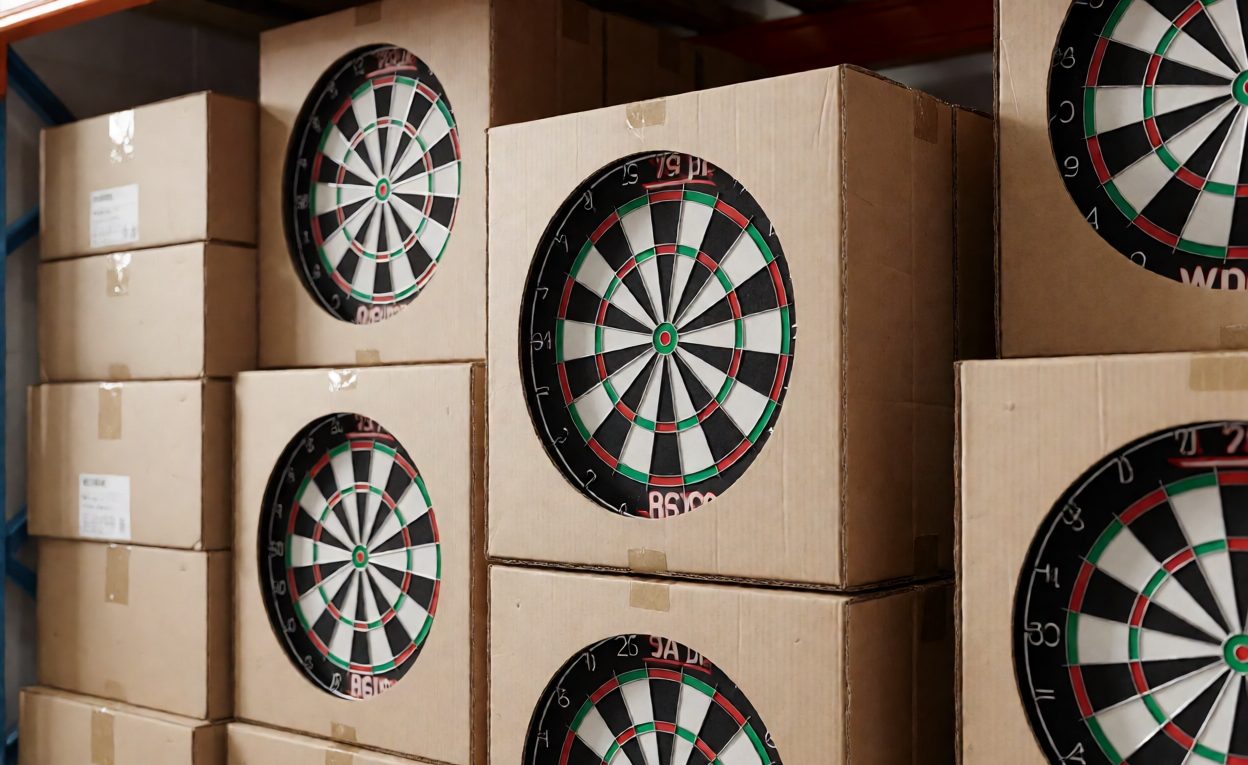
Six lines cover it: face material and construction, fibre density or equivalent measure where applicable, overall diameter and scoring-zone dimensions, weight, the mounting and rotation hardware included, and any moisture or storage requirement for transit. Then add the packaging claim you intend to make, and check that the product supports it.
Ask for a wear test rather than a sample inspection. Fifty throws into a sample tells you more about self-healing than any visual check, and it is the difference between a specification that reads well and one that survives a season in a pub or a games room.
Technical Background
The natural fibre used in quality boards is sisal, whose fibre structure is what gives the board its self-closing behaviour. The alternative construction using wound paper composites is a form of paperboard, chosen for cost and weight rather than longevity. Electronic boards replace the fibre face with engineered injection moulded segment plates, which is why their failure modes are mechanical and electronic rather than fibrous.
Heat and Dishwasher Behaviour in Service
The temperature question is usually asked about the plate and answered about the resin, but the failure customers see is different. A plate that survives a hot meal can craze after repeated dishwasher cycles, because the exposure is not one hot contact but hundreds of shorter ones combined with detergent and drying heat. That is a test, not an inference.
Decoration is the other element that fails. A printed graphic may be perfectly durable on one substrate and start lifting or fading on another after the same number of cycles, and the print system is a separate specification from the moulding. Ask for a dishwasher test on the decorated article rather than on a plain sample.
Where a range includes both microwaveable and non-microwaveable items, the marking has to be unambiguous on the article itself rather than only on the packaging, because the packaging is discarded and the article is what the consumer heats.
Choosing by Channel
League, pub and serious home buyers expect sisal and will notice if it is not. Family and occasional-use channels are well served by coiled paper at a price point that moves volume. Electronic faces serve soft-tip play and venues that want scoring, and they carry a higher unit value with a different support expectation.
Weight also has a freight consequence worth pricing before the order is placed. A dense fibre board can weigh several times a coiled paper equivalent, and on a container loaded by volume rather than weight that difference lands directly on freight per unit. It should be part of the landed cost calculation rather than a surprise at booking.
Where a buyer is assembling a bundle, the board choice sets the rest of the specification: darts, surround and cabinet all follow from whether the board is steel-tip or soft-tip, and from its diameter and weight.
Board types are compared further in the overview of dartboard types and in the coin-operated machine buying guide. Electronic specification is covered in the electronic dartboard OEM checklist, cabinet and surround decisions in cabinet, surround and backboard bundling, and board upkeep in the dartboard maintenance guide.
FAQ
What makes a sisal board self-healing?
Compressed fibre bundles that part around an incoming dart and close back over the hole when it is withdrawn, which is why density matters.
Are paper boards a bad product?
No. They suit casual and price-driven channels well; they are only a problem when sold as something they are not.
Why rotate a board?
To distribute wear around the scoring area, which extends usable life materially on a fibre board.
Does humidity affect fibre boards?
Yes. Fibre stored or shipped damp can swell, and a swollen face no longer heals the same way.
What fails first on an electronic board?
Usually segment plates from impact wear, or the sensor assembly – both mechanical rather than surface issues.
How should I verify a sample?
With a wear test: repeated throws into the face, then inspection of how well the holes close.
Does board choice affect shipping cost?
Yes. Dense fibre boards weigh substantially more than coiled paper, which changes freight per unit on a container.