




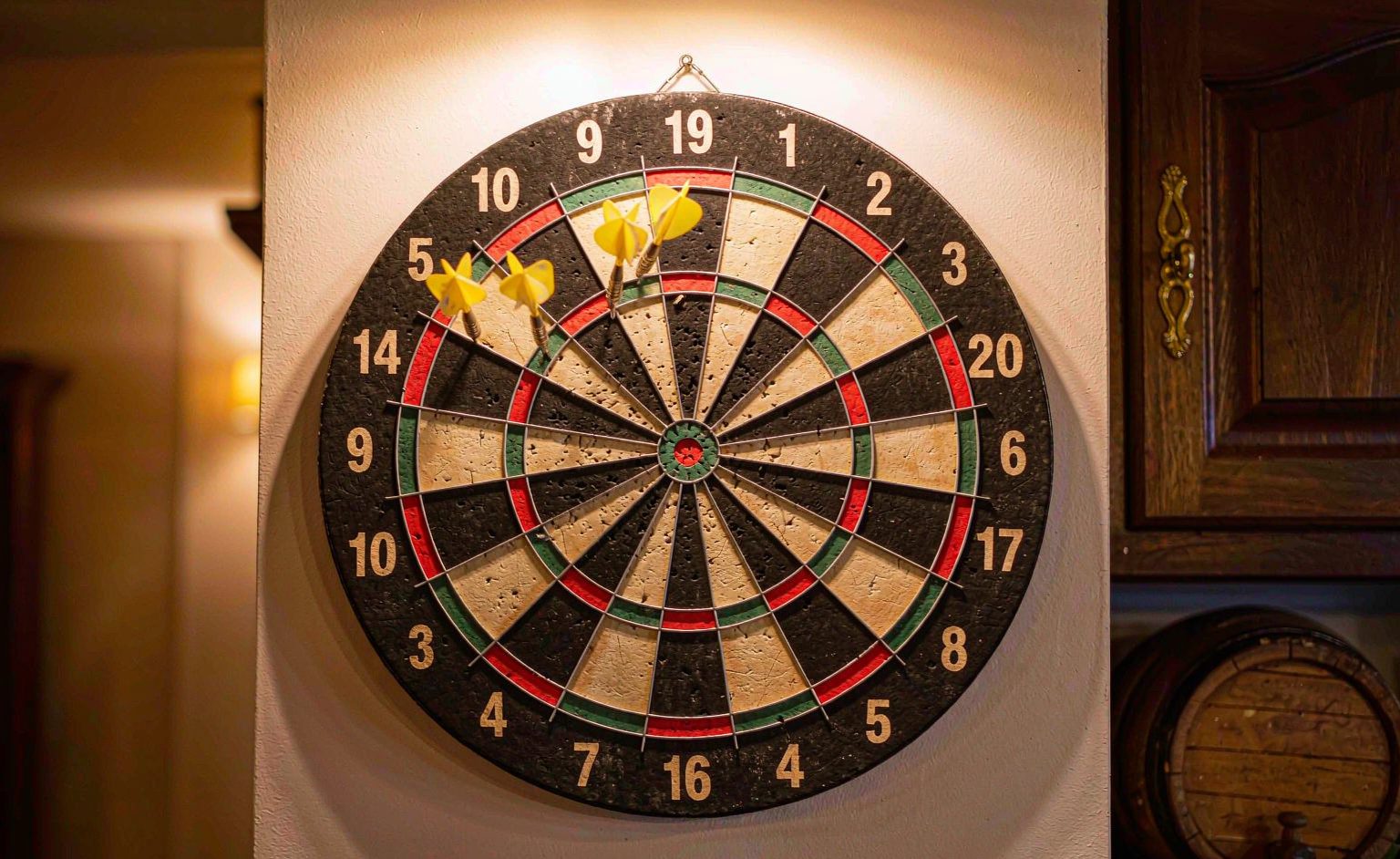
A dart board is a consumable with a long life if you treat it right and a short one if you do not. The single habit that doubles a board’s lifespan is rotation — turning the board so the heavy-traffic 20-segment is not always the same wedge. This guide covers rotation, cleaning, wire and segment care, storage, and the signs that replacement is finally due.
Key Takeaways
- Rotate the board regularly so wear spreads across segments, not just the 20.
- Clean the surface to keep it grippy; compressed air and a soft brush, never solvents.
- Re-seat tufts on bristle boards; fix or replace loose spider wires.
- Store away from humidity and direct sun to avoid warping and fading.
- Replace when the 20-bed is soft, wires are proud, or darts no longer bite.
Rotation: The Habit That Doubles Lifespan
Bristle (sisal) boards wear where darts land most — the 20, 19 and treble beds. Rotating the board 90° every few weeks moves that traffic to a fresh wedge, and because sisal compresses rather than tears, the rotated area recovers. A board that is never rotated develops a soft, unbitable 20 and is effectively dead in one corner while the rest is pristine. The board types this applies to are compared in our dartboard types guide; the mistakes that accelerate wear are in common darts mistakes.
| Action | Frequency | Effect |
|---|---|---|
| Rotate 90° | Every 2–4 weeks of play | Spreads wear, recovers sisal |
| Surface clean | Monthly | Keeps grip, removes oil |
| Wire check | Each rotation | Catches proud/lifted wires |
| Storage check | Seasonally | Prevents warp and fade |
Cleaning and Wire Care
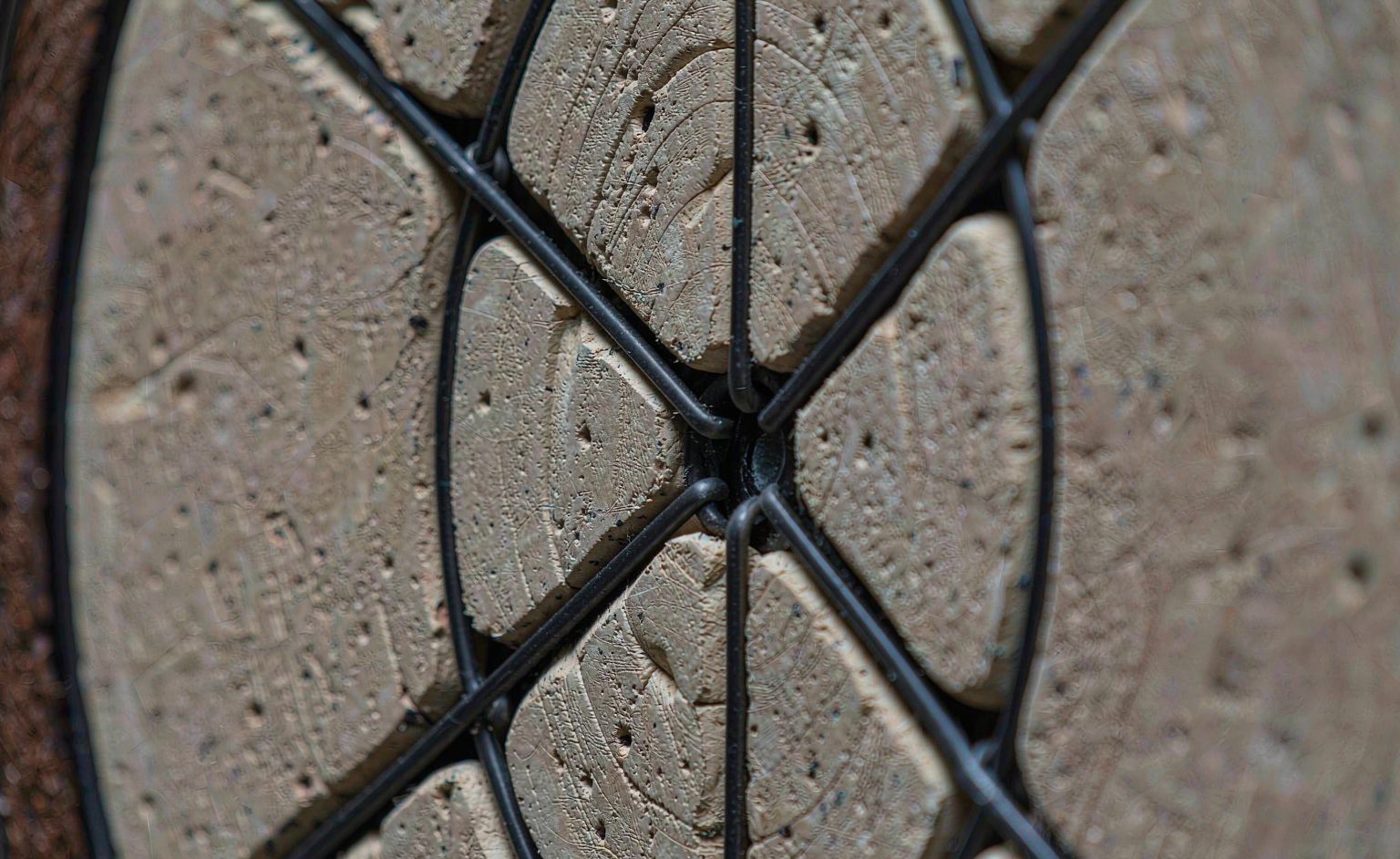
Dust and skin oil build a film that reduces grip; clean with compressed air and a soft brush, never solvents that attack the surface. On bristle boards, re-seat any tufts that have lifted. The spider (the wire web) should sit flush; a proud or lifted wire causes bounce-outs and chews darts — fix or replace it. Good hardware, discussed in our dart brand guide, includes boards with thin, recessed wire for fewer bounce-outs.
Storage and the Replacement Signs
Store the board away from humidity and direct sun; both warp the substrate and fade the ink, and a warped board never recovers. Replace when the 20-bed is soft and darts no longer bite, when wires are proud across the face, or when the surface is so compressed that scores become ambiguous. The fundamentals of play that drive wear — stance, grip, pull — are in our how-to-play guide.
Frequently Asked Questions
How often should I rotate a dart board?
Every 2–4 weeks of regular play; more often in heavy-use venues.
Can I clean a bristle board with water?
No — use compressed air and a soft brush; moisture warps the sisal and the substrate.
Why do my darts bounce out?
Usually a proud or lifted spider wire; re-seat or replace the wire, and prefer thin recessed wire.
How do I know it is time to replace?
The 20-bed is soft and darts won’t bite, wires are proud across the face, or the surface is compressed beyond scoring.
Does sunlight really damage a board?
Yes — it fades ink and can warp the substrate; store out of direct sun.
Are electronic boards maintained differently?
Yes — they need segment-contact cleaning and battery care rather than sisal rotation; the principle of regular upkeep is the same.
Technical background: darts, sisal fiber and electronic dartboards cover the context.