




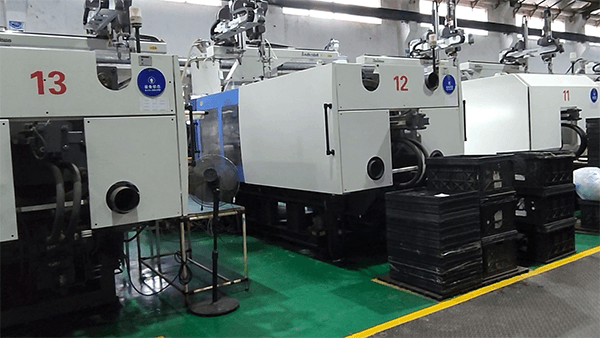
To address dimensional deviation defects in the injection molding process, plastic mold processing companies analyze various factors affecting product dimensional accuracy, including injection equipment, mold design and manufacturing, injection molding process conditions, and raw materials. Corresponding control measures are proposed to improve dimensional accuracy.
As injection molding technology advances, demands for product dimensional precision continue to grow. However, in actual production, dimensional deviations can often lead to assembly difficulties and resource waste. Therefore, improving the dimensional accuracy of injection-molded products has become a crucial topic in the molding field.
DAYIN Plastics has conducted in-depth analysis and research on the causes of dimensional deviations in plastic products. The factors contributing to dimensional errors are complex and varied, including external temperature and humidity as well as internal factors such as molecular crystallization, orientation, and internal stress changes. The analysis indicates that mold design and manufacturing, along with injection molding process conditions, are the primary factors causing dimensional errors, accounting for approximately two-thirds of dimensional deviations. Additionally, plastic material properties, product design, and injection equipment also impact dimensional accuracy.
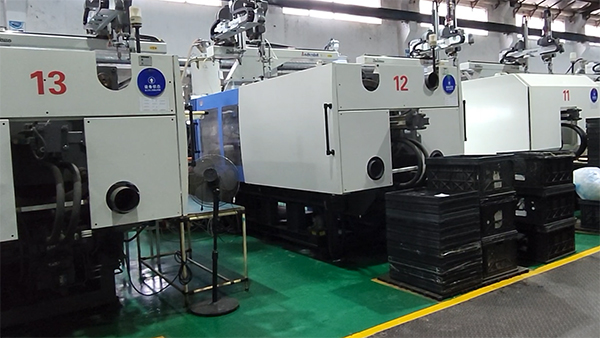
Typically, crystalline and semi-crystalline resins have a higher shrinkage rate than non-crystalline resins, with a wider range of shrinkage variation. This results in greater shrinkage fluctuations in the molded plastic parts. For crystalline resins, a higher degree of crystallinity reduces molecular volume, thereby increasing part shrinkage. Additionally, uneven pellet size of molding materials, insufficient drying, or inconsistent mixing of recycled and new materials can also lead to dimensional fluctuations in molded parts.
Dimensional deviation is common in injection molding. To achieve precision injection molding, optimizing mold structure, adjusting molding process parameters, and selecting appropriate raw materials are necessary to reduce or even eliminate dimensional deviations. This helps improve part performance and ensures that the dimensions and functionality of the product meet design requirements.
DAYIN Plastic Products Co., Ltd. has specialized in mold manufacturing for 30 years. As a professional injection molding and mold-making contractor, we provide one-stop OEM/ODM services. We excel in optimizing product structures to reduce mold and injection costs, with a full design and manufacturing team delivering high-quality product design services. Our production facility covers 50,000 square meters, equipped with advanced mold processing equipment and extensive mold-making experience. With over 30 years of mold development experience, more than 50 R&D personnel, and over 100 injection molding machines, DAYIN is able to meet diverse client needs.
Technical Control in Mold Shops: What the Dashboard Misses
Mold-shop control systems report machine health; the technical controls that protect parts live slightly off-dashboard:
| Off-dashboard control | What it verifies | Drift it catches |
|---|---|---|
| Gauge calibration program | Measurements mean what they say | Slow measurement lies |
| First-article photography | Visual baseline per tool | Gradual cosmetic decay |
| Coolant and hydraulic analysis | Fluid health behind the panels | Season-long degradation |
| Steel temperature surveys | Actual vs setpoint at the cavity | Controller optimism |
The calibration row is the foundation under every number the dashboard shows: gauges that drift make honest machines report dishonest parts, and the shop chases production ghosts while the ruler itself is wrong. The survey row is the temperature-control cousin of the same insight — controllers believe their own thermocouples, and the cavity face may disagree by degrees the controller never sees. The photography row is the cheapest of the set and the most human: first articles photographed at a consistent angle build a visual memory that outlives every staff change, and gradual decay — the kind no single measurement catches — becomes visible in a side-by-side a year apart. Technical control, in this fuller sense, is less about more sensors than about verifying the verifiers. The processing steps under control are in mold processing, and the inspection sequence in part inspection. Reference: SPC practice and quality systems.