




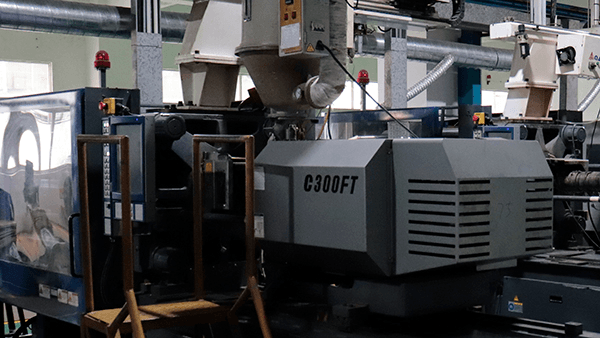
Today, an editor from an injection molding manufacturer discusses the impact of poor ventilation and mold swelling deformation on product quality. We propose an approach to control the distribution of injection pressure by adjusting the number and placement of gates, and we introduce a method to eliminate mold swelling deformation by pre-setting a compressed gas space.
In the injection molding process, after extended use, mold plates may become deformed, leading to defects such as flash and burrs in the products, resulting in rejected items. Typically, people address these issues by opting for major repairs or scrapping the mold. However, for products with less stringent dimensional requirements, such solutions are often impractical. Jinan Kaiming Plastics has proposed a simple and effective solution specifically for the common problem of mold swelling deformation.
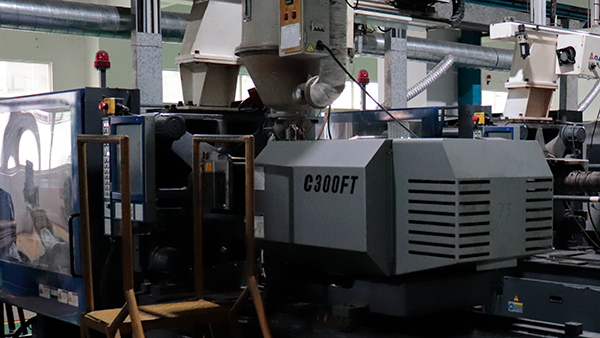
When mold ventilation is poor, as plastic melt continues to be injected, the air within the cavity is gradually displaced and compressed. The greater the degree of gas compression, the more it obstructs the flow of the melt. As the plastic melt flows, energy loss causes a drop in temperature, which in turn reduces flowability. Additionally, the compressed gas blockage leads to two possible outcomes: first, the melt may be unable to overcome the compressed gas obstruction, forcing it to stop and resulting in defects like short shots or burn marks. Second, if the melt does break through the compressed gas, excessive pressure (especially common in multi-gate molds) can lead to mold swelling.
DAYIN Plastic Products Co., Ltd. is a high-tech enterprise focused on product R&D, design, manufacturing, and sales, dedicated to providing one-stop solutions. Established in 1989, the company specializes in mold creation, injection molding, post-processing, and electronic assembly. In addition to contract manufacturing, we develop our own products and offer private label customization for clients. With a 50,000-square-meter production facility, 30 years of mold development experience, over 50 R&D personnel, and more than 100 injection molding machines, DAYIN is equipped to meet diverse client needs.
Mold Cooling and Waterways: The Unglamorous Half of Cycle Time
Cooling consumes most of every cycle, and the waterways that do it are the least glamorous steel in the shop:
| Waterway issue | What it costs | The fix that lasts |
|---|---|---|
| Scale buildup | Slowly lengthening cycles | Treated water, periodic flush logs |
| Crossover leaks | Dead spots, warp gradients | Pressure-test after every service |
| Baffled deep cores | Hot cores, long cycles | Beryllium copper inserts where geometry demands |
| Unbalanced circuits | Cavity-to-cavity differences | Flow-meter verification per circuit |
The scale row is the slow tax nobody budgets: every millimetre of scale insulates, and the cycle lengthens by seconds that compound into shift output — operations that log flush dates and back-pressure readings catch the tax before it compounds. The flow-meter row pays in consistency what it costs in minutes: circuits verified to specification at installation, and re-verified after every teardown, keep cavities behaving like siblings instead of strangers. Cooling also explains cycle-time quotations worth doubting — a quote based on optimal water performance assumes water performance the tool has never delivered, so asking for cycle data from a similar tool in production, scale and all, lands the conversation on honest ground. The temperature-control context is in temperature control in molds, and the processing foundation in mold processing key points. Reference: cooling phase and heat exchange fundamentals.