



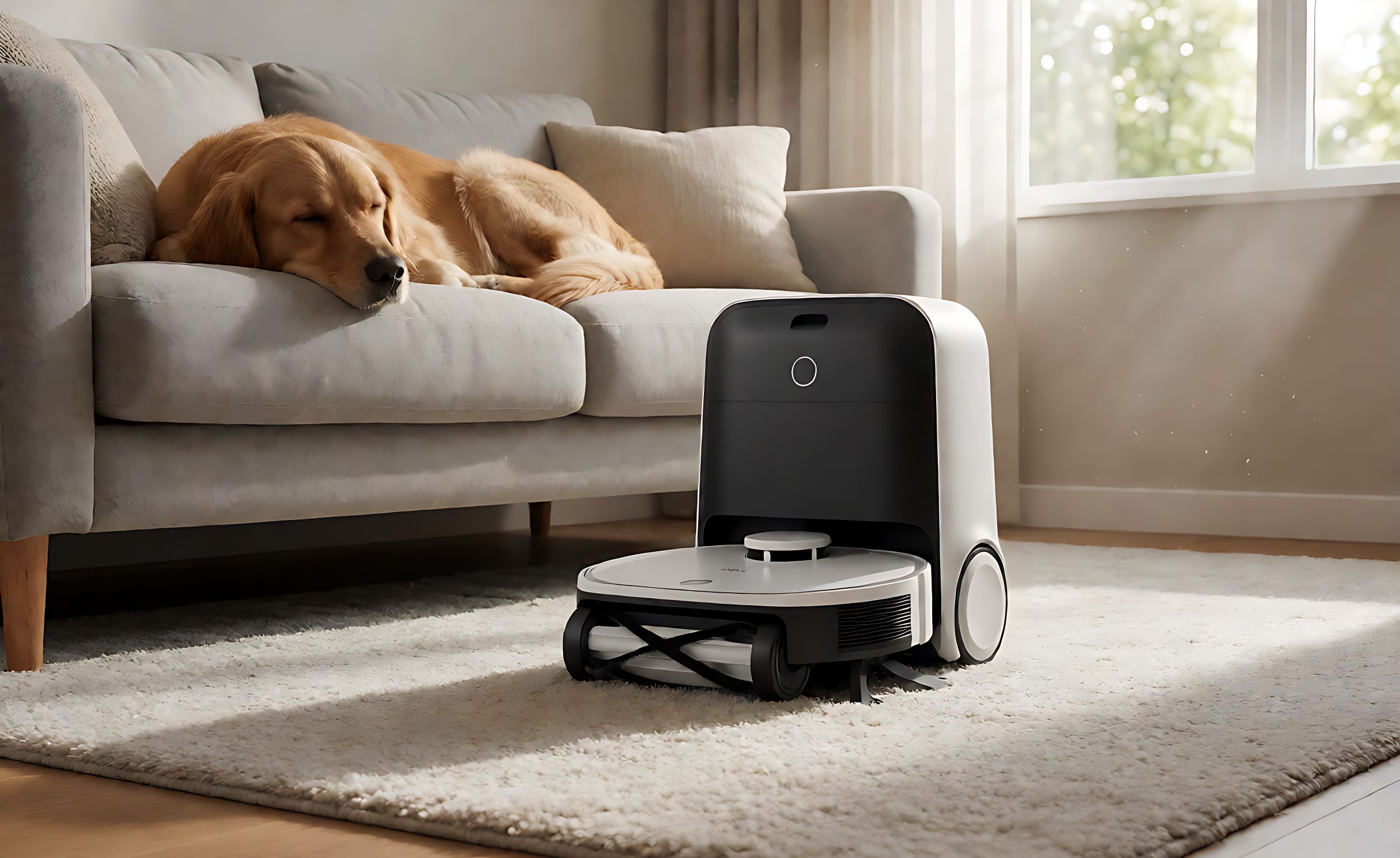
Pet hair can challenge robot vacuums because it wraps around brushes, moves through the airflow path, and changes how quickly a bin reaches its practical fill limit. For a pet-focused product programme, define the target floors, hair load, and maintenance expectations, then verify them on production-equivalent units.
For a buyer building a pet-focused programme, the difference is three design decisions – brush, airflow path and bin – and all three are specifiable and testable.
Brush Roll: The First Point of Failure
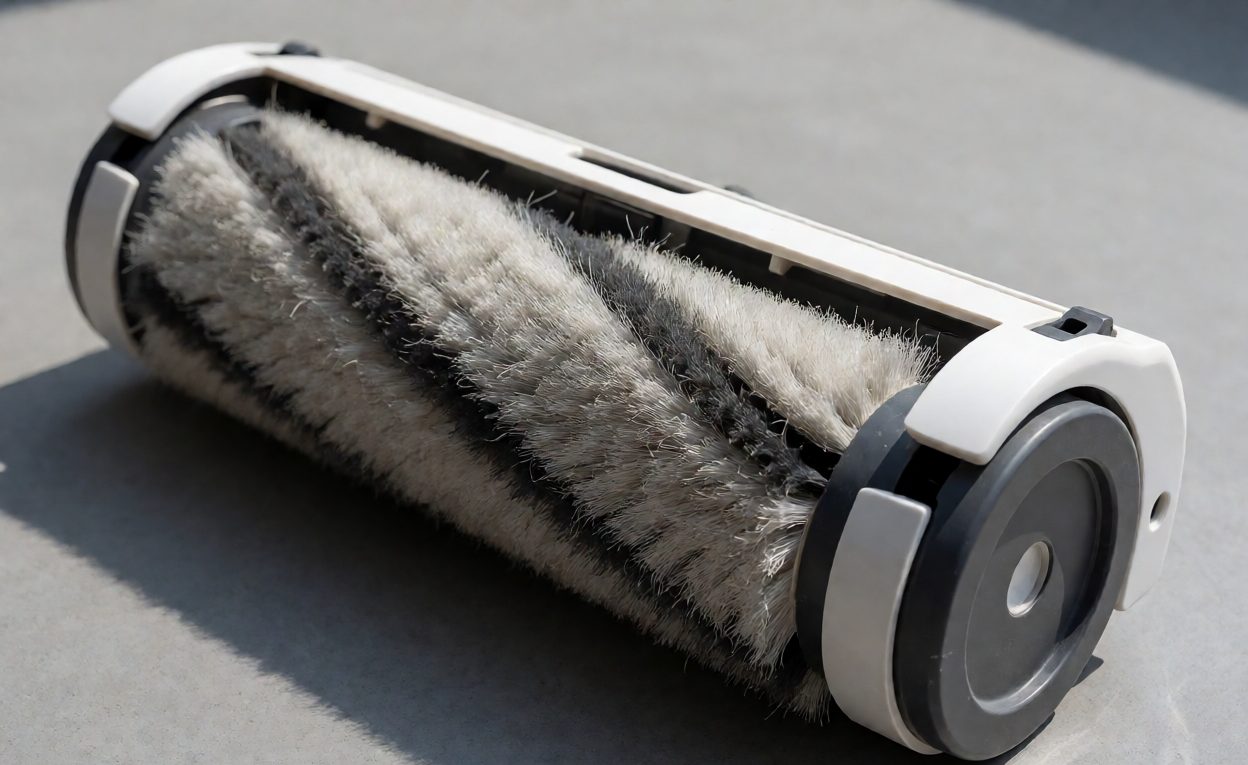
Hair wraps around a bristle brush roll and, once wrapped, the roll stops working long before the motor does. Two designs address it. A rubber or finned roll sheds hair into the airflow instead of collecting it, at some cost to agitation on carpet. A bristle roll agitates better and wraps faster.
The decision follows the target home. Hard floors and low-pile carpet favour a rubber or combination roll; deep carpet favours bristles with a design that makes removal easy. Either way, specify how the roll is meant to be cleaned, because a roll that requires a tool and twenty minutes is a design defect regardless of how well it cleans.
A repeated-run wrap test can be useful when its hair type, mass, floor, run count, and inspection method are defined. Test duration depends on the protocol and the behaviors the programme needs to measure.
Airflow Path and Suction
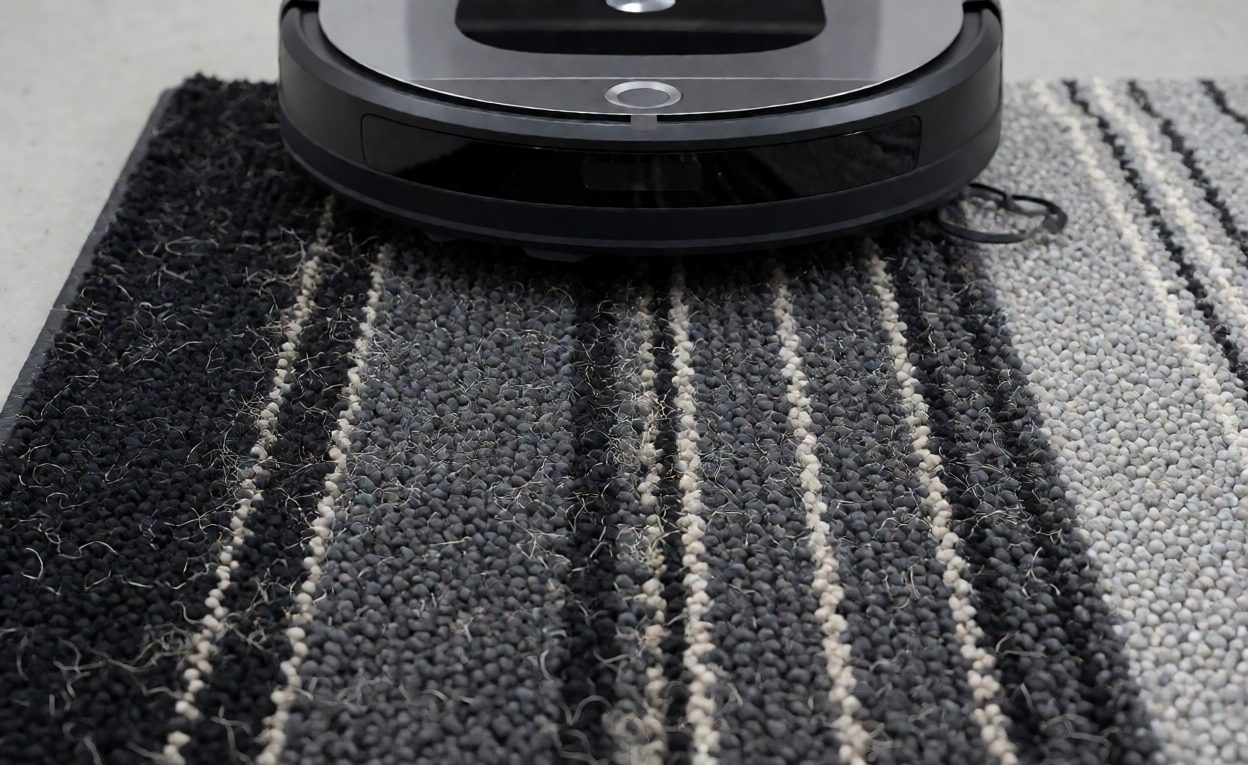
Published suction figures may use different measurement locations and conditions, so they are not automatically comparable with pickup at the cleaning head. Specify the measurement method, debris, floor, bin fill, and filter state for any supplier comparison.
Specify performance at the cleaning head rather than at the motor: a pickup rate on a defined debris type over a defined area. That is measurable, comparable between suppliers, and not gameable by a motor specification.
Filtration placement matters for a second reason: a filter that clogs with fine hair and dust reduces suction progressively through a run, so a unit that starts strong can finish weak. Ask whether the design maintains airflow as the bin fills.
Bin Capacity and Disposal
A pet home fills a bin several times faster than a test environment assumes. Capacity is the obvious specification; disposal is the overlooked one. A bin that requires the owner to pull hair out by hand creates the exact chore the product was bought to remove.
Where the programme targets pet owners specifically, a self-emptying base station is the feature that most changes satisfaction, and it changes the product’s cost structure and its aftermarket – bags become a consumable revenue line and a supply commitment.

Maintenance is the part of the ownership experience buyers underestimate. Filters need cleaning or replacing, brush rolls need clearing, and sensors need wiping – and a product that requires an hour of maintenance a week will be described as broken by owners who expected none. Specify the maintenance interval honestly, and prefer designs where the common tasks are tool-free.
Multi-pet homes deserve their own performance expectation. Hair load scales with the number of animals, and a unit specified for one pet may need twice the bin capacity and twice the brush clearing for three. Where the programme targets those homes, the specification should be set for the heavy case rather than the typical one.
Bối cảnh kỹ thuật
For comparative household dry-cleaning robot performance, see IEC/ASTM 62885-7:2020+AMD1:2022. A pet-hair programme should add its own defined hair type, floor, load, repeated-run, bin-fill, and brush-wrap checks; the standard does not make a pet-hair claim for a product.
What to Verify on a Sample
Four tests, run on production-equivalent units. A standardised hair pickup test on the floor types the product will meet, with a measured mass before and after. A wrap inspection after repeated runs. A sustained-run test to see whether pickup falls as the bin fills. And a disposal test: how long clearing the bin takes, and what it requires.
Tie each packaging claim to the floor type, debris, operating mode, bin fill, and test method that support it. Results from one surface or condition should not be presented as universal performance.
Finally, confirm the unit recovers from a hair-clogged state without intervention.
Navigation and coverage are compared in the LiDAR-versus-camera guide. For private-label release checks, see what robot-vacuum brands should verify. Test runtime and coverage on production-equivalent units under the same floor, hair-load and operating-mode conditions used for the pickup claim; general sourcing options are in the consumer product development partner guide.
Câu hỏi thường gặp
Tại sao lông vật nuôi lại hạ gục robot hút bụi?
Lông thú cưng có thể quấn quanh các chổi, di chuyển qua đường khí động và thay đổi tốc độ mà thùng chứa đạt đến giới hạn đầy thực tế. Hiệu suất phụ thuộc vào thiết bị và điều kiện thử nghiệm.
Lăn chổi cao su có tốt hơn không?
It depends on brush geometry, hair, and floor type. Compare pickup and wrap performance on the surfaces the product is intended to handle.
Do advertised suction figures matter?
They may be useful only when the measurement location and conditions are clear. Compare suppliers using the same pickup method, debris, floor, bin fill, and filter state.
What test is most informative?
Use a repeated-run test that defines hair type, load, floor, run count, pickup measurement, brush-wrap inspection, bin fill, and maintenance conditions.
Does performance fall as the bin fills?
It can, depending on airflow design, filter loading, and debris. Measure performance at defined fill levels and set an acceptance limit for the intended run.
Is a self-emptying base worth it for pet homes?
It can reduce manual emptying, but adds cost, noise, maintenance, and potentially consumables. Test evacuation with the intended hair and debris mix.
Should packaging claim pet-hair performance?
Only make a claim supported by a defined test on the relevant floor, hair load, operating mode, and production-equivalent unit.