




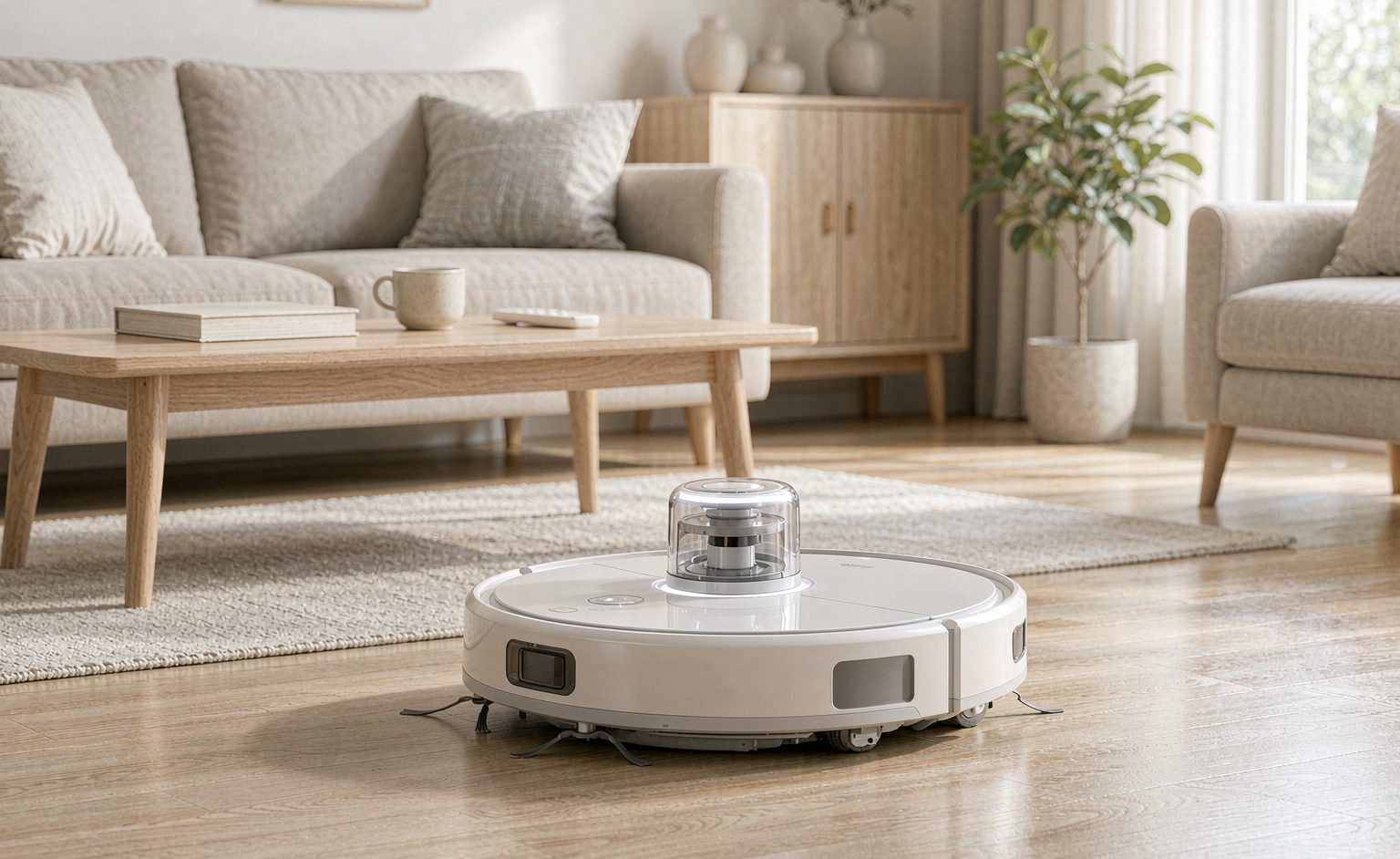
Robot vacuum navigation is the difference between a device that cleans methodically and one that bumbles. The two dominant approaches are LiDAR (laser ranging) and camera-based vSLAM (visual simultaneous localization and mapping). They produce similar maps but behave differently in the dark, around glass, and on price. This guide compares them on accuracy, lighting, cost and mapping, and explains how to choose.
Những điểm chính
- LiDAR ranges with laser; camera vSLAM maps from visual features — both build room maps.
- LiDAR works in the dark and is robust to low texture; camera needs light and struggles with plain walls/glass.
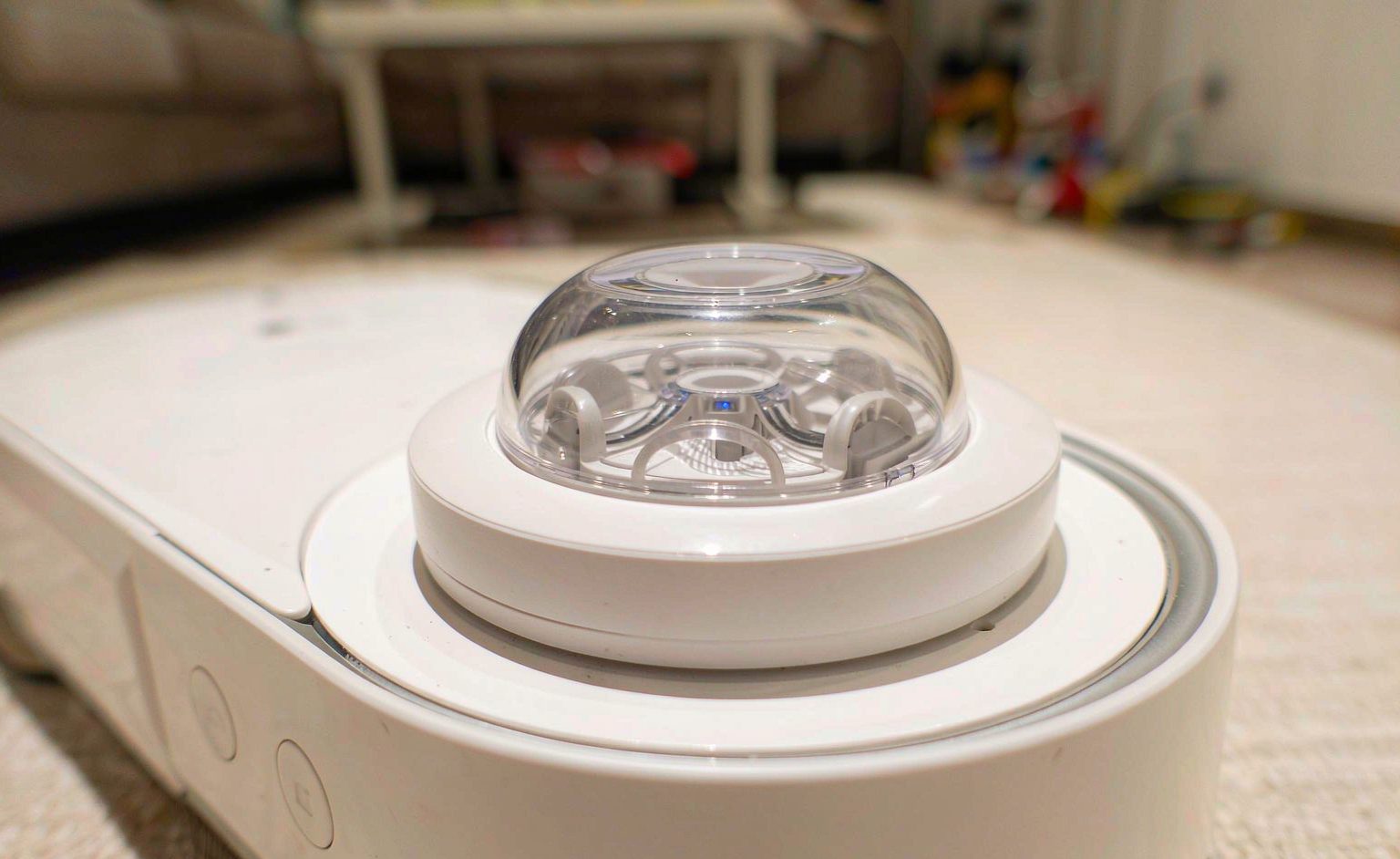
- Camera systems are usually cheaper and lower-profile; LiDAR adds a turret or module.
- Mapping quality matters more than the sensor for everyday cleaning.
- Pet homes benefit from strong suction plus good navigation, not sensor brand alone.
How Each System Navigates
LiDAR spins or fires a laser to measure distances and builds a precise map independent of light. Camera vSLAM uses one or more cameras to track visual features and infer position. Both localize and map simultaneously, but their failure modes differ: LiDAR is blind to nothing lit, while camera systems degrade in darkness and on featureless surfaces. The basic operation is in our how-robots-work guide, and the case for owning one is in why invest.
| Dimension | LiDAR | Camera vSLAM |
|---|---|---|
| Light need | None (active laser) | Needs ambient light |
| Dark rooms | Robust | Kém |
| Glass/featureless | Mịn | Struggles |
| Chi phí | Cao hơn | Lower |
| Profile | Turret/module | Low and slim |
Accuracy and Mapping
Both produce room maps that enable no-go zones, room naming and efficient paths. LiDAR’s distance data is typically more consistent; camera vSLAM can be excellent in well-lit, textured homes and marginal in dark or minimalist ones. For most buyers, the map’s usefulness — not the sensor — drives satisfaction. The pet-hair angle, where navigation must handle obstacles, is in our pet-hair list.
Cost and Form Factor
Camera systems are cheaper to build and let the robot stay slim; LiDAR adds a turret or side module and cost. The full buyer framework — balancing sensor, suction and price — is in our buyers guide.
Những Câu Hỏi Thường Gặp
Loài nào đi lại giỏi hơn trong bóng tối?
LiDAR — it uses active laser and does not need light; camera vSLAM needs ambient light.
Is LiDAR worth the extra cost?
For dark homes, glass-heavy rooms or consistent mapping, yes; bright textured homes may do fine with camera vSLAM.
Do both make maps?
Yes — both enable no-go zones, room naming and efficient paths; quality varies more than the sensor type.
Why does my camera robot get lost?
Plain walls, glass or low light remove the visual features it tracks; LiDAR avoids this.
Does navigation matter more than suction?
For coverage, yes; but pet homes need both good navigation and strong suction.
Are slim robots always camera-based?
Usually — slim profiles favor camera systems; LiDAR typically needs a turret or module.
Technical background: LiDAR, SLAM và robotic vacuum cover the concepts.