




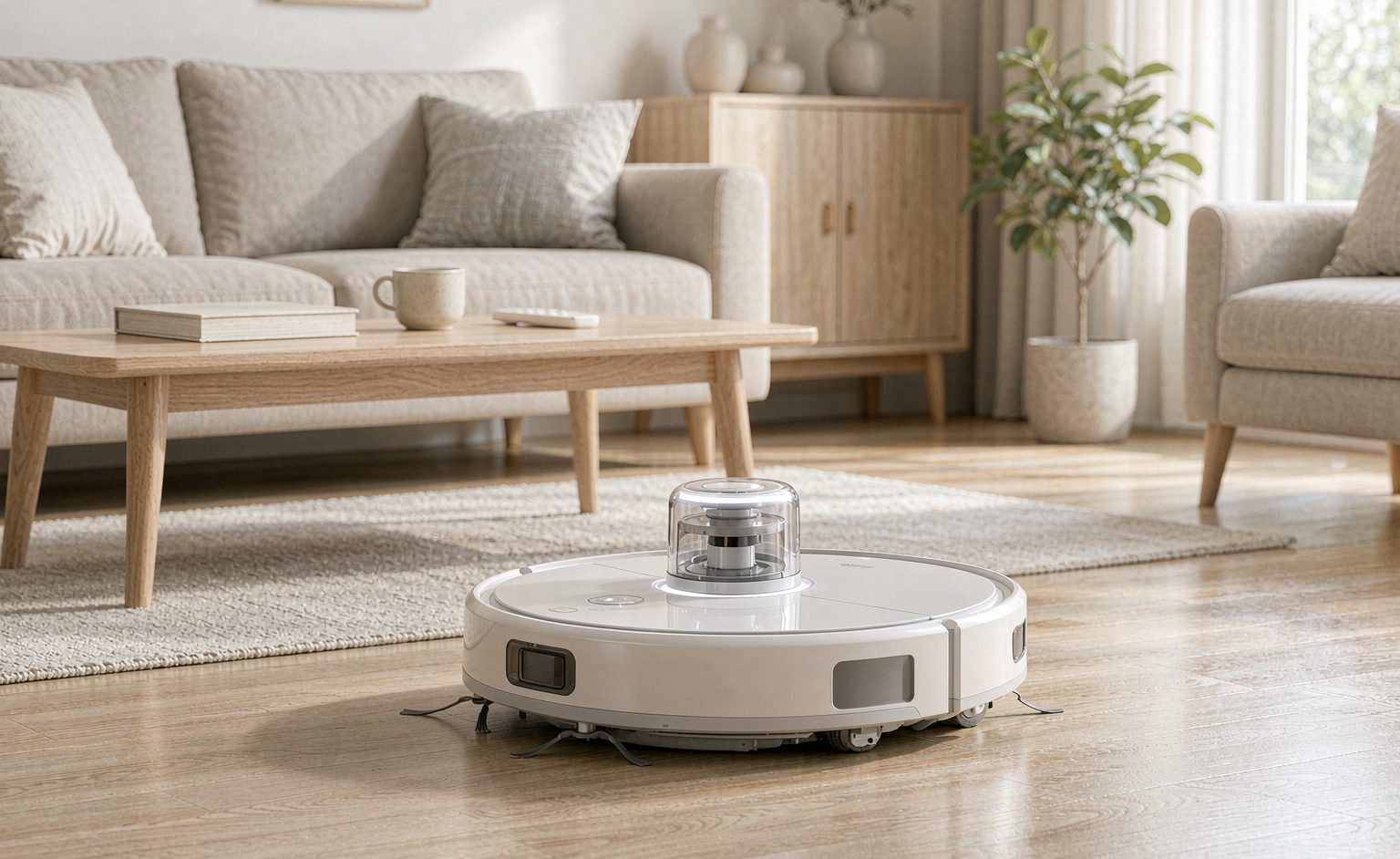
Navigation is the largest single cost driver in a robot vacuum and the largest single differentiator in how it sells. A random-bounce unit and a LiDAR-mapping unit look similar on a spec sheet and behave nothing alike in a customer’s home — and the gap shows up in reviews, return rates and the price a brand can command. For OEM and ODM programs, the navigation choice determines the bill of materials, the software roadmap and the market positioning. This guide compares the three navigation architectures and what each means for a private-label program.
The Three Architectures
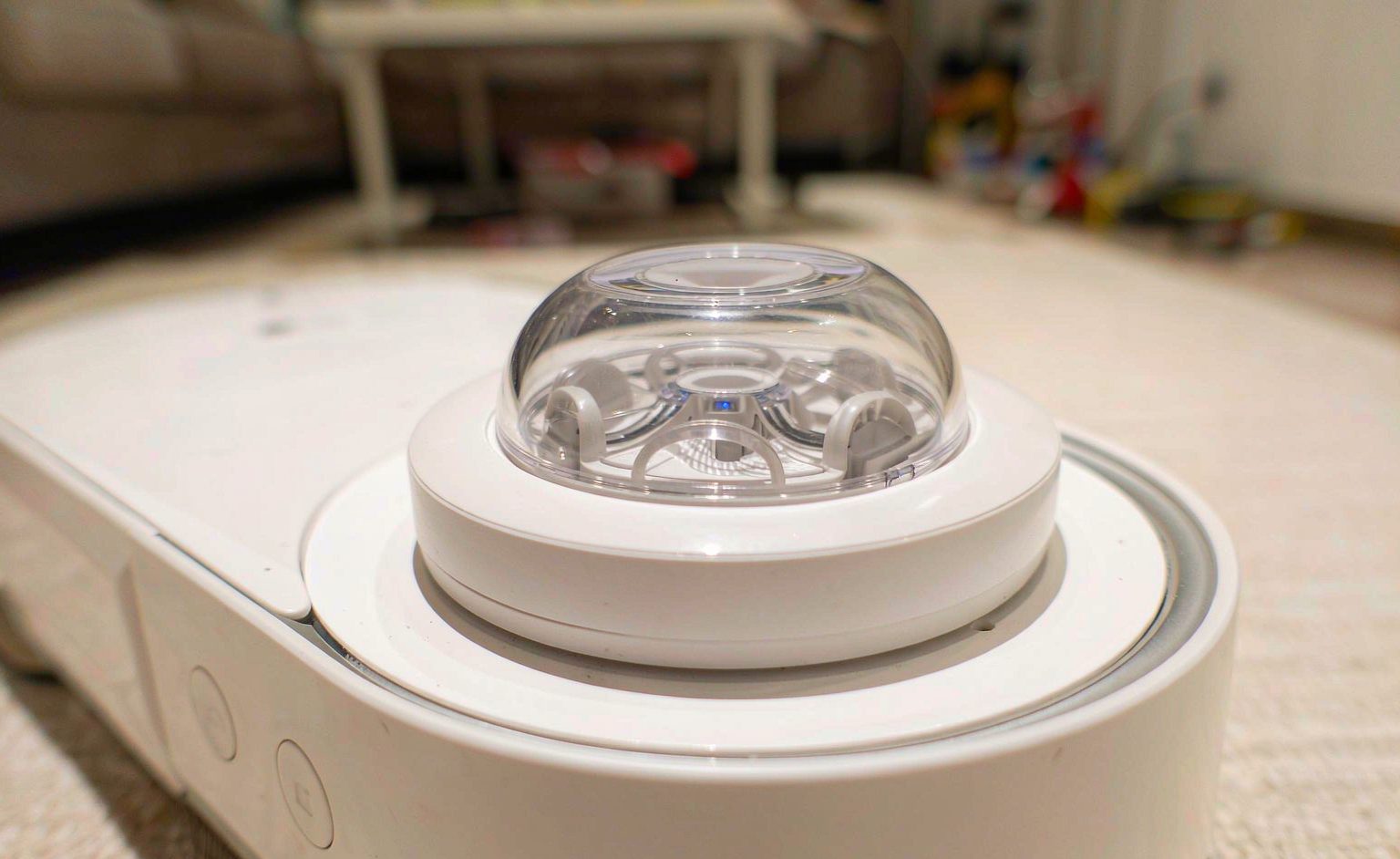
Robot vacuum navigation divides into three families, and the market has largely consolidated around the first two. Random navigation bounces off obstacles and relies on coverage statistics; it is cheap, unpredictable and increasingly hard to sell. Camera-based navigation (VSLAM) uses a downward or forward camera to identify features and build a map; it sees furniture types and can recognise obstacles semantically, at the cost of sensitivity to lighting. LiDAR navigation spins a laser rangefinder to measure distances and build a precise geometric map; it is lighting-independent and accurate, at the cost of the sensor’s price and its physical bulge.
| Architecture | How it maps | 強度 | Weakness |
|---|---|---|---|
| Random / bumper | No map; bounce and coverage statistics | Very low cost | Long clean times; misses; poor reviews |
| Camera (VSLAM) | Feature tracking via camera | Semantic recognition; low sensor cost | Fails in darkness; privacy questions |
| LiDAR (LDS) | Laser distance scanning | Accurate, lighting-independent, fast mapping | Sensor cost; turret height |
A fourth approach — hybrid LiDAR plus camera — has become the premium configuration, combining geometric mapping with object recognition, and it is where the segment’s software differentiation now lives. The underlying travel and sensing technology that all these share is covered in our analysis of robot vacuum travel and technology.
What Each Architecture Means for a Program
For OEM buyers, the navigation choice cascades through the whole program. Random navigation programs compete on price in a segment where reviews punish unpredictability; they work for gift-tier and emerging-market positioning where the alternative is manual vacuuming. Camera programs offer mid-tier positioning with richer features — obstacle avoidance, room recognition, targeted cleaning — but carry the darkness limitation and the privacy optics that some markets dislike. LiDAR programs carry the highest bill of materials but the strongest reviews, because mapping accuracy converts directly into the customer-visible metrics: coverage, clean time and the ability to clean a named room.
| Program factor | Random | Camera | LiDAR |
|---|---|---|---|
| BOM position | Entry | Mid | Premium |
| Software complexity | 低 | 高 | 高 |
| Differentiation potential | Minimal | Feature-rich | Feature-rich + accuracy |
| Review risk | High (coverage complaints) | Moderate (darkness complaints) | 低 |
| Manufacturing partner needs | Basic | Software capability | Software + sensor integration |
The manufacturing implications are detailed in our robot vacuum contract manufacturing guide, and the OEM-specific considerations in our robot vacuum OEM production guide. The partner question is decisive: camera and LiDAR programs live or die on the factory’s software team, and a brand buying the hardware without the software roadmap is buying a spec sheet, not a product line.
Evaluating a Navigation Demo
Navigation claims are easy to make and easy to test. The evaluation protocol that separates real capability from demo theatre: run the unit in a real home layout, not a showroom, and measure coverage — the percentage of accessible floor actually cleaned, which is the metric customers experience. Test in low light for camera systems, because that is their failure mode. Test mapping speed and accuracy for LiDAR systems, including how the map handles a moved sofa. And test the failure recovery: drop a sock on the floor, and see whether the unit routes around it or spends ten minutes pushing it.
Two questions consistently reveal a factory’s depth. First: which cleaning scenarios does the software prioritise, and how is the coverage algorithm tuned — a factory that describes its coverage tuning in percentages and edge cases has done the work. Second: what is the update cadence for the navigation software after launch, and who owns it — because navigation is a software product that ships in hardware, and the post-launch roadmap is where the category is actually won. The consumer-facing selection criteria that these capabilities ultimately serve are in our robot vacuum buyer’s guide.
經常問的問題
Is LiDAR worth the cost premium?In most markets, yes — the mapping accuracy converts directly into the reviews that drive the category, and the premium tier is where the margin sits. The exception is entry positioning, where random navigation still clears a price floor.
Can camera navigation work in dark rooms?Poorly, which is its defining limitation; units compensate with infrared illumination, but that changes the privacy and cost picture. Ask specifically about low-light behaviour.
What software questions should an OEM buyer ask first?Who owns the navigation software after launch, what the update cadence is, and whether the factory or the brand controls the roadmap — these three answers decide whether the product improves or stagnates in year two.
Technical background: {{OUT:https://en.wikipedia.org/wiki/Lidar|LiDAR sensing}}, {{OUT:https://en.wikipedia.org/wiki/Simultaneous_localization_and_mapping|SLAM and mapping}} and {{OUT:https://en.wikipedia.org/wiki/Robotic_vacuum_cleaner|robotic vacuum design}} cover the technologies referenced above.