



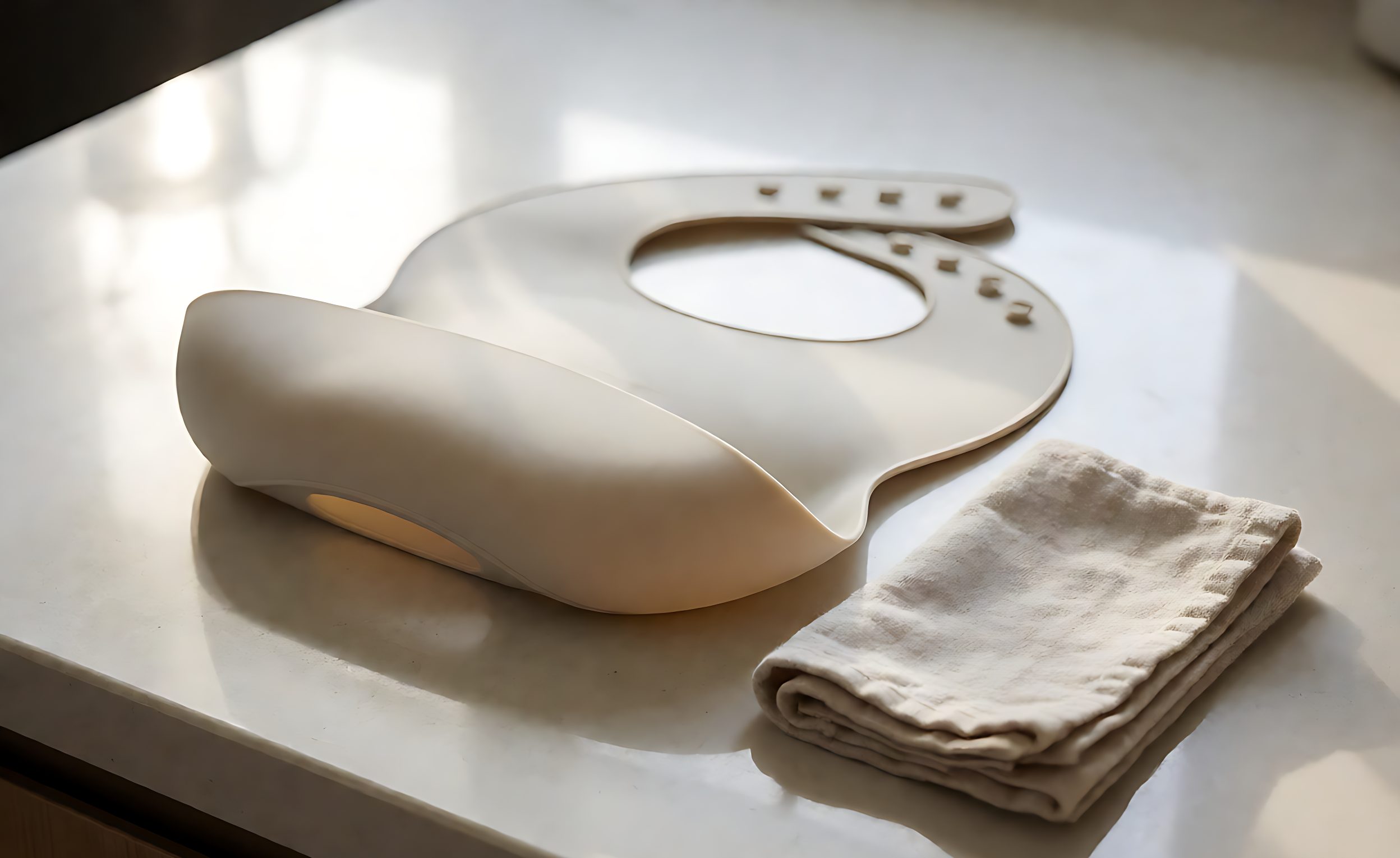
A bib is the one children’s product bought with the expectation that it will be ruined daily and must nevertheless look acceptable at the next meal. Parents do not evaluate a bib on how it photographs; they evaluate it on whether tomato puree wipes off, whether the pocket holds what it caught, and whether it still smells clean after a week of use. For a buyer specifying a bib programme, cleanability is the product.
The category is unusually sensitive to exaggeration. Wipe clean, dishwasher safe and stain resistant are claims a customer tests within the first hour of ownership, on the worst stain a toddler can produce. A specification that ties each claim to a test is the difference between a repeat-buying SKU and a returns problem.
Silicone, TPU or Coated Fabric
Silicone is a common option for premium bibs and can be easy to wipe clean, but cleaning, dishwasher and steriliser performance varies with the formulation, surface and finished design. Test the actual decorated SKU under the use conditions named on the label. Compare weight, neck fit and surface feel with a production sample rather than assuming all silicone grades behave alike.
Coated fabric bibs, usually a polyester face with a waterproof film backing, are light, soft, quiet and cheap. They wipe well for a while and then the coating crazes with repeated washing, at which point liquid reaches the fabric and the bib becomes a sponge rather than a barrier. Flexible TPU film sits between the two: lighter than silicone, genuinely waterproof and quieter in use, but prone to permanent creasing if folded for packaging and easier to puncture.
- Silicone – best cleanability and lifespan, heaviest, and grade-sensitive for tackiness.
- Coated fabric – lightest and cheapest, with a lifespan set by coating fatigue.
- TPU film – light and waterproof, with creasing and puncture behaviour to verify.
The Food Catcher Pocket
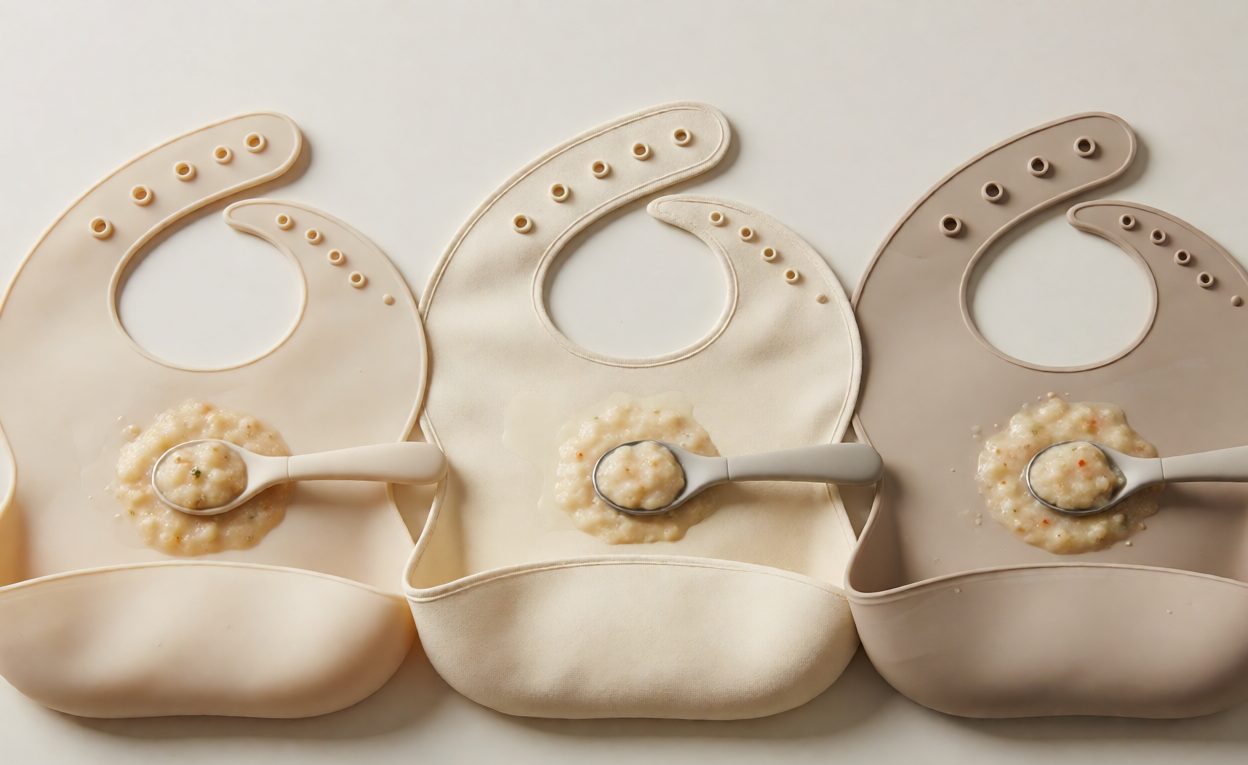
The pocket is the feature that turned bibs from a fabric accessory into a moulded product, and it is worth specifying properly. A useful pocket is formed by a stiffened lip that stands away from the body so food falls into a channel; a useless one is a flat fold that closes as soon as the child leans forward and dumps its contents onto the lap.
Pocket stiffness is the first decision – it must hold its open shape through washing, drying and folding, which usually means a thicker section or a moulded reinforcement rather than a simple turn-back. Depth and mouth width follow the age band: a shallow pocket suits a six-month-old being spoon-fed, while a self-feeding toddler needs depth and a wide mouth to catch what misses. Test the pocket loaded, because that one observation settles more design arguments than any drawing review.
Cleanability: What to Test, Not Just Claim
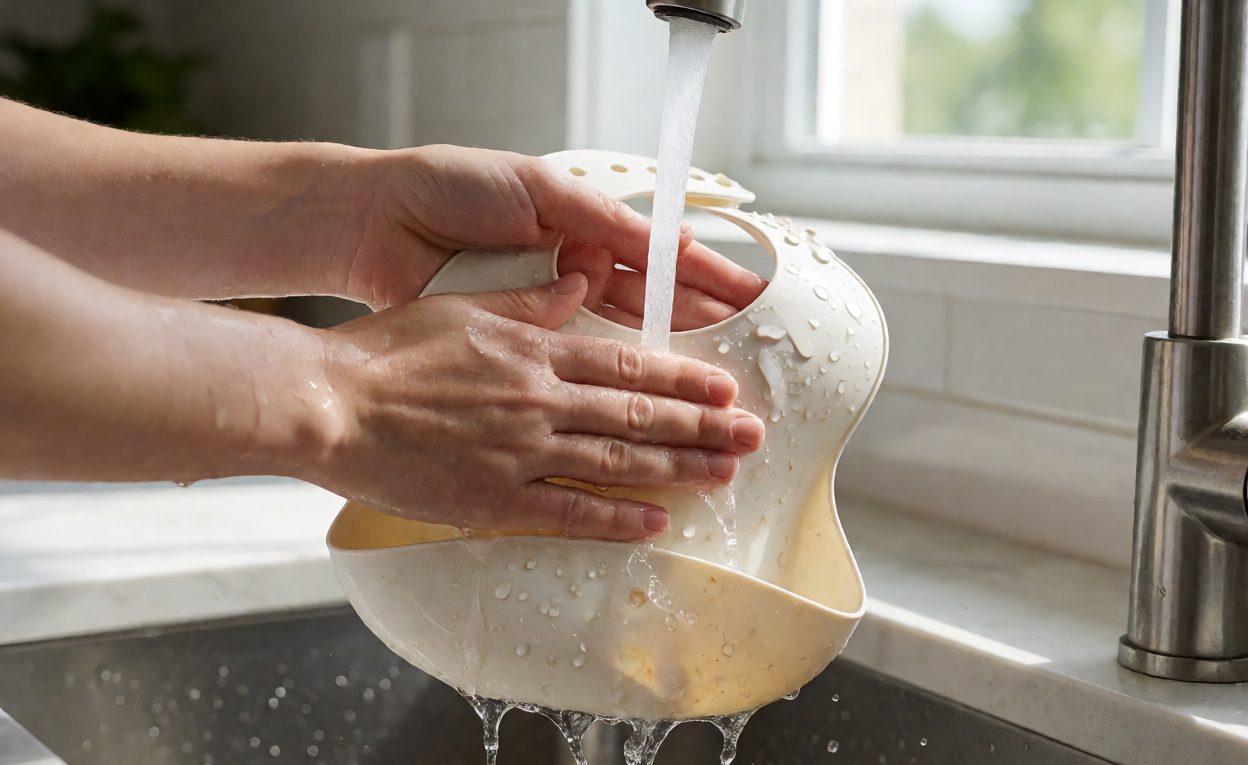
Cleanability is measurable if the buyer insists on measuring it. The standard protocol is short: apply representative stains – a tomato-based puree, a carrot or sweet potato puree, a berry puree and an oil-based food – leave them for a defined dwell time, wipe with a damp cloth, and inspect immediately and again after twenty-four hours. The second inspection is the one that matters, because delayed staining is what customers complain about.
Then repeat after washing. A bib that wipes clean when new and stains after thirty dishwasher cycles is a common and avoidable failure, usually caused by a surface that roughens slightly with detergent and heat. Specify the cycle count the claim must survive, and test the finished decorated article rather than a plain sample, since print and trim degrade first.
Neck Closure, Sizing and Age Banding
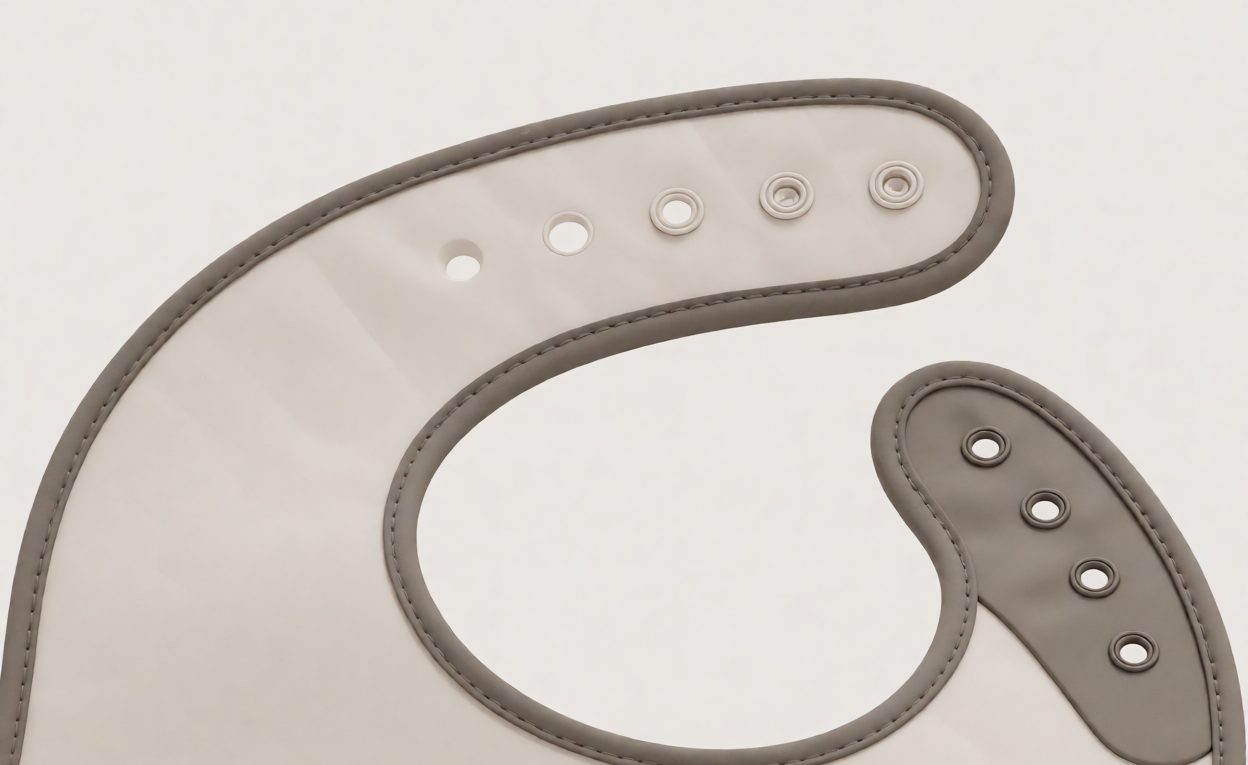
The closure is where bibs fail mechanically. Snaps moulded into a silicone or TPU band are durable and adjustable but need reinforcement at the moulded hole, which is where tearing starts. Hook-and-loop is quiet and infinitely adjustable but collects food and lint and eventually stops gripping. A slip-over opening has no hardware to fail but limits adjustability and can feel tight on larger babies.
Sizing should follow an age band stated as a weight or age range rather than a single age. A bib for six months and up needs a smaller neck opening and a shallower pocket; a toddler bib needs a longer body covering more of the chest. Check coverage width too, since a narrow bib leaves sleeves and lap exposed, which is precisely the complaint parents write about.
Odour, Staining and Dishwasher Reality
Odour is the quiet failure of waterproof bibs: residue trapped in a seam, a pocket fold or a snap recess sours, and the bib smells even when it looks clean. Fewer seams, no fabric layers and drainable geometry prevent most of it, and an odour check after a defined number of use-soil-wash cycles catches the rest.
Staining has a merchandising dimension. Pale bibs sell beautifully and stain visibly, so a range that leads with white should carry a verified stain-resistant surface treatment, and many programmes sensibly lead with mid-tone colourways. On dishwashers, a genuinely dishwasher-safe bib should say so and survive a stated top-rack cycle count; one that is not should simply say wipe clean. Both are sellable, and the claim that is not sellable is the one that fails.
Certifications and Labelling
Whether a bib or its pocket falls under food-contact requirements depends on the product’s intended use, design and destination-market rules; do not treat the pocket’s likely contact with dropped food as a legal classification by itself. Ask a qualified compliance lab to confirm scope, then keep the material and test evidence linked to the finished SKU. Review colour changes when they alter the formulation or evidence scope, and substantiate any BPA-, phthalate- or PVC-free claim for the parts and limits it names. The FDA’s component-level guidance và những EU framework illustrate why market and intended use matter.
Labelling should carry the age band, the cleaning instructions as tested, and any limitation the testing revealed – no machine washing, top rack only, do not fold. A bib whose label matches its tested behaviour generates far fewer complaints than one whose label was written by the marketing team.
Bối cảnh kỹ thuật
Specify the exact bib material and construction, then evaluate wiping, washing, drying, and repeated-use behavior under the care instructions that will appear on the product. Confirm material and food-contact requirements for the intended market and use rather than relying on a generic material-family claim.
Related Feeding Programme Decisions
Bibs are usually specified alongside bowls and spoons; review each product’s material evidence for its own intended use and market. Related buyer guides cover silicone feeding sets, children’s tableware sourcing, dinnerware set composition và tableware material trade-offs. Check bib folding and pack fit on the finished SKU before artwork approval.
Những Câu Hỏi Thường Gặp
Which bib material cleans best?
Silicone can be easy to wipe clean, but verify dishwasher or steriliser claims on the finished bib under the stated conditions; the material name alone does not establish performance.
How should cleanability be tested?
Apply representative stains, dwell, wipe, inspect immediately and again after twenty-four hours, then repeat the whole sequence after washing cycles.
Why do coated fabric bibs stop working?
The waterproof coating crazes with washing, so liquid reaches the fabric and the bib becomes absorbent instead of waterproof.
What makes a catcher pocket useful?
A stiffened lip that stays open when the child leans forward, with depth matched to the age band. Test it loaded.
Which neck closure lasts longest?
Reinforced moulded snaps. Hook-and-loop grips well but collects food and lint and eventually stops holding.
Why do bibs develop an odour?
Residue trapped in seams, pocket folds or snap recesses sours. Fewer seams and drainable geometry prevent most of it.
What documentation should a bib programme carry?
A market-specific assessment of applicable food-contact requirements, evidence covering the actual SKU and substantiation for any BPA-, phthalate- or PVC-free claim; cleaning instructions should match finished-product testing.