



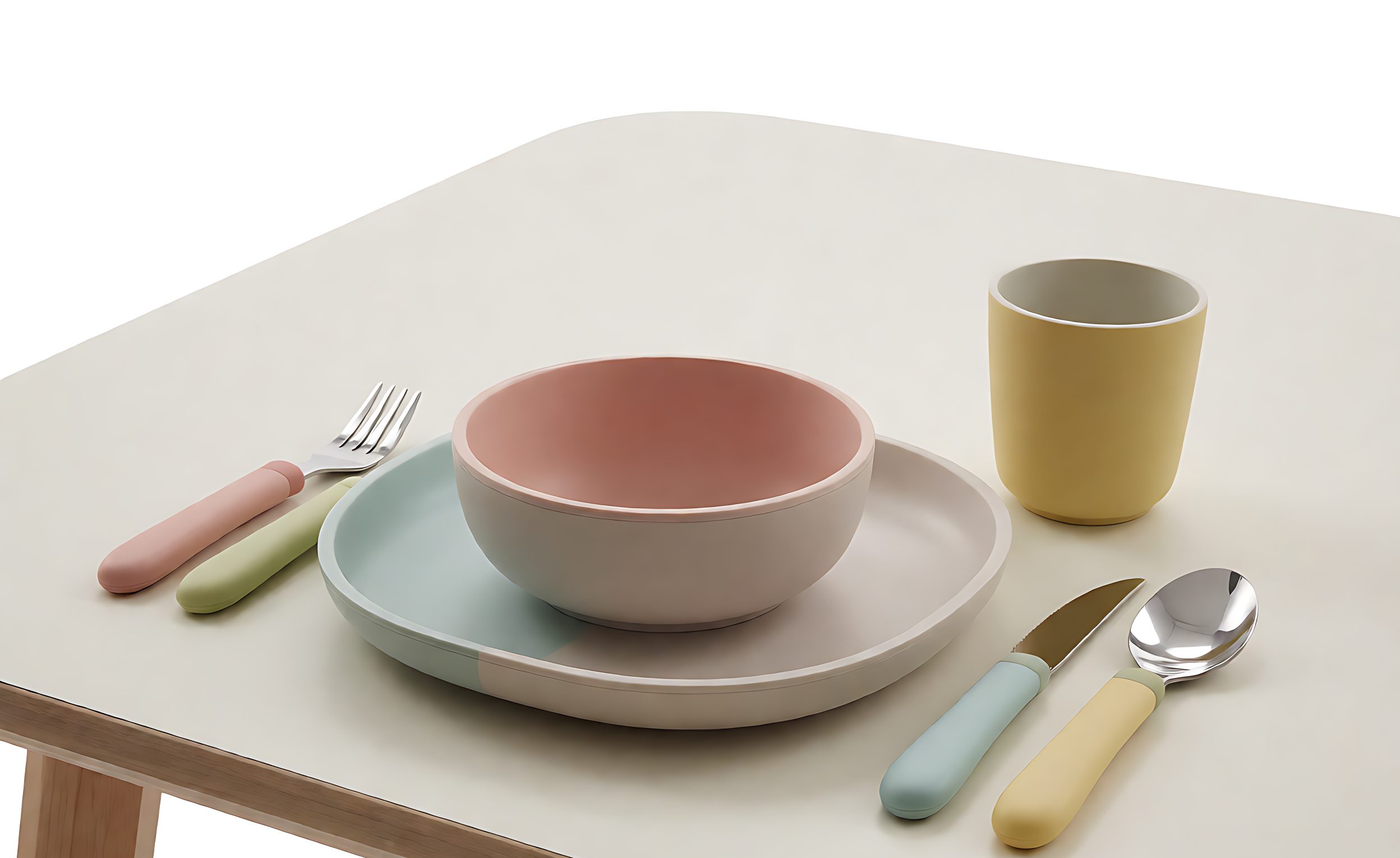
A children’s dinnerware set is sold as a solution, not as a bowl. What the buyer is really defining is an age band, a feeding stage and a price point, and the piece count follows from those rather than the other way round. Getting that order wrong produces a set that is technically fine and commercially awkward: too many pieces for the price, or too few for the shelf.
Packaging then decides whether the set reaches the shelf intact and whether the retailer can sell it without extra handling.

Define the Age Band First
Three stages dominate the category, and each implies different pieces:
- Early weaning: small bowls, often with a suction base, soft-tipped spoons, and a cup with handles or a spout. Portions are small and stability matters more than capacity.
- Toddler self-feeding: a plate with a raised or divided rim, a deeper bowl, a two-handled cup, and a spoon and fork sized for a small hand. Grip and spill containment are the design drivers.
- Older child: a conventional-looking set scaled down, often with a themed graphic. Durability and dishwasher performance start to matter more than feeding aids.
The age band also drives the safety requirements that apply, including the migration and mechanical tests appropriate to the group, and the warnings that must appear on the pack. That is a compliance matter rather than a design one, and it should be settled before artwork.
Piece Count and the Price Point
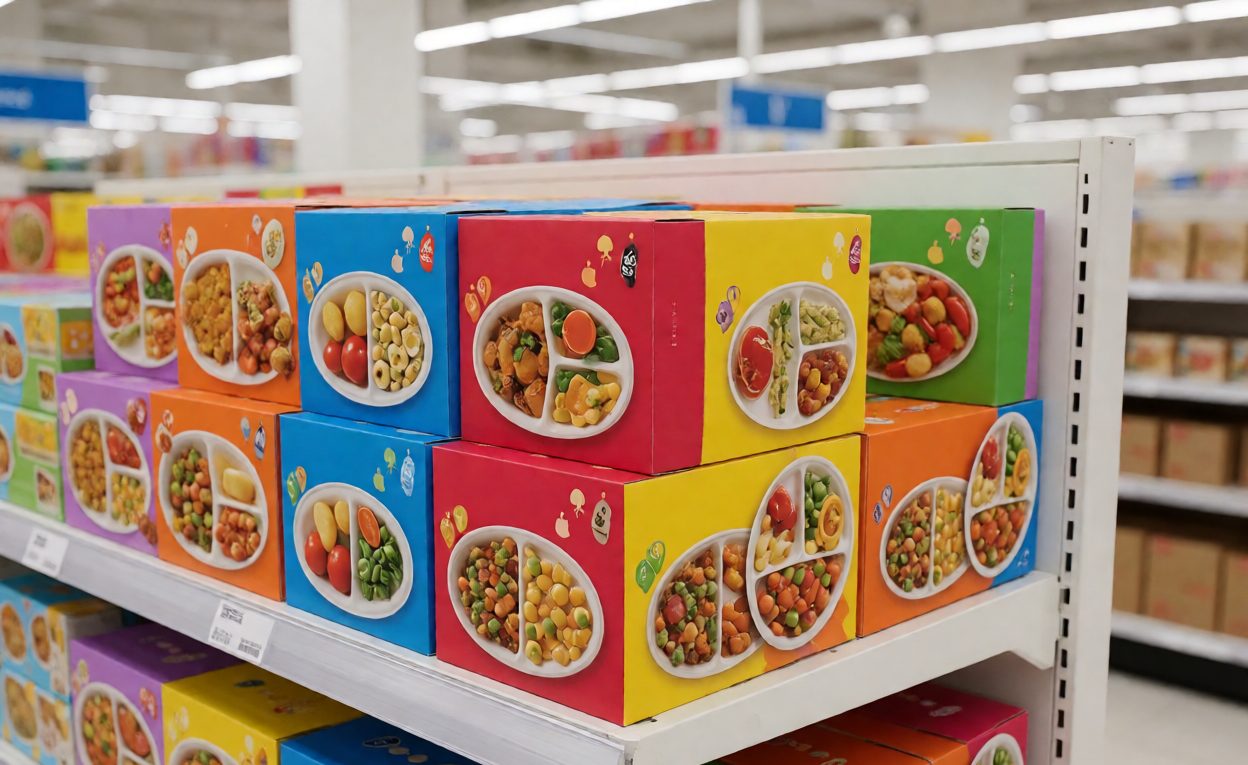
More pieces raise perceived value and raise cost, freight volume and the chance of a missing item. The practical approach is to build the set around the two or three pieces the stage genuinely needs, then decide whether one accessory justifies its place.
Divided plates and suction bases are the accessories that most consistently earn their cost because they solve a visible problem for the parent. Additional cups and lids are the ones that most often inflate the set without changing the purchase decision.
Storage and display deserve a thought too: sets that nest or stack neatly reduce both shelf footprint and the volume of the retail carton, which is worth money in freight as well as in shelf space.
Where a range spans price tiers, standardise the core pieces and vary the accessories. That keeps tooling and mould investment contained while giving the shelf a clear good-better-best story.
Pack Format by Channel
Three formats cover most programmes:
- Printed gift box: suits retail gifting and e-commerce, carries the brand story, and protects the pieces. The highest pack cost and the best shelf presence.
- Header card and film: cheaper, shows the product directly, suits value channels. Needs enough rigidity to survive handling without crushing.
- Plain shipper for institutional buyers: schools and care programmes want the pieces, not the pack, and a plain bulk carton is cheaper and easier to store.

Technical Background
Pieces in this category are overwhelmingly polymer, produced by đúc phun, with silicone used for soft tips and suction elements. The regulatory frame is food contact: materials must be assessed as food contact materials for the conditions of use. Retail identification and chargeback avoidance depend on the barcode being specified and verified rather than assumed.
Getting the Set Complete and Consistent
A missing piece is the most common complaint on a boxed set, and it is a packing problem rather than a moulding problem. Two controls prevent it: pieces counted into the pack by weight or by a fixed tray layout rather than by eye, and a sealed pack that makes a missing item obvious before it reaches the shelf.
Colour consistency matters as much as completeness. A plate from one batch and a bowl from another in matching colours that differ slightly reads as a fault to a customer buying a set, so sets should be assembled from matched production where colour is a visible feature.
Marking and Documentation
Age grading, feeding-stage claims, material identification, dishwasher and microwave suitability, and any warnings belong on the retail pack in the destination language. Compliance attaches to what the consumer receives, so the individual set matters more than the outer carton.
Keep the test evidence aligned with the pieces actually shipped: same material, same colourants, same manufacturing site. A set that gains a new coloured component after testing has changed its evidence base, and that is the gap auditors look for.
Material and safety background is covered in children’s tableware safety requirements and in ABS versus PP versus PC. Product development context is in consumer product development partners, surface and branding options in branding and surface finishes, and inspection practice in the AQL inspection guide.
Câu hỏi thường gặp
How many pieces should a children’s set have?
Enough for the feeding stage – usually three to five – with accessories added only where they solve a visible problem for the parent.
Which accessories earn their cost?
Divided plates and suction bases, because they address stability and portioning. Extra cups and lids often add cost without changing the purchase.
Which pack format is best?
Printed gift box for retail and gifting, header card for value channels, plain bulk carton for institutional buyers.
Where must compliance marking appear?
On the retail pack the consumer receives, in the destination language, not only on the outer carton.
Do new colours change the test evidence?
They can. Adding a coloured component after testing changes the evidence base, so re-check scope before shipping.
Should the range share core pieces?
Yes where possible: standardising the core and varying accessories contains tooling cost while giving a clear tier story.
What is the most common cause of retail chargebacks?
Barcode and marking failures on the retail pack, which are specification issues rather than product defects.