



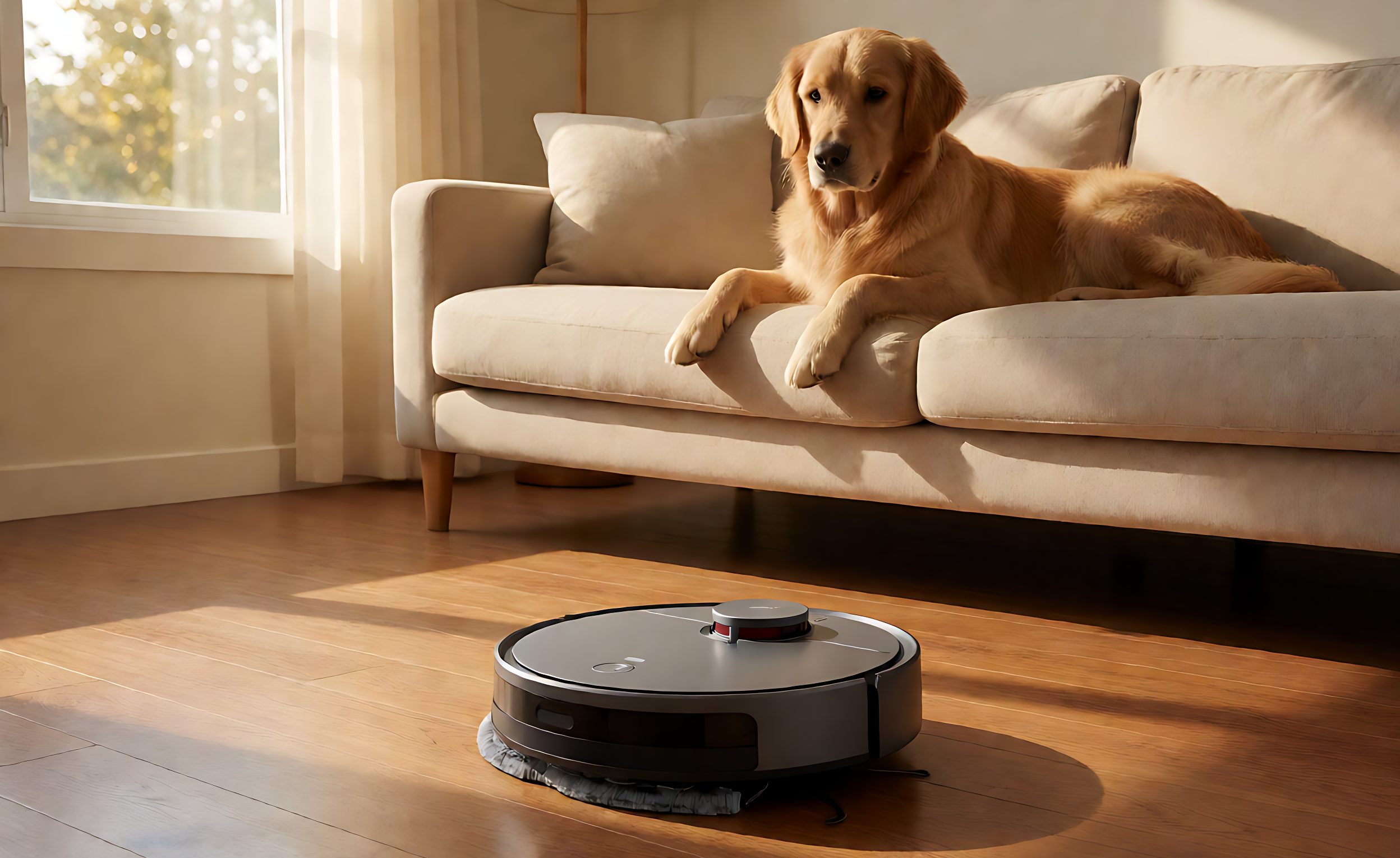
In a pet household, a robot vacuum that frightens the animals does not get used – it gets left in a cupboard, and an unused product is a refund, a review, and a lost repeat customer all at once. Noise is therefore not a comfort specification for this segment; it is the adoption specification. A machine with slightly weaker suction that the dog tolerates will outsell a louder, stronger one, because the customer can hear the difference every single day.
The difficulty for buyers is that noise numbers are easy to quote and hard to compare. Two machines with the same decibel rating can feel completely different in a living room, and the difference lies in how the number was measured and what the machine actually emits. Both belong in the specification.
What a Decibel Rating Does and Does Not Tell You
Vacuum noise is quoted in decibels, almost always A-weighted, which adjusts measurements toward what human ears are sensitive to. The scale is logarithmic, so a few decibels is a large perceptual step, and a rating measured a half-metre from the machine will read lower than the same machine measured at a metre. Without a stated measurement distance and test condition, a noise number is decoration.
Name the acoustic quantity in the specification. If reporting sound-pressure level, state the microphone position, operating mode, floor and room conditions; if reporting sound-power level, state the test method and do not label it as a value measured “at one metre”. For example, a product-specific claim could set an A-weighted sound-pressure limit at a fixed microphone position in standard mode on hard floor. Test quiet mode separately. A repeatable method matters more than a bare decibel number.
Loudness Is Not the Whole Story: Pitch and Character
Two machines at the same level sound different because of frequency content. A broad rushing noise reads as background; a tonal whine – often from a motor spinning at a fixed high speed – cuts through conversation, television and sleep, and humans and animals are both more sensitive to tones than raw level suggests. Some of the most common “it’s so annoying” complaints about vacuums are really about tonal character, not loudness.
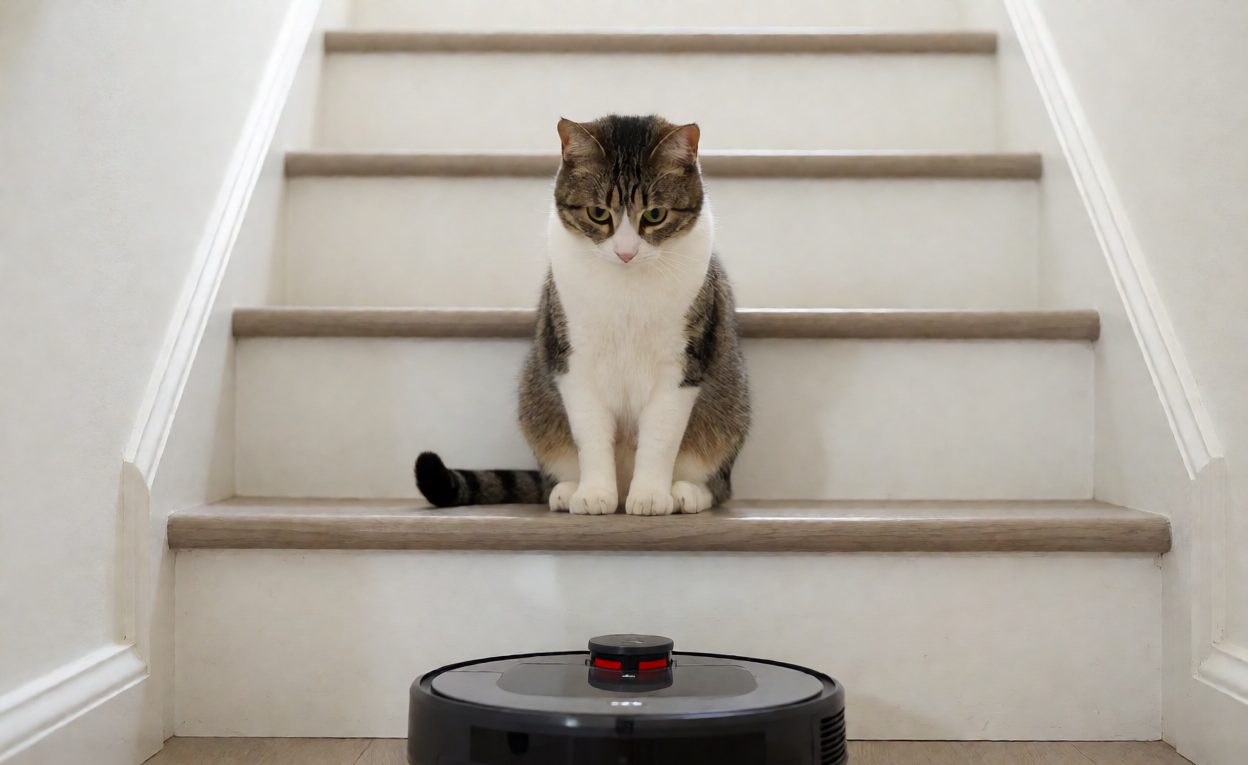
For pets, character matters even more. Sudden changes in noise – a motor ramping to max mode, a change of surface under the brushes – are what startle animals, more than steady background sound. A machine whose power steps are gradual, whose quiet mode is genuinely quiet, and whose route behaviour avoids repeated abrupt restarts will be tolerated by far more households than the same machine with aggressive mode switching.
- Specify tonal quality: require the noise spectrum in quiet and standard mode, not just the level, so dominant tones are visible before shipment.
- Specify the ramp: motor start-up and mode changes should be gradual rather than stepped.
- Specify the schedule default: a pet-household model should ship with quiet hours respected by default in the app.
Where Robot Vacuum Noise Comes From
Three sources, in rough order of importance. The suction fan dominates in maximum mode, and its noise rises steeply with airflow – which is why max-mode numbers are the worst numbers a machine has. The brush system adds mechanical and impact noise, and it is the source that grows with wear and with hair packing. And the drive and gearing system contributes rolling and gear noise on hard floors, which is what a pet lying on that floor hears most directly.
Pet-hair models carry a specific interaction: hair that wraps around a brush or spindle increases both mechanical drag and noise over time, and the machine that starts quiet and becomes loud by week six has a maintenance story as well as an acoustic one. Anti-tangle brush design and easy brush removal are noise-maintenance features, not only cleaning features.
Testing Before the Order: A Practical Protocol
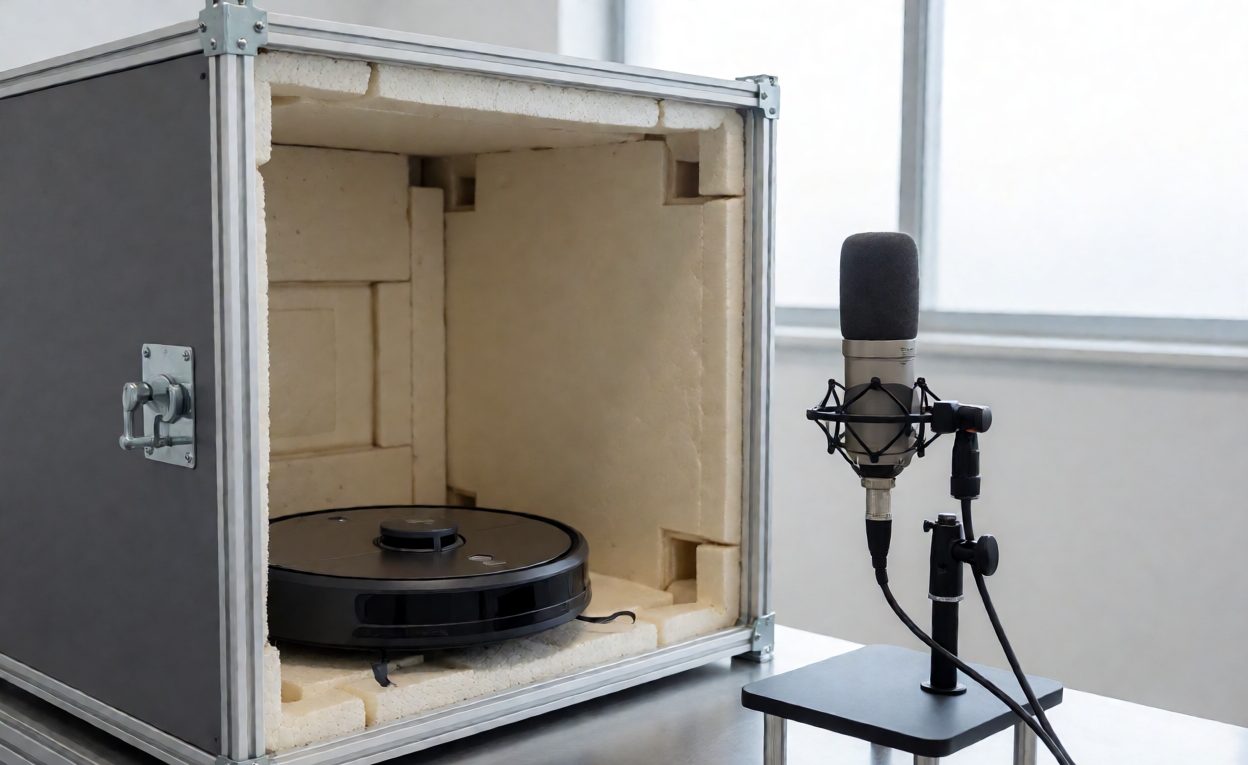
Use a calibrated sound-level meter and an agreed, repeatable protocol for supplier comparisons and published figures. A phone app can help with rough side-by-side screening when the same device, position and conditions are used, but it is not a substitute for comparable instrumented evidence. Measure quiet and standard modes on hard floor and carpet, record tonal whine or rattling as well as the level, and listen through a complete cleaning run.
Finally, test with animals if at all possible, or with the closest honest proxy: play the machine near a friend’s pet for twenty minutes and watch. Startle responses, repeated vigilance, or an animal that leaves the room and stays away are the real-world verdict that no decibel number reproduces. Products destined for the pet segment are worth that afternoon of fieldwork.
What to Specify on the Order
- Quiet-mode level: under a stated dB(A) at one metre on hard floor – this is the headline number for pet households.
- Standard and max levels: stated at the same distance and floor for honest comparison.
- Spectrum data: in both modes, to expose dominant tones before they become reviews.
- Ramp behaviour: gradual start-up and mode transitions specified as requirements.
- Wear behaviour: noise level after a defined runtime with pet hair, on the same measurement setup.
- App defaults: quiet hours and gradual power stepping enabled out of the box on pet SKUs.
Bối cảnh kỹ thuật
A-weighted decibel readings are useful only when the measured quantity and method are clear. Sound-pressure level changes with microphone position and the acoustic environment; sound-power level describes the source and is not a distance-specific reading. See the NIST discussion of noise-emission measurements. Instrument performance is addressed by IEC 61672-1 for sound-level meters; buyers still need a product-specific test protocol.
How Noise Fits the Pet-Model Programme
Noise should be assessed alongside cleaning performance, brush loading and runtime on the same production-equivalent unit. For brand-side release checks, see the private-label robot vacuum verification guide; customer-reported failure patterns are summarized in common robot vacuum issues.
Những Câu Hỏi Thường Gặp
Mức độ tiếng ồn mà mô hình hộ gia đình có thú cưng nên nhắm tới là bao nhiêu?
A quiet mode under roughly 60 dB(A) at one metre on hard floor, with the number stated and tested rather than implied.
Why do two vacuums at the same dB sound different?
Frequency content. Tonal whines cut through a room far more than broadband noise at the same measured level.
What actually startles pets?
Sudden changes – motor ramps, mode switches, restarts – more than steady sound. Gradual transitions matter as much as low level.
Does the max-suction number matter for pet models?
It matters for cleaning performance, but pets live with the quiet and standard modes, so those numbers should headline the pet SKU.
Why does a machine get louder after a few weeks?
Hair wrapping on brushes and spindles raises mechanical drag and noise; anti-tangle brush design is also a noise-maintenance feature.
How can I compare two candidates quickly?
For an informal screen, keep the same phone and app, microphone position, floor and operating mode; treat the result as a relative check only. Use a calibrated meter and an agreed method for supplier claims.
Can app settings reduce perceived noise?
Yes. Default quiet hours, gradual power stepping and fewer disruptive retries all reduce how intrusive the machine feels at home.