



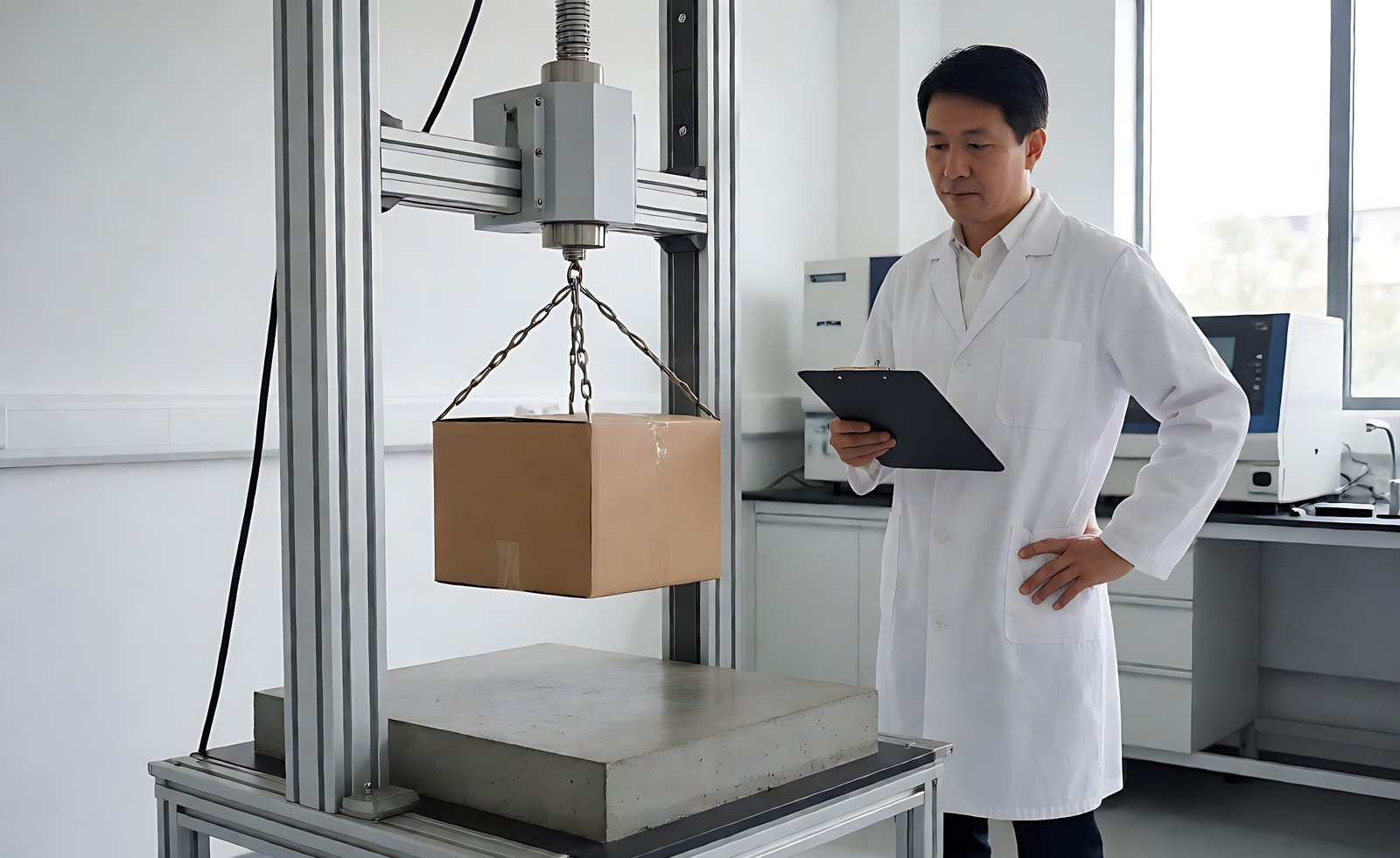
Most damage claims on moulded housewares are not manufacturing problems. The product was fine when it left the factory and cracked on the way, because nobody specified what it had to survive. Packaging was chosen by cost, cartons were stacked to a height nobody tested, and the failure appears at the customer’s dock where it is most expensive.
A drop and transit specification is cheap to write and cheap to test, and it converts a recurring argument into a pass or fail.

What to Test and at What Level
Three levels, each answering a different question:
- Bare product drop, which tests the moulding itself. Drop from a defined height onto a defined surface, in the orientations most likely to occur – flat face, corner and edge.
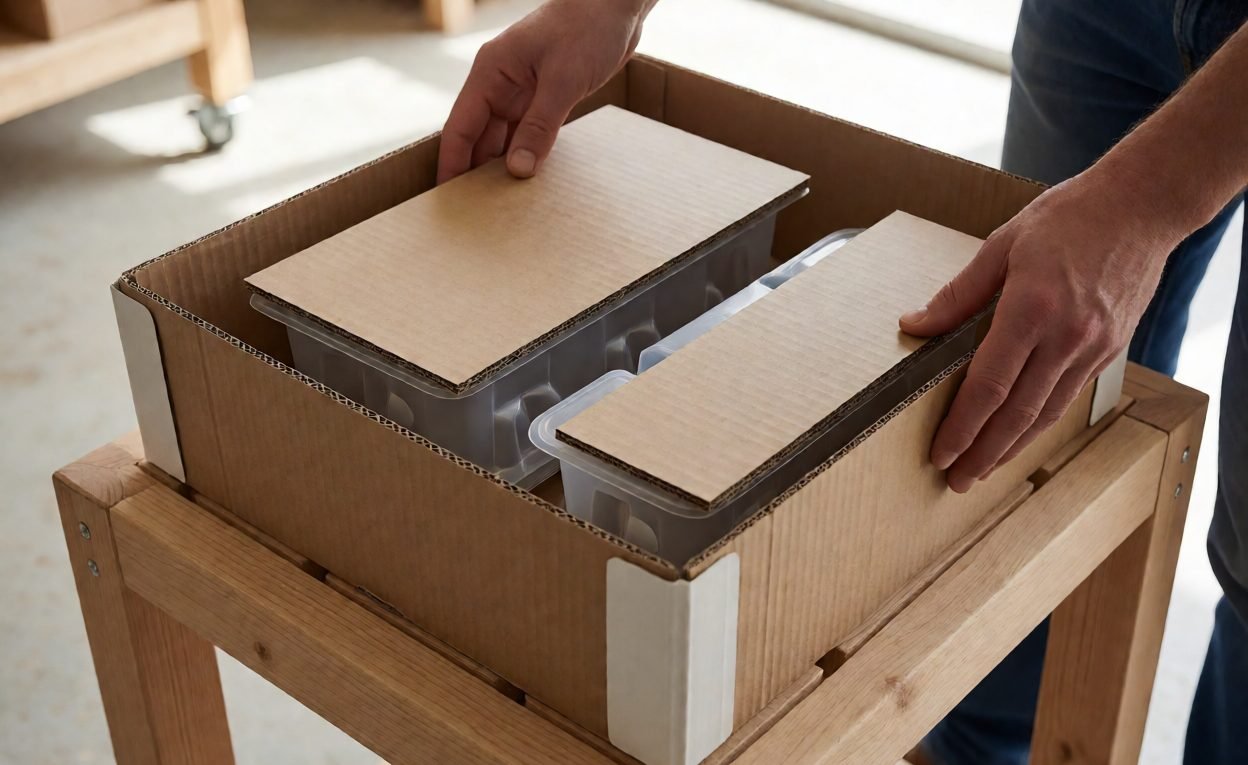
- Packed product drop, which tests the pack. The same sequence with the product in its retail packaging, because the pack is what actually takes the impact in distribution.
- Carton or pallet test, which tests the shipping configuration: drops on the carton, plus a compression or stacking check for how long it will sit in a container or warehouse.
The middle level is the one usually skipped, and it is where most real damage occurs. A product that survives bare may fail inside a rigid pack that concentrates load at one corner.

Setting Pass Criteria
“No damage” is not a criterion. Define what is acceptable: no crack visible without magnification, no functional loss, no detachment of components, and cosmetic marking within a defined area. Then state the sample size and the orientations.
Material matters here. A brittle grade fails by cracking at corners; a tough grade deforms and may be acceptable after a cosmetic mark. The criterion should reflect the material chosen, which is why material selection and damage specification belong in the same conversation.
Temperature matters too. A product shipped through a cold chain arrives colder and more brittle than it was tested at room temperature, and a specification that ignores service temperature will pass in the lab and fail in January.
Using Results Rather Than Filing Them
A failed drop test is useful information, not a rejected batch. Three responses, in order of preference: change the pack, since protective inserts and corner protection are cheap and effective; change the geometry, if a sharp corner or a thin rib concentrates stress; or change the material, if the grade is genuinely too brittle for the application.
Packaging changes are almost always the cheapest and fastest. A single insert or a better carton grade frequently converts a failing configuration into a passing one without touching the tooling.
Bối cảnh kỹ thuật
For vertical impact drop testing of complete, filled transport packages, ISO 2248 defines a method using predetermined conditions, drop height, and package attitude. It does not replace a separate test of the unboxed houseware itself; define product-level handling tests for the actual use and packaging configuration.
Stacking and Pallet Configuration
Damage in transit is often a stacking problem rather than a drop problem. Cartons crushed at the bottom of a pallet fail because the board grade was chosen for contents weight rather than for the compressive load of a full stack over weeks in a container. Specify carton grade against stack height and duration, and check the pallet pattern – an overhang or a misaligned layer concentrates load on a small area of the cartons beneath.
Re-test on any change to pack, carton or pallet configuration, and re-test when the product geometry changes. A specification that was met by an earlier configuration says nothing about the current one, and packaging changes are frequent enough that a standing re-test rule is cheaper than an investigation.
Writing It Into the Order
State the test level, drop height, surface, orientations, sample size, pass criteria and the temperature at which testing is performed. Then require the result with the shipment documentation, and keep the tested samples as reference.
Where damage still occurs in transit, the investigation should start from the specification rather than from the batch. If the product met a properly written drop specification and still arrived broken, the cause is usually how it was stacked or handled – which is a different fix and a different conversation.
Material behaviour is discussed in ABS so với PP so với PC và trong lựa chọn cấp nhựa, dimensional issues in moulding tolerances, defect background in common moulding defects, và phạm vi kiểm tra nằm trong hướng dẫn kiểm tra AQL.
Câu hỏi thường gặp
Chênh lệch giữa thử nghiệm rơi hàng trần và thử nghiệm rơi hàng đóng gói là gì?
Các bài kiểm tra trần đo thử khuôn; các bài kiểm tra đóng gói đo thử bao bì bán lẻ, vốn là thứ thực sự chịu lực va đập trong phân phối và là bài kiểm tra có giá trị thông tin hơn.
Is “no damage” a usable pass criterion?
Không. Xác định mức nứt, mất chức năng, lỏng hời các bộ phận và các vết đánh dấu thẩm mỹ, cùng kích thước mẫu và hướng của mẫu.
Why test at temperature?
Cold products are more brittle. Testing only at room temperature passes in the lab and can fail in winter distribution.
What is the cheapest fix for a failed test?
Usually packaging: inserts, corner protection or a better carton grade, none of which require tooling changes.
Does a tough material always survive better?
It deforms rather than cracking, which may be acceptable where a brittle grade’s crack is not – the criterion should match the material.
Should cartons be compression tested?
Yes, for stacking in a container or warehouse, because carton failure causes damage that no product test predicts.
What if compliant product still arrives damaged?
Investigate stacking and handling rather than the batch; that is a different cause and a different fix.