




When selecting materials for injection molding sample processing, there are several key requirements to pay special attention to. Let DAYIN Plastic’s editor guide you:
- High Corrosion Resistance: Many resins and additives can corrode the cavity surface, leading to metal erosion and peeling, which affects both the surface quality and the final plastic part. Therefore, it is recommended to use corrosion-resistant steel or to apply chrome or nickel plating on the cavity surface.
- Excellent Wear Resistance: The surface gloss and precision of plastic parts are closely related to the wear resistance of the mold cavity. This is particularly important when glass fibers, inorganic fillers, or pigments are added to certain plastics, as they flow rapidly through the runners and mold cavities, potentially causing surface wear. If the material lacks good wear resistance, the quality of the plastic parts will be compromised.
- Good Dimensional Stability: During the plastic molding process, the mold cavity temperature often needs to reach above 300°C. Therefore, it is best to choose properly tempered tool steel (heat-treated steel) to avoid changes in the microstructure of the material that could cause dimensional changes in the mold.
- Ease of Processing: Mold components are mostly made of metal materials, and some have complex structural shapes. To shorten production cycles and improve efficiency, the mold material selected should be easy to process to meet the required shape and precision as per the design specifications.
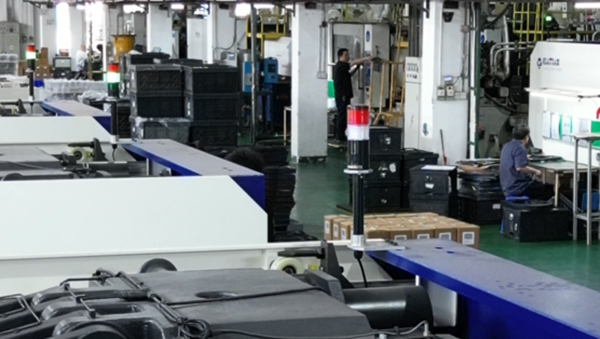
Good Polishing Performance: Plastic parts often require excellent gloss and surface finish, so the cavity surface’s roughness needs to be minimal. This necessitates selecting steel that is free from rough impurities and pores to facilitate subsequent polishing and grinding processes.
Minimal Impact from Heat Treatment: To enhance mold hardness and wear resistance, plastic molds generally require heat treatment; however, this treatment should ideally minimize dimensional changes. Therefore, it is recommended to use pre-hardened steel that can be easily machined.
DAYIN Plastics Co., Ltd. has specialized in mold manufacturing for 30 years. As an injection molding contract manufacturer, DAYIN provides comprehensive OEM/ODM services. The company excels in product structure optimization to reduce injection molding costs, supported by a full product design and manufacturing team to deliver high-quality design services. Equipped with advanced mold processing equipment and extensive mold-making experience, DAYIN offers diverse plastic product manufacturing services. With a 50,000-square-meter production base, 30 years of mold development experience, over 50 R&D personnel, and more than 100 injection molding machines, DAYIN is committed to providing efficient services to its clients.
Six Essentials of a Meaningful Mold Trial
A mold trial proves things only if designed to. The six essentials:
| Essential | What it proves | Skipped trial finding |
|---|---|---|
| Written shot plan | Behaviour traced to variables | Parts without lessons |
| Production resin, dried and logged | Results transfer to production | Good trial, failing launch |
| Instruments staged | Dimensions measured, not judged | Opinions at the press |
| Short-shot sequence | Fill pattern visible stepwise | Hidden flow problems |
| Both parties present | Decisions made in the room | Weeks of email archaeology |
| Signed acceptance criteria | Pass or fail is pre-defined | Endless re-trial debates |
The acceptance-criteria row is the trial’s constitution: dimensions, cosmetic classes and cycle time defined and signed before the first shot — because criteria written after seeing parts are negotiations, not criteria. The presence row is calendar engineering: both parties in the room converts observations into decisions on the spot, and trials that defer decisions to email chains routinely re-run at full trial cost. The short-shot sequence is the diagnostic dividend — stepped fills show where flow hesitates, and one thirty-minute sequence teaches more about the tool than a week of full-shot sampling. Trials built on these six essentials end with three artifacts: parts, data and a decision — and the decision is the one that matters. The preparation checklist is in debugging preparation, and the schedule context in on-time completion. Reference: validation practice and trial process.