



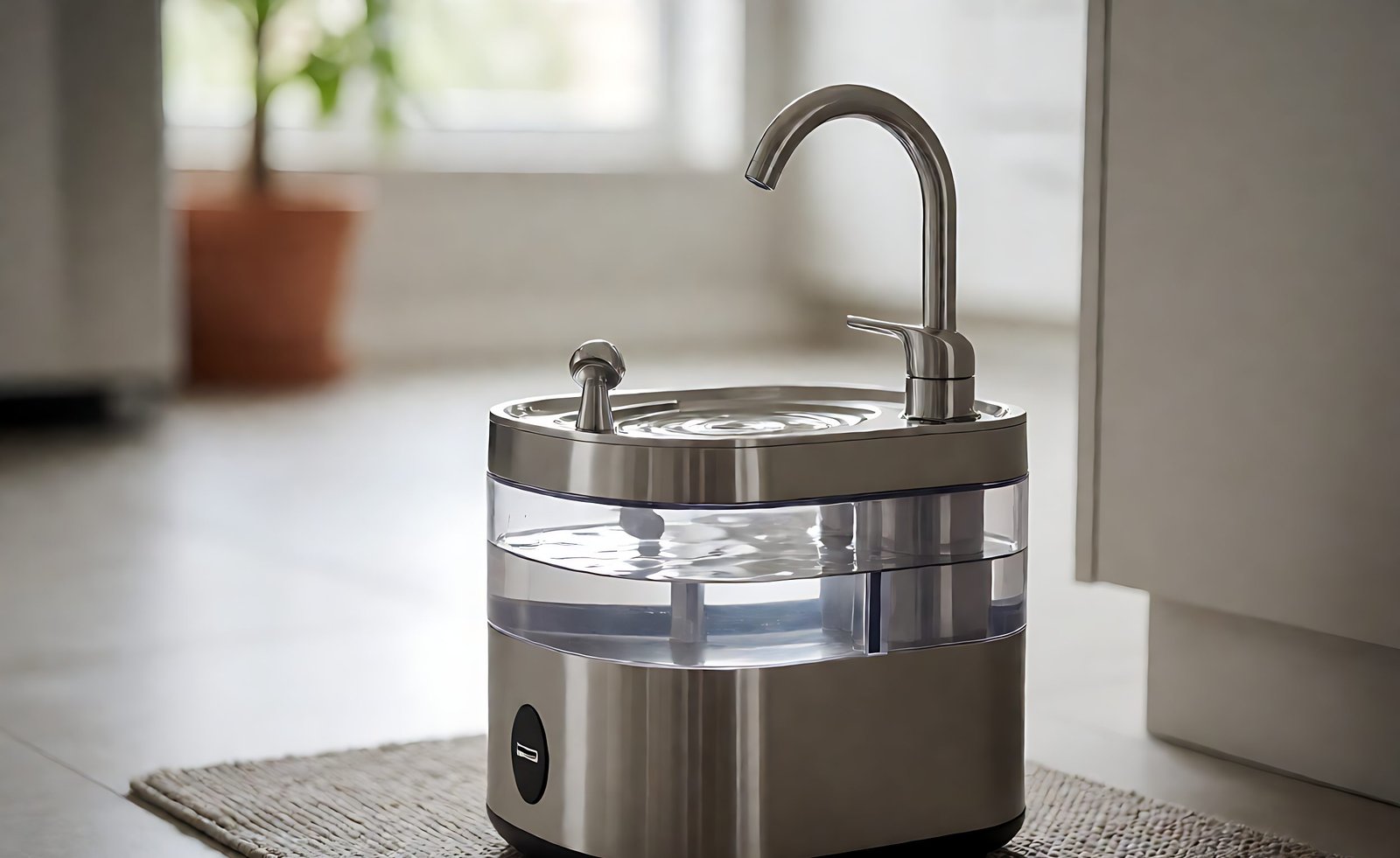
For a private-label pet water fountain, specify the filter, pump, reservoir and spout as one operating assembly. A media label or a pump maximum-flow figure alone does not show how the finished fountain performs. In the RFQ, name the product claims that matter and agree how each will be checked on the production-intent model.
Use the same cartridge, pump, firmware or controller, water level and assembly configuration for supplier comparisons. Record any change to these parts before relying on an earlier sample result.
Specify the Filter Cartridge and Its Claim
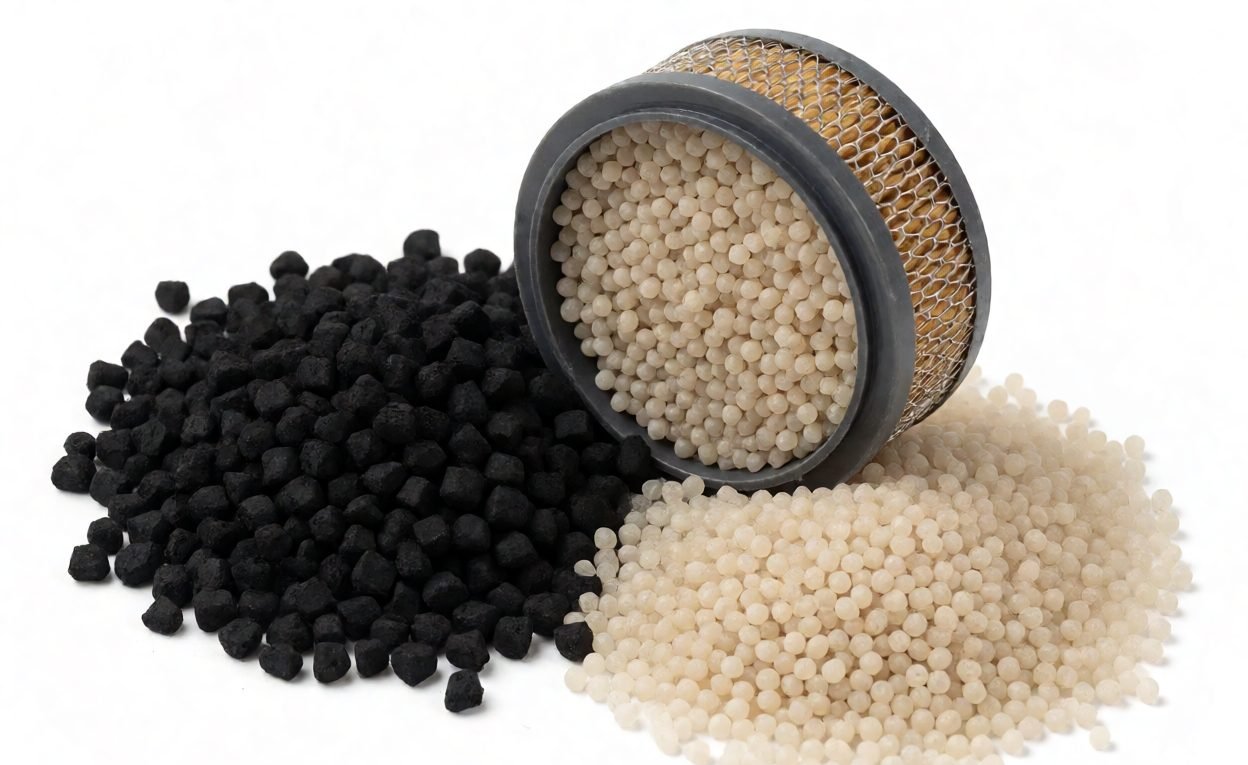
Identify the cartridge SKU and revision, media layers and order, media supplier or grade, stated quantity, water path, seals, fit and any bypass path. Ask for the supplier data that describes the selected cartridge rather than relying on a generic phrase such as “carbon filter.”
Then define the intended claim. If the brand plans to describe particle capture, taste or odour change, mineral reduction or another outcome, identify the test water, starting condition, flow, operating time, measurement method, replacement endpoint and evidence required. Test the exact cartridge in the intended fountain configuration. The name of a media does not establish what the finished product removes or how long the result lasts.
The U.S. EPA describes activated carbon adsorption and cation exchange as water-treatment mechanisms, including use of cation exchange for softening. That background does not certify or demonstrate the performance of a small pet-fountain cartridge. Request evidence for the exact cartridge and claim, and avoid broad “purifies” or safety claims without supporting product-specific data. See the EPA’s overview of drinking-water treatment technologies for the general mechanisms.
Compare Pump Flow in the Finished Fountain
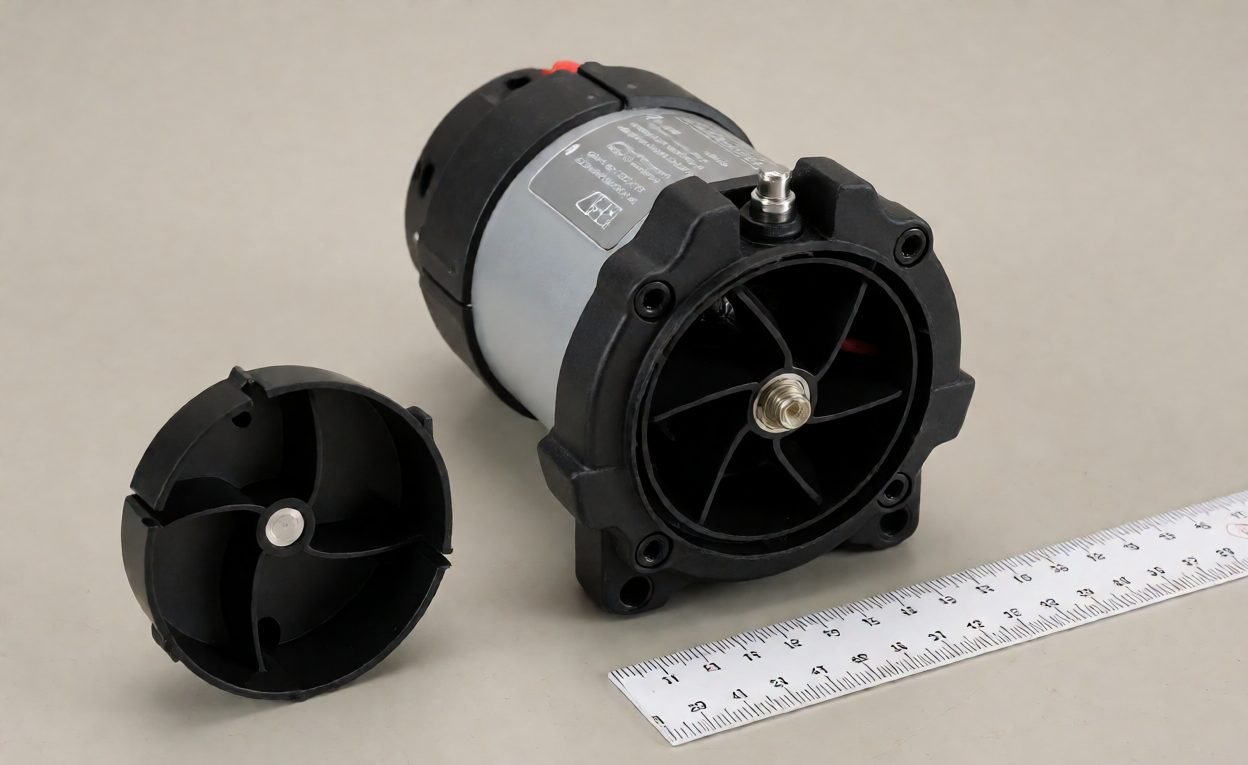
Record the pump manufacturer and part number, supply voltage, input rating, operating speed or setting, and the performance information available for the selected pump. A flow number needs its operating conditions. The fountain’s inlet, cartridge, tubing and spout form part of the system that the pump has to serve.
The Hydraulic Institute explains that a pump’s operating point depends on the interaction between the pump curve and the system curve. Use the supplier’s curve as supporting information, then agree a measurement on the finished fountain with the production-intent filter and spout installed. Record the lift from the reservoir’s stated fill level to the outlet, water level, cartridge condition, power supply and measured outlet flow. The Institute’s pump and system curve guide explains that operating-point relationship.
If the design includes low-water detection or automatic shutoff, list the required behaviour and how it should be observed. Define the low-water condition, shutoff response, refill and restart behaviour, and any indicator or error state. Verify the intended function using the supplier’s approved procedure; do not assume every fountain includes dry-run protection.
Set Conditions for Noise and Vibration
Write down the assembled product, operating mode, water level, placement surface, background environment, microphone distance and orientation, instrument or measurement method, and reported metric. Keep these conditions consistent between samples. If tonal sounds or vibration are important to the brand, record them as separate observations alongside the measured result.
Set the project’s acceptance criteria before samples are compared. A sound number without its distance, room conditions, water state and operating setup is difficult to reproduce. Avoid a universal decibel target; the buyer should choose a requirement that fits the product and intended use.
Define Cartridge Replacement and Service Parts
Do not publish a replacement interval in weeks unless its use conditions and endpoint are clear. Define the water characteristics, operating schedule, intended household or pet-use profile, and the performance change that triggers replacement. Make the customer guidance match the evidence and instructions for the exact cartridge.
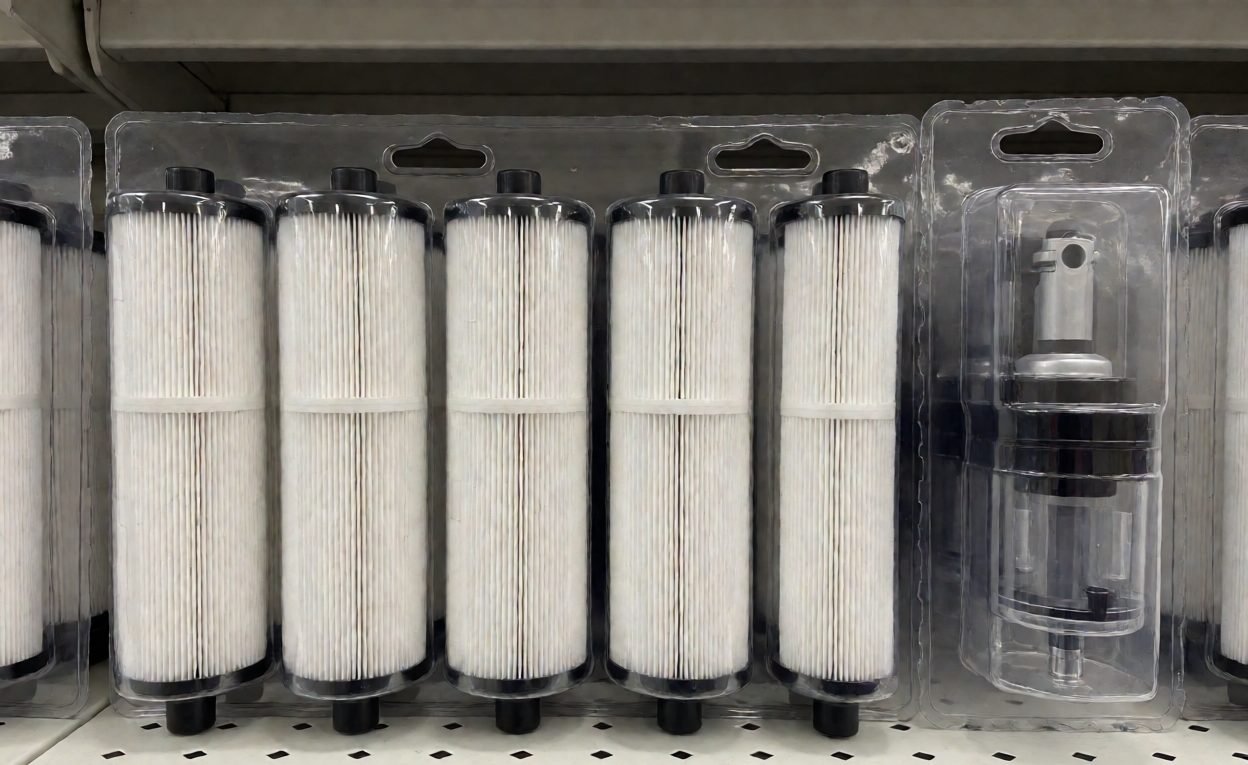
List replacement cartridges and service components by part number. Specify compatibility, packaging, spare-part availability, warranty terms, and how a buyer or service team can identify the correct revision. A proprietary shape by itself does not prove that a filter programme will retain repeat purchases; product fit, supply continuity and the replacement experience all need to be planned.
Make Cleaning and Wetted-Part Requirements Testable
List the components that contact water, including the reservoir, tubing, pump housing, seals, cartridge holder and spout. Identify their material grades or supplier specifications and the cleaning instructions intended for customers. Confirm that the design can be disassembled and reassembled as described, with access to the parts the user is expected to clean or replace.
Limit care claims to what has been checked on the named components. If the manual says a part is dishwasher-safe or compatible with a cleaning agent, record the tested part, cycle or exposure, and resulting acceptance criteria. Give the supplier and buyer the same care instructions for sample review and production documentation.
OEM Sample-Approval Checklist
- Cartridge identity, media layers, fit, water path and the exact performance claim to substantiate.
- Test-water characteristics, starting conditions, flow, duration, measurement method and replacement endpoint.
- Pump identity and operating data; outlet flow measured on the final assembly at the intended lift.
- Low-water, shutoff, refill and restart behaviour, if those functions are part of the product requirement.
- Noise and vibration setup, reported metric, sample plan and agreed acceptance criteria.
- Wetted-part materials, cleaning access, care instructions and evidence for any dishwasher or chemical-compatibility claim.
- Replacement cartridge and service-part SKUs, version control, supply and warranty terms.
- Change-control review when the cartridge, media, pump, tubing, reservoir, spout or control logic changes.
For a related discussion of restart planning in pet devices, see the pet-device power-backup guide. For moulded reservoir and housing materials, see DAYIN’s resin selection guide and custom plastic injection-molding services. To discuss a fountain programme or share an RFQ, see DAYIN OEM/ODM manufacturing services or contact DAYIN.
Frequently Asked Questions
What information belongs in a pet-fountain filter specification?
Identify the cartridge SKU and revision, media layers, water path, fit, seals and supplier data. Define each performance claim with its test water, flow, duration, measurement method and replacement endpoint.
Does activated carbon prove that a cartridge improves water?
No. Activated carbon is a treatment medium, but its presence alone does not establish a result for a specific cartridge. Require evidence for the exact cartridge, claim and operating conditions.
How should buyers compare fountain pump flow?
Measure outlet flow with the intended cartridge and spout installed at the specified lift. Record the water level, power supply and other test conditions; a pump curve helps describe the pump but does not replace a finished-product measurement.
How should fountain noise be specified?
Name the finished model, operating state, water level, placement, background conditions, microphone distance and orientation, measurement method and reported metric. Record tonal sound or vibration separately if the buyer has a requirement for it.
How long should a fountain filter last?
State the replacement interval only with its water and use conditions and the performance endpoint that triggers replacement. Do not apply one interval to every water source or household.
Should every fountain have dry-run protection?
That is a product-design requirement to agree for the selected model. If low-water detection or shutoff is specified, define and verify its trigger, response, refill and restart behaviour using the supplier’s approved procedure.
When can a fountain part be called dishwasher-safe?
When the specific part has been checked under the named dishwasher cycle and care instructions, with acceptance criteria recorded. Limit the claim to the components covered by that evidence.