



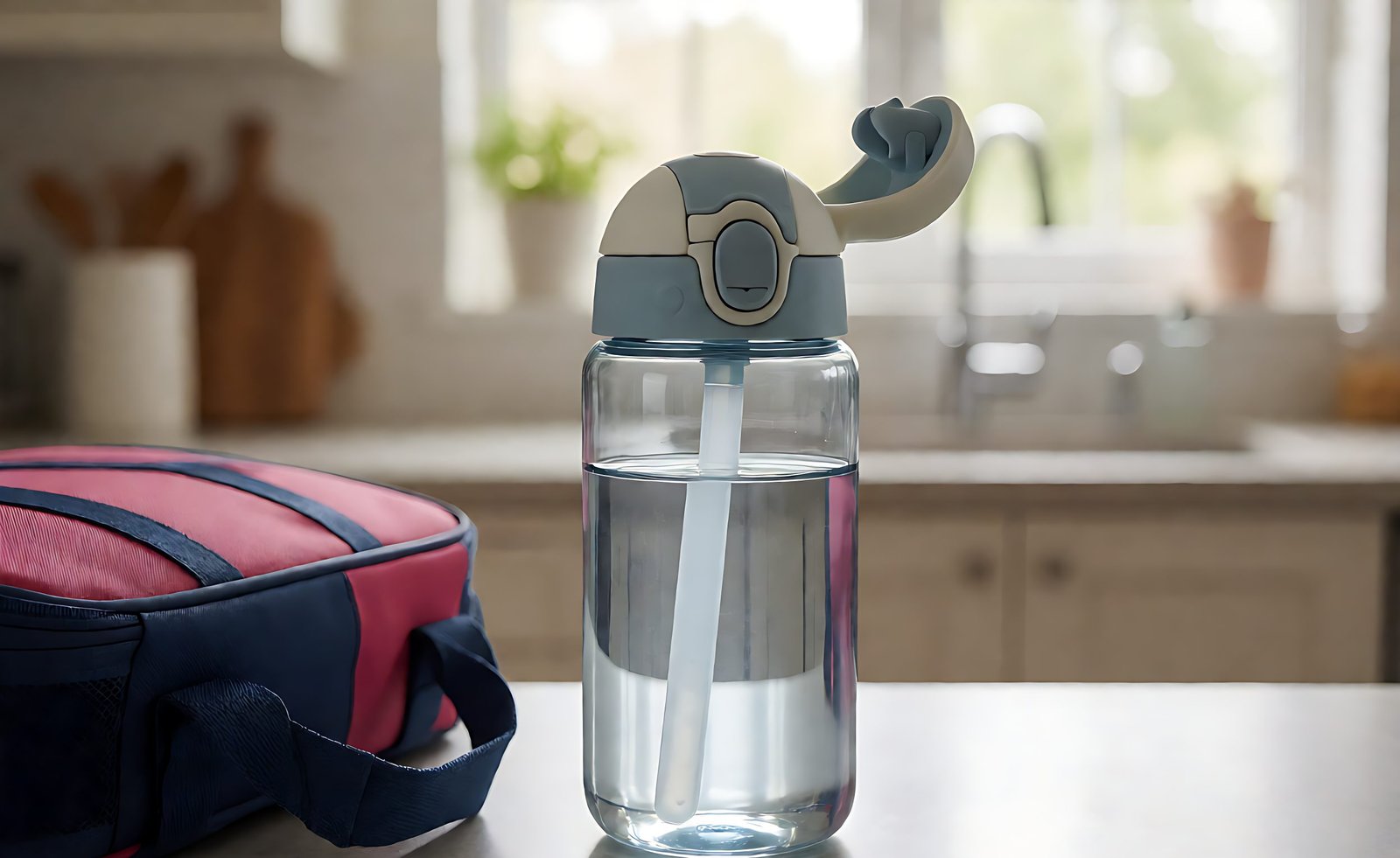
For a brand or importer developing a children’s water bottle, the cap and straw assembly needs its own product brief. List the components, intended user and use conditions, target markets, materials, claims and sample checks before requesting a quote. This guide focuses on that assembly; it does not replace product-specific safety or compliance review.
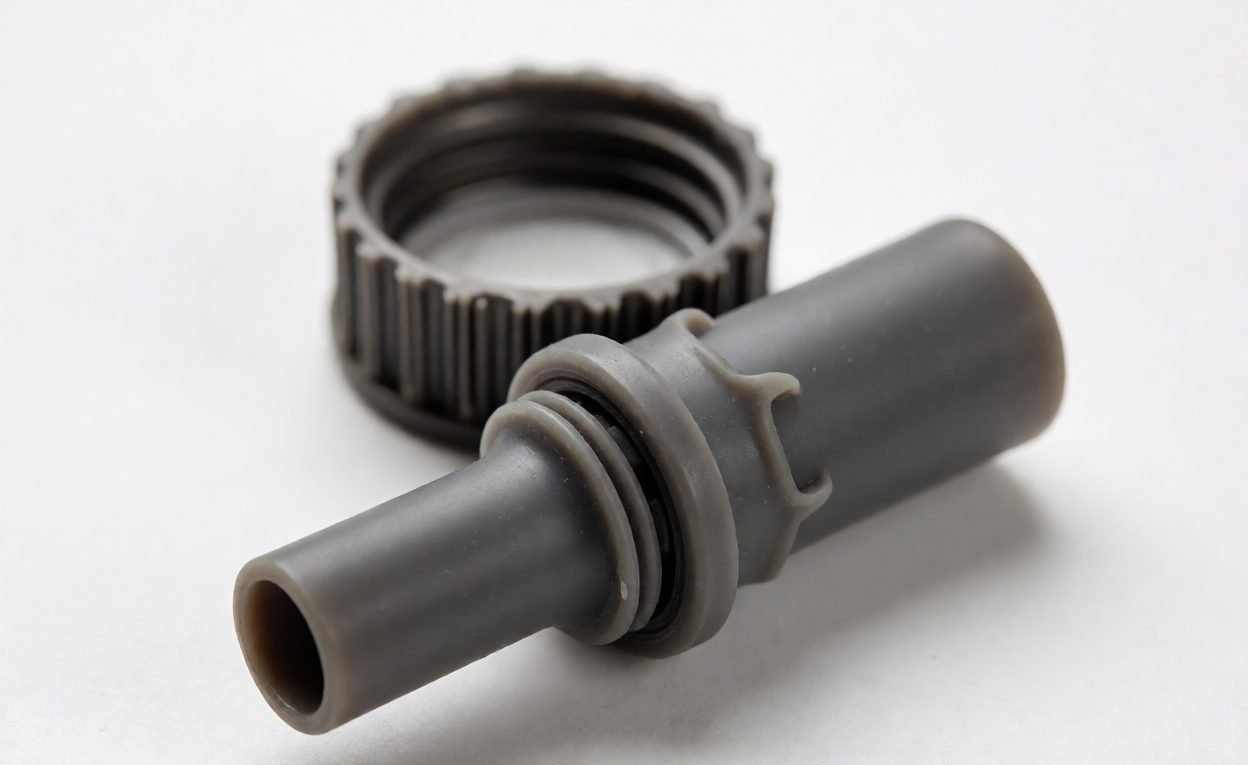
1. Map the components and intended use
Record each part in the cap assembly and how the consumer is expected to use and clean it. A supplier should be able to quote against an identified assembly rather than a generic “straw lid.”
- Cap shell, lid, latch, gasket, vent, valve, straw, spout or mouthpiece.
- Which parts are removable and how the user is instructed to clean and reassemble them.
- Intended user, age language, sales markets and any one-handed or school-bag use claim.
- Leak, flow, drop or cleaning claims planned for the package or product listing.
- Material, grade, colour, drawing revision and supplier for each component.
For the wider food-contact document checklist, see the children’s tableware compliance guide. For set composition and packaging, see the children’s dinnerware composition guide.
2. Check the small-parts rule only after product classification
The U.S. CPSC small-parts rule is not a blanket test requirement for every bottle marketed to children. CPSC describes its scope in terms of products intended for children under three, and it lists exemptions that include certain feeding products such as drinking glasses, dishes and eating utensils. Whether a particular bottle, cap or straw falls within a rule or an exemption is a product-classification question; confirm it for the design and destination market with a qualified compliance reviewer.
CPSC says that age intent can be assessed using the manufacturer’s stated intent, marketing and whether the product is commonly recognized as intended for children under three. Its small-parts and choking-hazard FAQ describes the rule, exemptions and test procedures. Do not rely on an age label alone to settle the classification.
3. Define leak, flow and cleaning checks for the claim
Translate each product claim into an agreed evaluation. For a leak claim, specify the filled configuration, closure state, orientation, duration, handling and acceptable result. For flow, state the use case and how the valve or straw should perform. For dishwasher or hand-washing instructions, identify the conditions and the signs of damage or loss of function to check afterward.
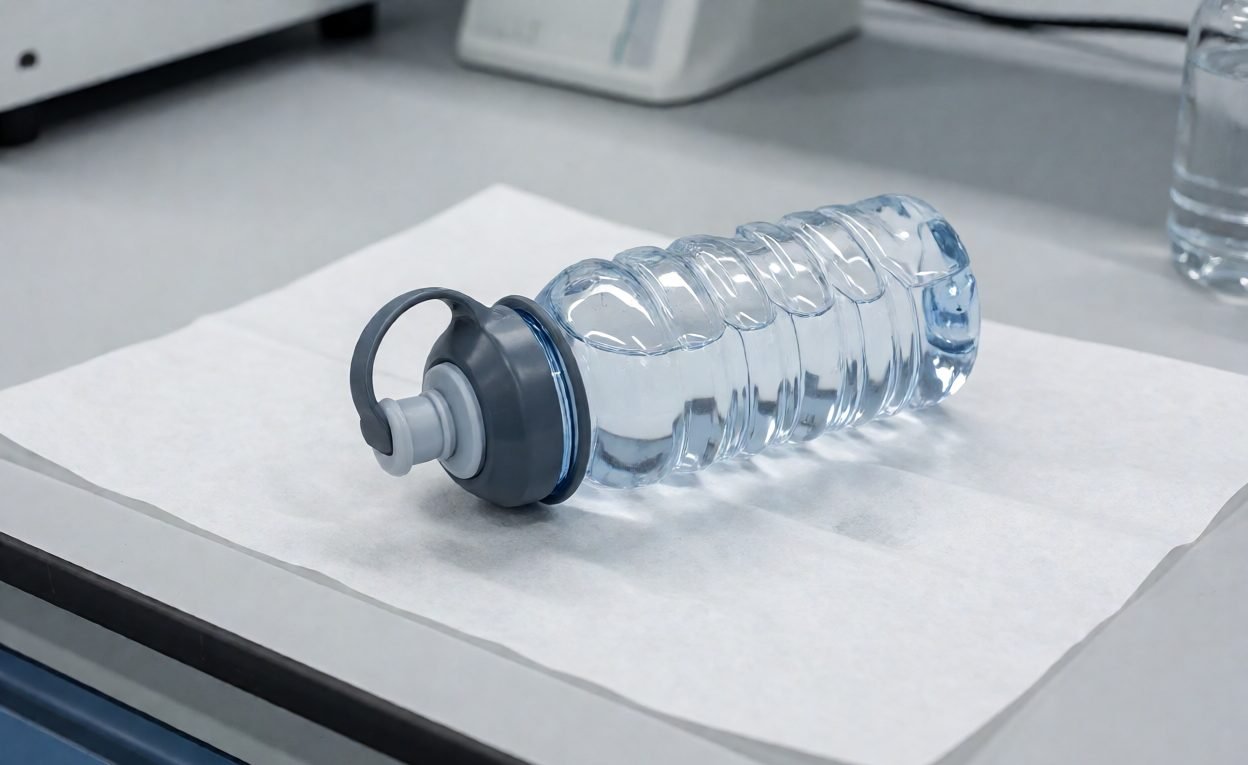
Use production-equivalent materials and assembly for the sample review. If a test is required by a specific market rule or product claim, ask the qualified laboratory to identify the applicable method and scope rather than copying a test duration or drop height from another bottle.
4. Record material and change-control details
Identify the actual material grade, colourants and supplier for parts in the food-contact path. The FDA food-contact guidance explains that a component’s regulatory status depends on the substance and its intended use. Ask how the available evidence covers the proposed formulation and conditions; do not infer compliance from a generic material name.
For soft spouts, valves and seals, state the proposed compound and any design target such as flexibility or retention. Compare samples against the agreed handling and cleaning requirements. If the material, colour, supplier, geometry or assembly changes, review whether documentation or validation needs to be updated.
For moulded cap shells or closures, review DAYIN’s custom plastic injection molding services and confirm that the listed process scope fits the project components.
Children’s water bottle cap OEM RFQ checklist
- Component list, drawings, dimensions and assembly revision.
- Intended user, age language, destination markets and use instructions.
- Material, grade, colour and supplier for every cap and straw component.
- Leak, flow, cleaning and durability claims with test conditions and acceptance criteria.
- Product-classification and laboratory review for rules that may apply in each market.
- Sample approval, packaging claims, change control and production inspection scope.
For resin background, see the resin grade selection guide. Use the AQL inspection guide to plan production-release checks. For a project discussion, send the cap and straw drawings through the Contact DAYIN page.
Frequently asked questions
Does the U.S. small-parts rule apply to every children’s water bottle?
No. Scope and exemptions depend on the product classification. CPSC lists some feeding products among exempt categories, so confirm how the specific bottle and assembly are classified before setting a test requirement.
Is the age label enough to decide the product’s age scope?
Not by itself. CPSC identifies stated intent, marketing and common recognition as factors. Have the intended age language and product scope reviewed together.
How should a buyer specify a leak test?
State the filled configuration, closure state, orientation, duration, handling conditions and acceptable outcome. Match the protocol to the exact claim instead of assuming one test applies to every use.
Which valve design is best?
There is no universal answer. Compare candidate valves against the project’s flow, leakage, cleaning and assembly requirements using production-equivalent samples.
Should every cap component be dishwasher-safe?
Only make that claim when the instructions and validation cover the parts as sold and assembled. If cleaning methods differ by component, state them clearly and verify that users can follow them.