



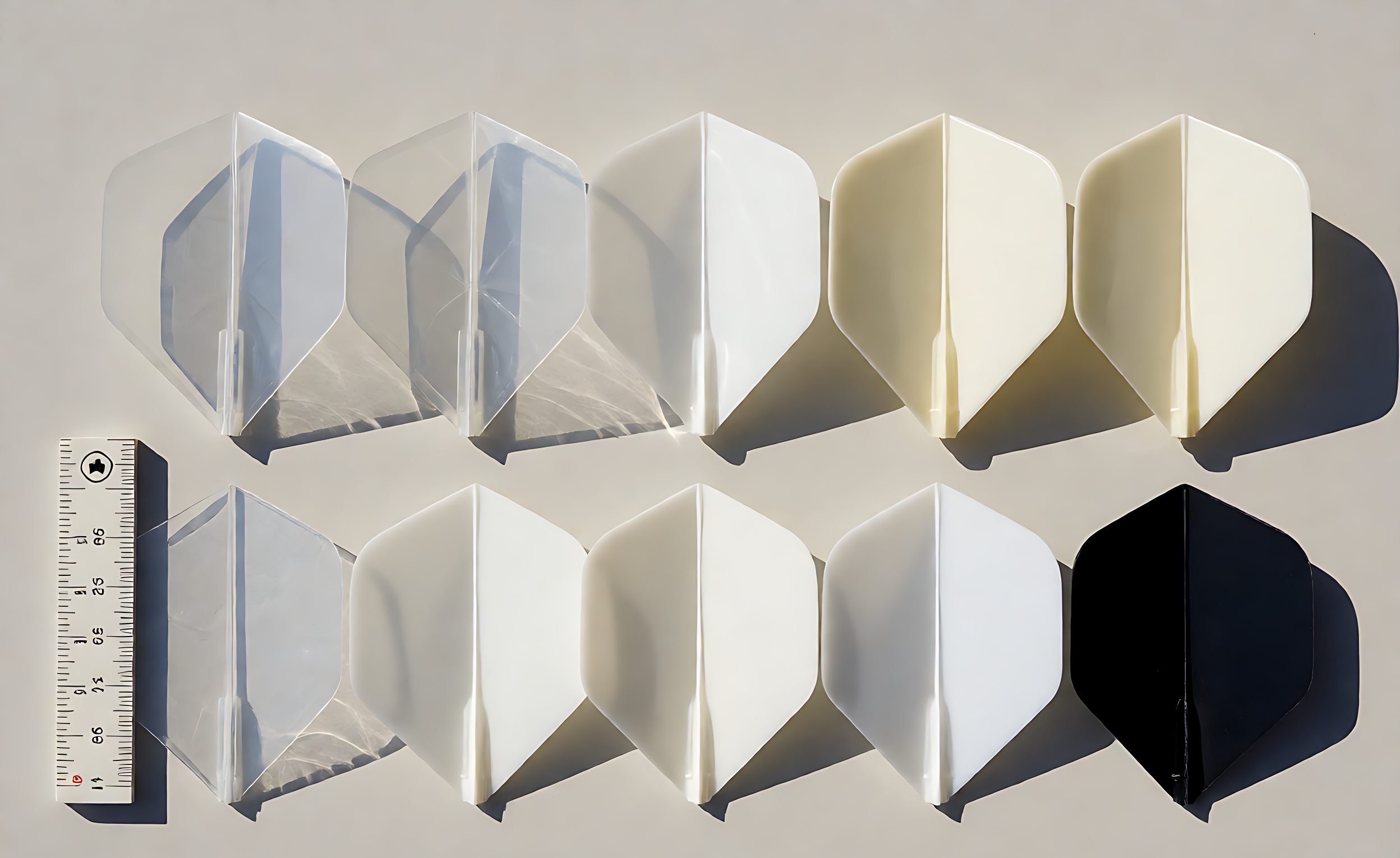
A dart flight is the cheapest component in a set and the one customers blame first when a set stops performing. It is also the component buyers specify least carefully: a shape and a piece of artwork get chosen, the material and thickness are left to whatever the factory normally runs, and the consequences arrive in reviews three months later. Torn wings, flights that lose their angle, print that peels along the crease – all material and thickness problems, all preventable on the specification.
The reason to care is not cosmetic. The flight controls drag and stability at the rear of the dart; change its stiffness or mass and the dart flies differently even when barrel and shaft are untouched. Material and thickness belong on the order as numbers, not adjectives.
Thickness: The Number Behind Flight Life
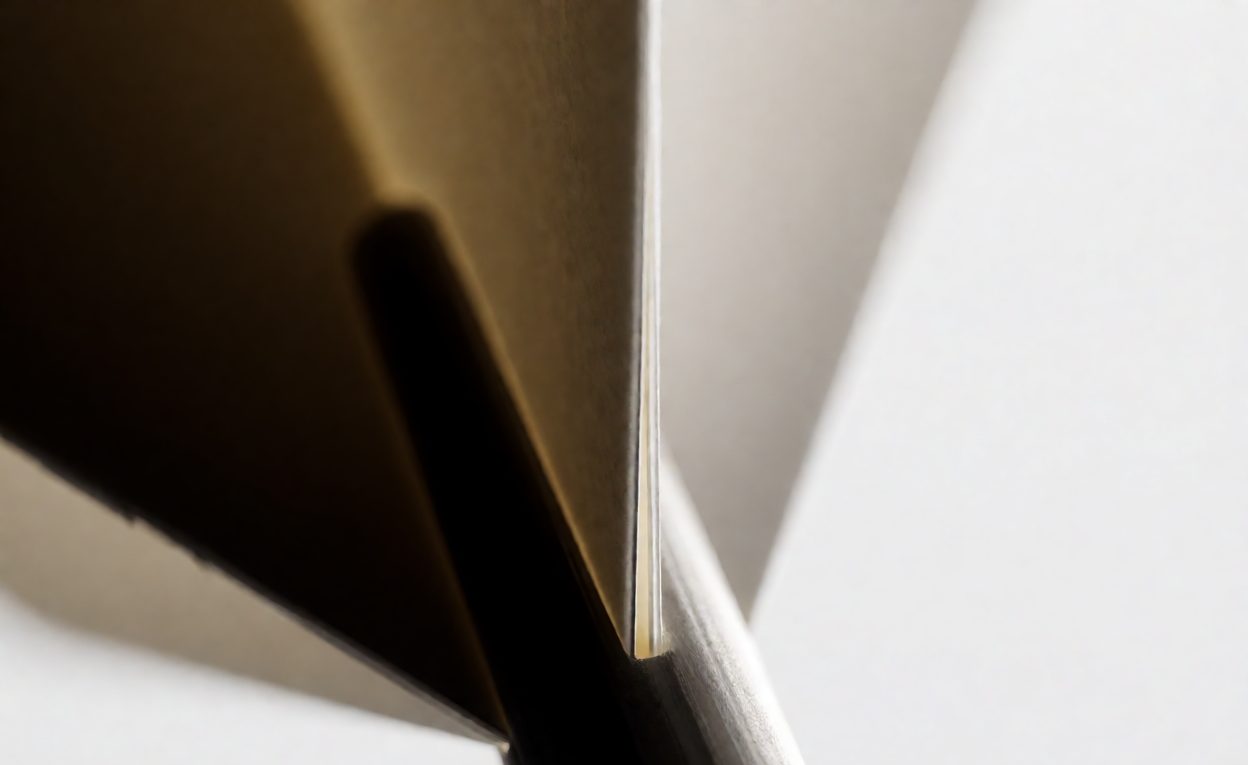
Thickness is where vague specifications hide. Film gauges commonly run from about 75 microns, thin and lively but short-lived, through 100 microns as the general-purpose default, up to 150 microns and above for heavy-duty and premium sets. Moulded flights are not film at all; they are a formed plastic section whose wall thickness is specified like any other moulded part, and which is usually stiffer at the wing than any folded film.
Moving up a gauge buys tear resistance and better crease retention, at the cost of a small shift in balance and feel on release. State thickness in microns with a tolerance, never as “standard” or “heavy duty”.
- Plus-or-minus band – nominal gauge in microns, verified on delivered samples.
- Crease behaviour – thicker film creases crisply but can crack at the fold if too stiff.
- Angle retention – measure the wing out of the pack, then again after a defined number of throws.
Polyester Film Versus Moulded Plastic
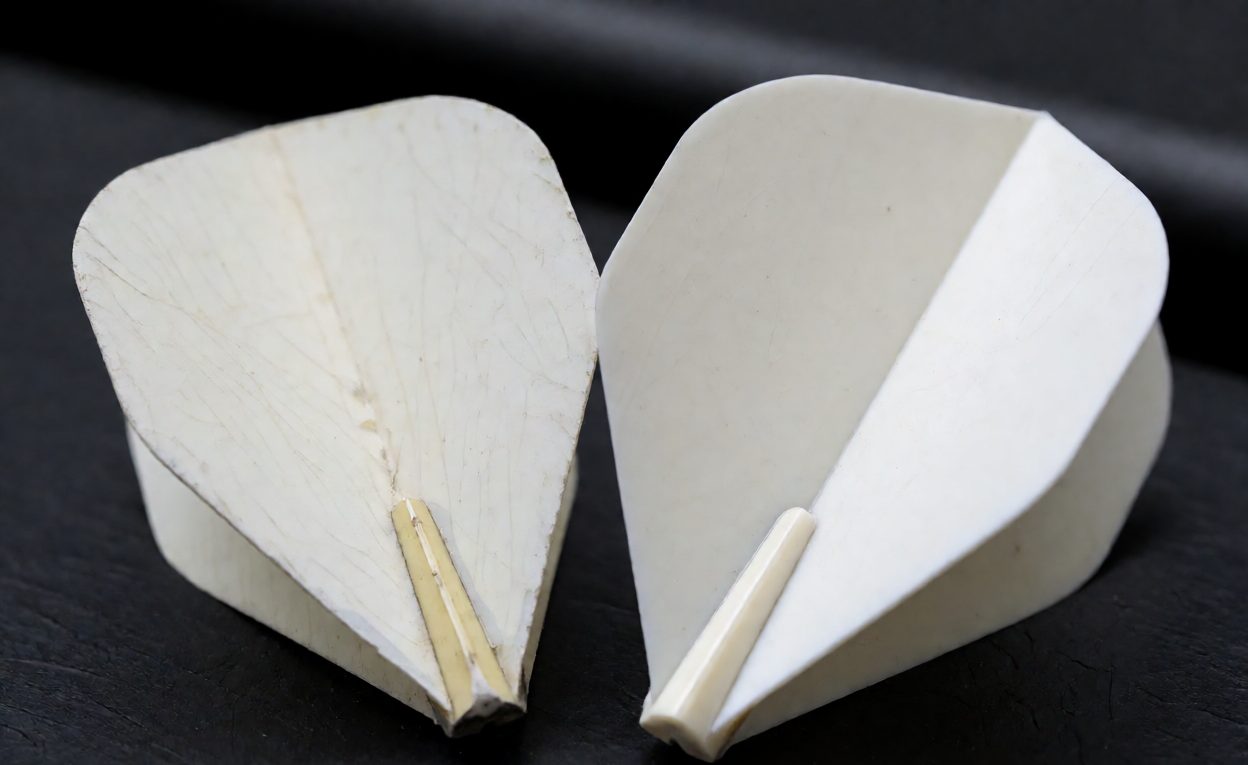
Folded polyester flights are stamped from sheet, printed flat and creased into shape. They are inexpensive, they carry artwork beautifully because the print goes onto a flat sheet, and they are the default for almost every set on the shelf. Their weakness is the crease: repeated impacts work the fold until the wing loses its set.
Moulded one-piece flights are plastic parts formed in three dimensions. They hold their angle far longer, resist tearing better than any film and cost more per unit. For a step-up set they are one of the few upgrades a customer can actually feel.
A hybrid is worth knowing too: a moulded flight bonded permanently to a short shaft stub, sold as an integrated rear assembly. It removes the joint that normally works loose, but it makes the whole assembly a consumable, so price the spares before committing.
Print, Adhesion and What Happens at the Crease
The flight is the branding panel of a dart set, and print is where material choices collide with marketing. Ink sits on the surface and the crease folds through it, so a print system with poor adhesion on the chosen film cracks along the fold after a few dozen throws, leaving hairline fractures across artwork that still flies perfectly well.
- Keep heavy ink coverage off the crease line, which is where cracking starts.
- Verify metallic and fluorescent inks separately – they behave differently from process colours.
- Approve artwork after folding and flexing, not out of the pack.
Matching Flight to Barrel and Shaft
Flights do not exist in isolation. A heavy barrel amplifies every weakness at the rear, because more mass means more force working the crease and the thread at each impact. A heavier flight adds stability behind a light barrel and can rescue a dart that lands tail-down; the same flight on a heavy barrel can make it fly nose-high.
Shaft length completes the triangle: a longer shaft moves the flight further back and increases the leverage it exerts. Specify the gauge alongside the barrel weight and shaft length it was validated with, so changing any one triggers a re-test rather than a silent substitution.
What to Test Before Approving a Flight Spec
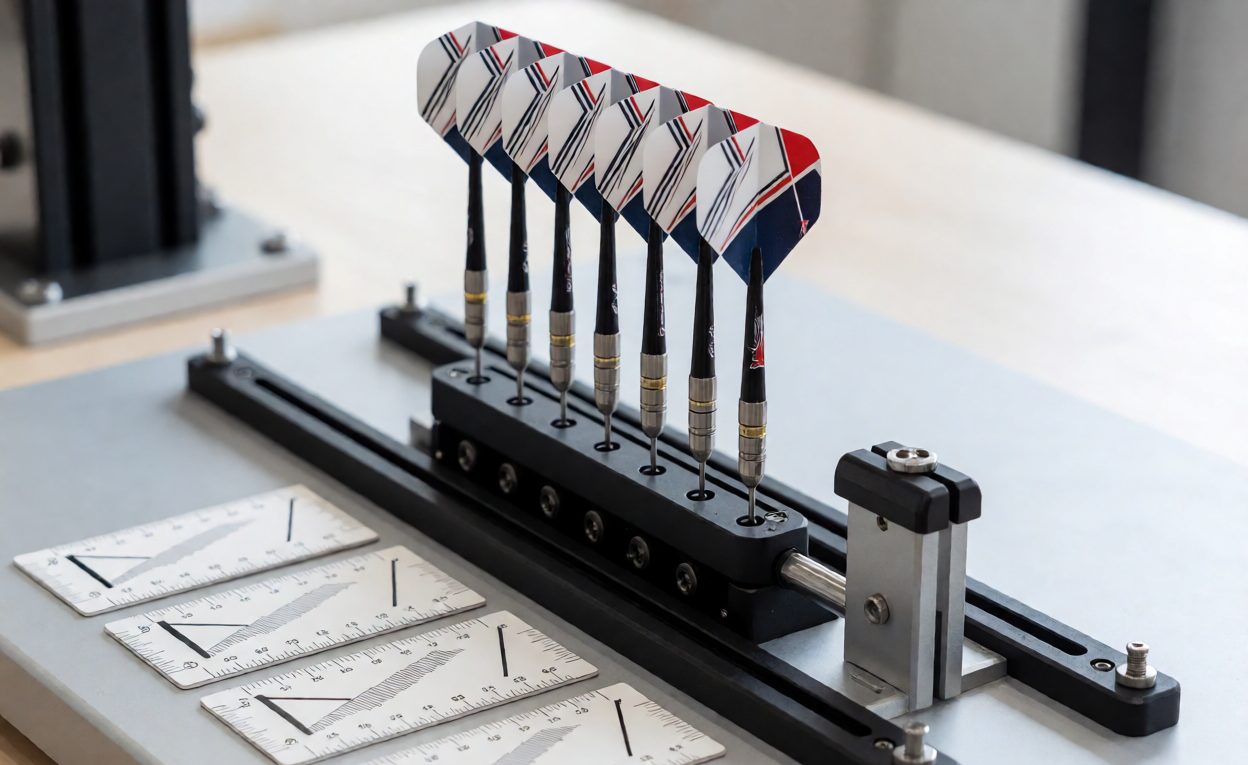
- Angle retention – wing angle before and after a defined number of throws, on production packs.
- Crease cycling – fold, flex and bounce deliberately onto a hard floor, then inspect for cracking.
- Gauge verification – measure actual film thickness against the stated micron figure.
- Play test in the target board – the same flight behaves differently against different segment geometry.
These checks take an afternoon and predict almost every durability complaint in the category.
Technical Background
The flight is the stabilising surface of the dart, and the shapes available are all variations on the formats that settled out of a century of play. Folded flights are typically stamped from biaxially oriented PET film, chosen because the drawn film is stiff, stable and holds a crease. Moulded flights are generally injection-moulded polypropylene, which is tough, fatigue-resistant and cheap to form in three dimensions.
Where This Fits in the Dart Programme
Flight material and thickness are half of the rear-assembly decision; the other half – shape, shaft material and thread – is covered in the dart flight and shaft specification guide. The darts the set pairs with are treated in the soft-tip dart specification, the surface they land in in the dartboard materials comparison, and brand artwork on moulded components in the branding and surface finish guide. What customers should expect to replace over time belongs in the copy alongside the dartboard maintenance guide.
Những Câu Hỏi Thường Gặp
What film thickness should a general-purpose dart set use?
Around 100 microns is the safe default for casual and family sets; step-up sets benefit from 125 to 150 microns.
Cánh độn có đáng với chi phí cao hơn?
For a step-up set, yes. They hold their angle far longer and remove the most common consumable complaint in the category.
Why does print crack along the fold?
Ink sits on the surface and the crease folds through it. Heavy coverage and metallic inks crack first, so test artwork after flexing.
Does a heavier flight change how a dart flies?
Yes. It adds stability at the rear and shifts balance rearwards, which helps a light barrel but makes a heavy one fly nose-high.
Should thickness be given as a tolerance?
Yes. State microns with a plus-or-minus band and verify gauge on delivered samples; qualitative terms are not testable.
Do shaft length and flight thickness interact?
They do. A longer shaft increases the leverage the flight exerts, so the same flight behaves differently on short and long shafts.
How many samples are enough for flight approval?
Several production packs, flexed and thrown a defined number of times, with wing angles measured before and after.