



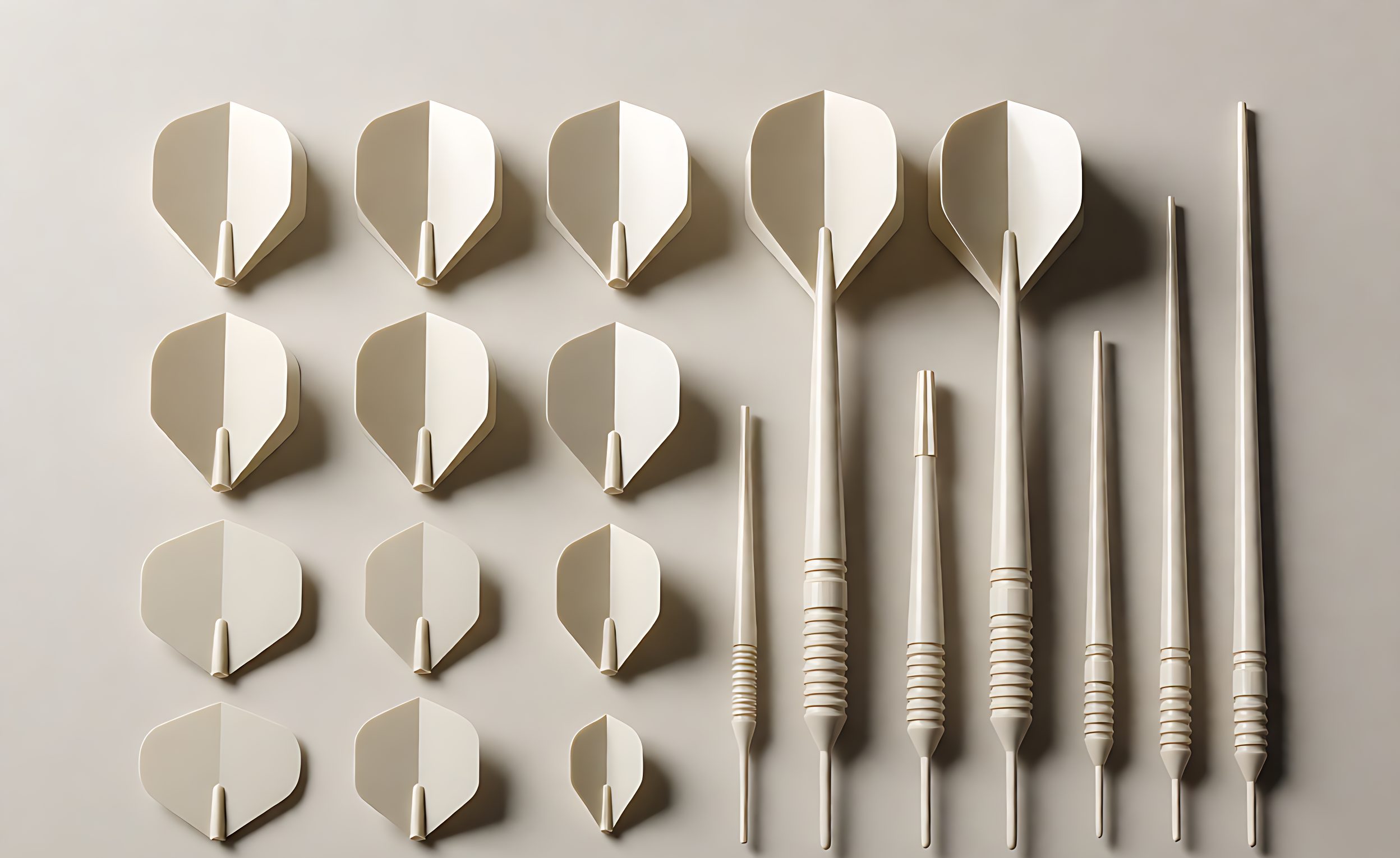
A dart set is judged by its barrel weight on the shelf and by its flights and shafts in the first month of use. Barrels rarely fail; flights tear, shafts snap and threads loosen, and those are the failures that turn a well-received set into a review full of complaints. For a buyer putting together an OEM dart set, the flight and shaft specification is therefore not a detail at the end of the conversation – it is where the product’s reputation for durability is actually decided.
The two components also interact. A flight that suits one shaft length performs badly on another, and a heavy barrel amplifies every weakness in the rear assembly. The specification should treat flight and shaft as one system rather than two line items.
Flight Shape: More Than a Graphic Panel
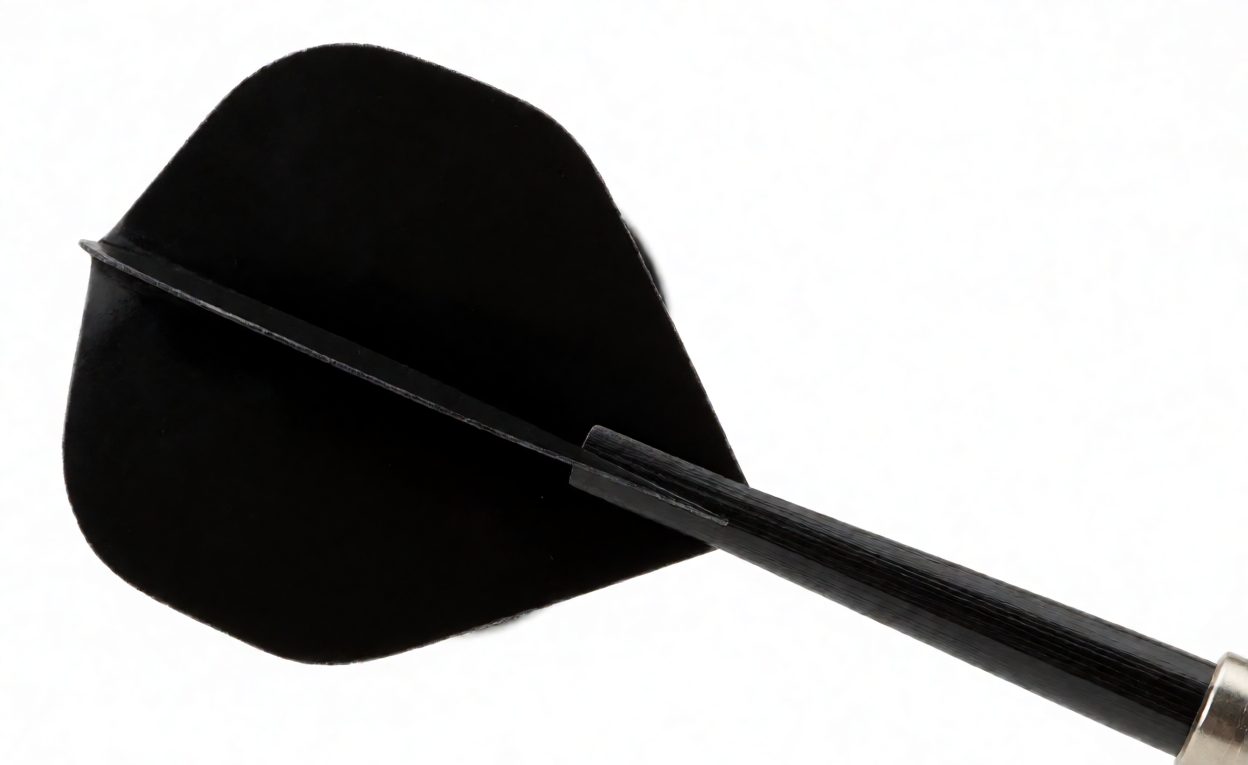
Flight shape changes the aerodynamics of the dart, and it changes what the customer feels. Standard flights give maximum stabilisation and suit slower, arcing throws. Slim flights reduce drag and suit faster, flatter throws. Kite, pear and fan shapes sit between the two. None of these is better; each suits a throwing style, and a set aimed at casual players should default to the shape that is most forgiving rather than the one that looks most distinctive on the card.
For a buyer, the practical points are narrower:
- Surface area – larger flights stabilise but catch on incoming darts, which increases deflections and torn flights in the board.
- Print area – the flight is the branding panel of the set, and the shape chosen must hold the artwork without distortion at the edges.
- Angle consistency – wings that splay unevenly after a few throws indicate weak material or a poor fold, and the dart stops flying straight.
Ask to see used samples, not just new ones. A flight that looks identical out of the pack can differ completely after a hundred throws, and used samples are the only honest comparison.
Flight Construction: Folded Versus Moulded
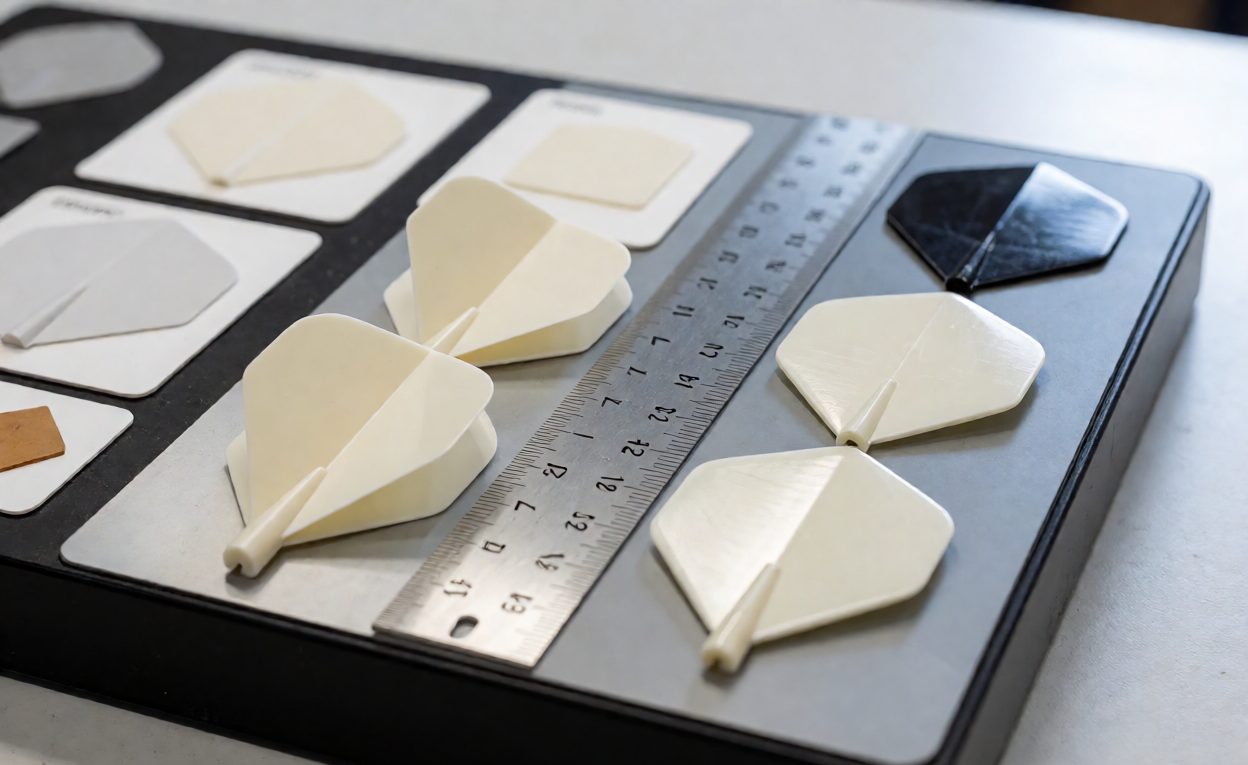
Folded flights are stamped from polyester or laminate sheet and creased into shape. They are cheap, they carry print beautifully, and they are the industry default. Their weakness is the crease: repeated impacts work the fold until the wing loses its set, and a torn flight is the single most common consumable complaint in the category.
Moulded one-piece flights are plastic parts, formed in three dimensions rather than folded. They hold their angle far longer, they resist tearing better, and they cost more. For a set positioned as a step up, moulded flights are one of the few upgrades a customer can actually feel, because the dart keeps its flight characteristics for the life of the set instead of for a few weeks.
There is also a hybrid worth knowing: a moulded flight permanently bonded to a short shaft stub, sold as an integrated flight system. It removes the joint that normally works loose, but it makes the whole rear assembly a consumable, so it changes what spares you commit to.
Shaft Material and Length
Shafts are offered in nylon, aluminium and composite or carbon. Nylon is flexible, light, inexpensive and the correct default for casual and family sets – it absorbs impacts that would crack a stiffer part. Aluminium is rigid, durable and reads as premium, but it transmits impact to the barrel threads and can bend permanently rather than forgiving. Composite shafts sit between, at a price that has to be justified by the set’s position.
Length matters more than material for how the dart flies. Shorter shafts move the centre of gravity forward and suit tight groupings; longer shafts stabilise a slower throw. The specification should state length at the shaft and at the overall rear assembly, because two shafts of the same nominal length carry flights differently.
The thread is the quiet specification. Most sets use a standard 2BA thread, and anything else creates an aftermarket problem: the customer who loses a shaft must be able to buy a replacement anywhere. Confirm the thread standard in writing, and confirm it on the actual sample rather than trusting the specification sheet.
Set Consistency and Spares
A set is three darts, and three darts that do not match feel like a defect even when every component is individually within tolerance. Specify consistency across the set – weight, balance and rear-assembly length – and check it on samples from the production line rather than on golden samples prepared for approval.
Spares close the loop. Flights are consumables, shafts are near-consumables, and a set that ships with two spare flights and a spare shaft converts the most common failure into a non-event. The cost is cents; the review difference is real.

What to Test Before a Bulk Order
- Impact cycling – repeated throws and deliberate bounce-outs onto a hard floor, then inspection of the flight crease, the shaft and the thread.
- Thread torque – the joint must not loosen during normal play; a shaft that unscrews itself mid-session is a complaint generator.
- Flight angle retention – measure wing angles after a defined number of throws, not just out of the pack.
- Fit check – the finished rear assembly in the actual board the set will be sold with, since segment geometry varies.
- Set matching – weigh and measure all three darts of several retail packs from the production run.
These checks take an afternoon and predict almost every durability complaint in the category. A specification that documents them is also a specification a factory can quote against honestly, which shortens the negotiation as well as the returns cycle.
Technical Background
A flight works by adding drag and stability at the rear of the projectile, and the shapes available are all variations on the dart flight formats that have settled out of a century of play. Nylon shafts rely on the toughness of nylon, which flexes and recovers where rigid materials crack. The threaded joint is a small example of standardised screw threads, and staying on the common 2BA standard is what keeps replacement shafts universally available.
Where This Fits in the Set Decision
Flight and shaft choices follow from the rest of the set rather than leading it. The board decides steel-tip or soft-tip; the barrel decides weight and balance; the rear assembly then has to match. Soft-tip sets are covered in the soft-tip dart specification guide, and the surface the set will land in is compared in the dartboard materials comparison và the dartboard types overview.
If the set ships as part of a cabinet bundle, the rear assembly also has to survive the transit environment of the whole unit, which is discussed in cabinet and surround bundling. Long-term care expectations, including flight and shaft replacement, belong in the copy alongside the dartboard maintenance guide so the customer knows what is a consumable and what is a defect.
Những Câu Hỏi Thường Gặp
Bộ set cho gia đình nên sử dụng hình dạng đường bay nào?
Standard flights. They stabilise the widest range of throwing styles, which suits mixed-ability households where the set will actually be used.
Cánh độn có đáng với chi phí cao hơn?
For a step-up set, yes. They hold their angle far longer and remove the most common consumable complaint in the category.
Vật liệu trục nào là mặc định an toàn?
Nylon. It flexes on impact instead of transmitting it, and it is light and inexpensive – well suited to family and casual sets.
Why insist on a 2BA thread?
Because replacement shafts must be available everywhere. A non-standard thread turns a lost shaft into a product defect.
Do shaft lengths change how a dart flies?
Yes. Shorter shafts move the balance forward and tighten groupings; longer shafts stabilise slower throws. Pick by target player.
Should sets include spare flights and shafts?
Yes. Flights are consumables, and a small spares pack costs cents while converting the top complaint into a non-event.
How do I check set consistency?
Weigh and measure all three darts across several retail packs pulled from the production run, not just from approval samples.