



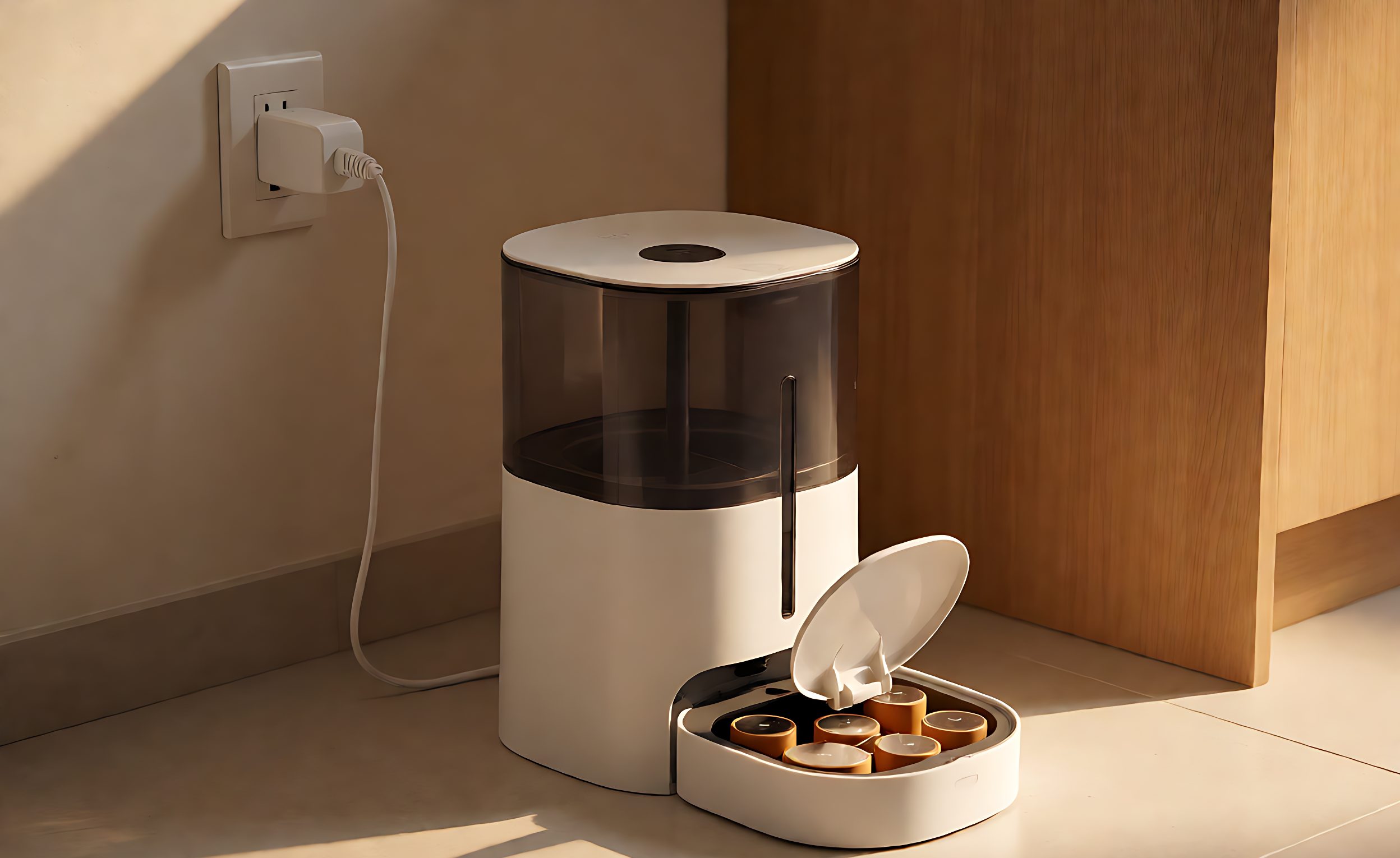
The failure customers remember is not a jam or a mis-portion. It is coming home to a pet that missed a meal because the power cut out, the feeder lost its schedule, and nothing dispensed. That single scenario generates a disproportionate share of negative reviews, and it is almost entirely a specification problem rather than a manufacturing one.
Power architecture determines what happens in an outage, and three architectures behave in three quite different ways. Buyers who specify by price alone tend to end up with the one that fails worst.
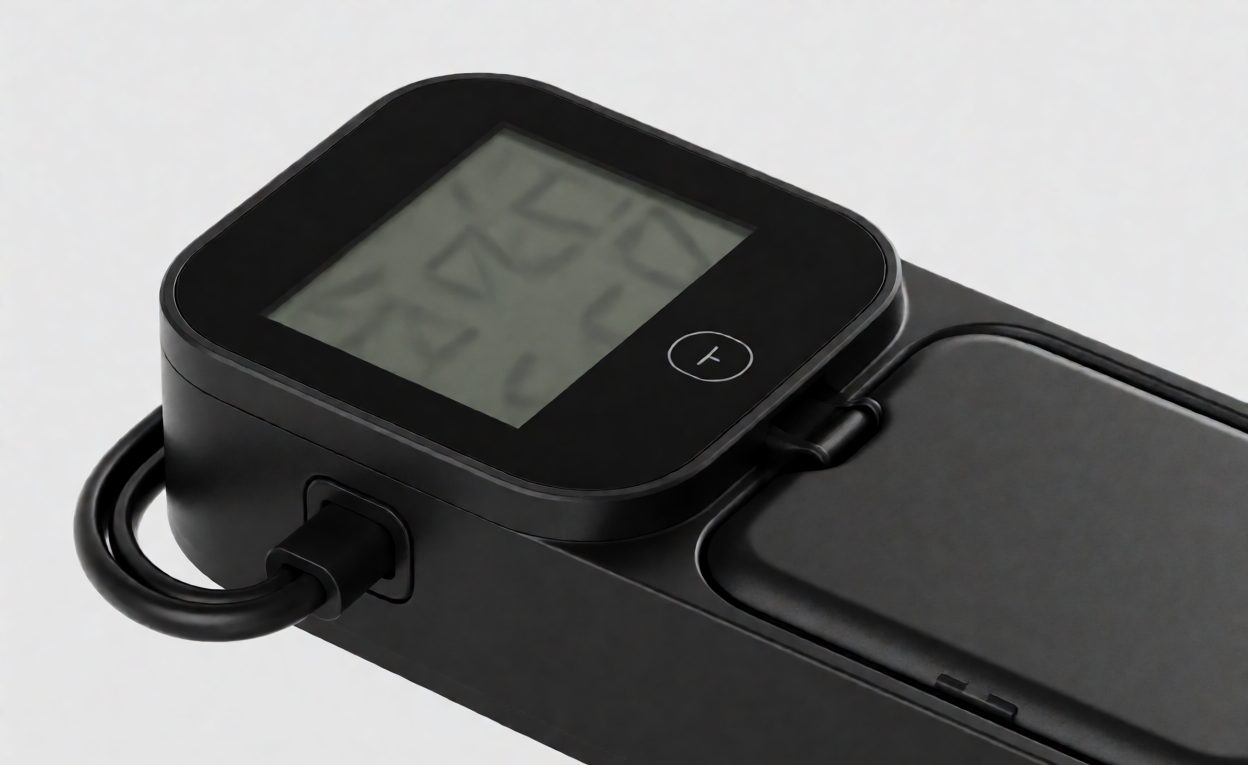
Three Power Architectures
Mains only. The simplest and cheapest. In an outage the feeder stops, and depending on the design it either resumes and fires a missed meal on restoration or waits for the next scheduled slot. Both behaviours are defensible; the problem is when neither is documented and the customer discovers the wrong one.
Mains with battery backup. A battery compartment keeps the control board alive and, in better designs, keeps the dispensing mechanism powered. The critical distinction is whether the backup covers control only or control plus dispensing. A feeder whose clock survives but whose motor does not will still miss meals, and that distinction is rarely stated on packaging.
Battery primary. Fully cordless placement, long battery life, and no outage risk – at the cost of battery replacement as an ownership duty and a dispensing mechanism that must work efficiently at low voltage. Well suited to homes where the feeder sits away from a socket, and to markets with unreliable supply.
What the Backup Specification Should Require
Four lines, each testable:
- What stays powered: clock only, or clock plus dispensing. State it, and test it by pulling the mains during a scheduled feed.
- How long the backup lasts, under a defined number of feeds per day, not in ideal conditions.
- Behaviour on restoration: does the feeder dispense missed meals, skip them, or wait? Any of the three is acceptable if it is predictable and stated.
- Warning behaviour: a low-battery indication that is visible before the battery is flat, not after.

The schedule-retention question is separate and frequently missed. If the feeder loses its programming in an outage, the backup has kept the clock alive and nothing else, and the customer still comes home to an unfed pet. Ask whether settings survive power loss, not only whether the clock does.
Testing Before a Bulk Order
Run four tests on a production sample rather than a demonstration unit. Pull mains power immediately before a scheduled feed and observe whether it dispenses. Remove batteries and restore power, and check whether settings survived. Run the unit on backup only for the claimed duration and count feeds delivered. And check the low-battery indication triggers with enough margin to be useful.
Then check the adapter itself. A feeder sold into multiple markets needs the correct plug type and the correct approval for that market, and an adapter mismatch is a returns problem that has nothing to do with the feeder’s electronics.
Maintenance is the part of the ownership experience buyers underestimate. Filters need cleaning or replacing, brush rolls need clearing, and sensors need wiping – and a product that requires an hour of maintenance a week will be described as broken by owners who expected none. Specify the maintenance interval honestly, and prefer designs where the common tasks are tool-free.
Multi-pet homes deserve their own performance expectation. Hair load scales with the number of animals, and a unit specified for one pet may need twice the bin capacity and twice the brush clearing for three. Where the programme targets those homes, the specification should be set for the heavy case rather than the typical one.
Technical Background
Backup behaviour depends on whether the design is a uninterruptible supply architecture or merely a retained clock, which is why the distinction matters for specification. Portable designs run on primary or secondary cells, described under batteries, whose voltage behaviour under load affects mechanism performance. Mains adapters must carry the approval appropriate to the destination market, which is a mains electricity interface question as much as a product one.
Battery compartment design is worth a line as well. A compartment that requires a tool discourages replacement, which effectively converts a backup feature into no backup at all. A compartment accessible without tools, with clear polarity marking and a specified cell type, is the difference between a feature that is used and one that is not.
Matching Architecture to Market
In markets with stable supply and socket-adjacent placement, mains with battery backup is the balanced choice, provided the backup covers dispensing. In markets with frequent outages or where feeders are placed away from sockets, battery primary with a long service interval is more appropriate and worth the higher unit cost.
Whichever is chosen, state the behaviour on the packaging and in the manual. Customers accept almost any documented behaviour; what they do not accept is discovering it during an outage.
Feeder mechanism behaviour is covered in portion accuracy and jam testing and in the automatic pet feeder OEM guide. Connectivity topics are in Wi-Fi connection problems và smart home integration, and inspection scope in the AQL inspection guide.
Câu hỏi thường gặp
Does battery backup mean the feeder still dispenses?
Not necessarily. Some designs keep only the clock alive. Specify whether dispensing is covered, and test it by cutting mains before a scheduled feed.
What happens to missed meals after an outage?
It varies by design: dispense late, skip, or wait for the next slot. Any is acceptable if predictable and documented.
Do settings survive power loss?
They should, and it is a separate question from clock retention. Test by removing all power and restoring.
How long should backup last?
Specify under a defined feeds-per-day figure rather than in ideal conditions, and verify by running the unit on backup alone.
Why is the adapter a separate issue?
Plug type and market approval must match the destination; a mismatch generates returns unrelated to the product itself.
Is battery-primary better?
For unstable supply or socket-free placement, yes, accepting battery replacement as an ownership duty.
What is the most common specification gap?
Failing to state outage behaviour, so the customer discovers it during the outage rather than before.