



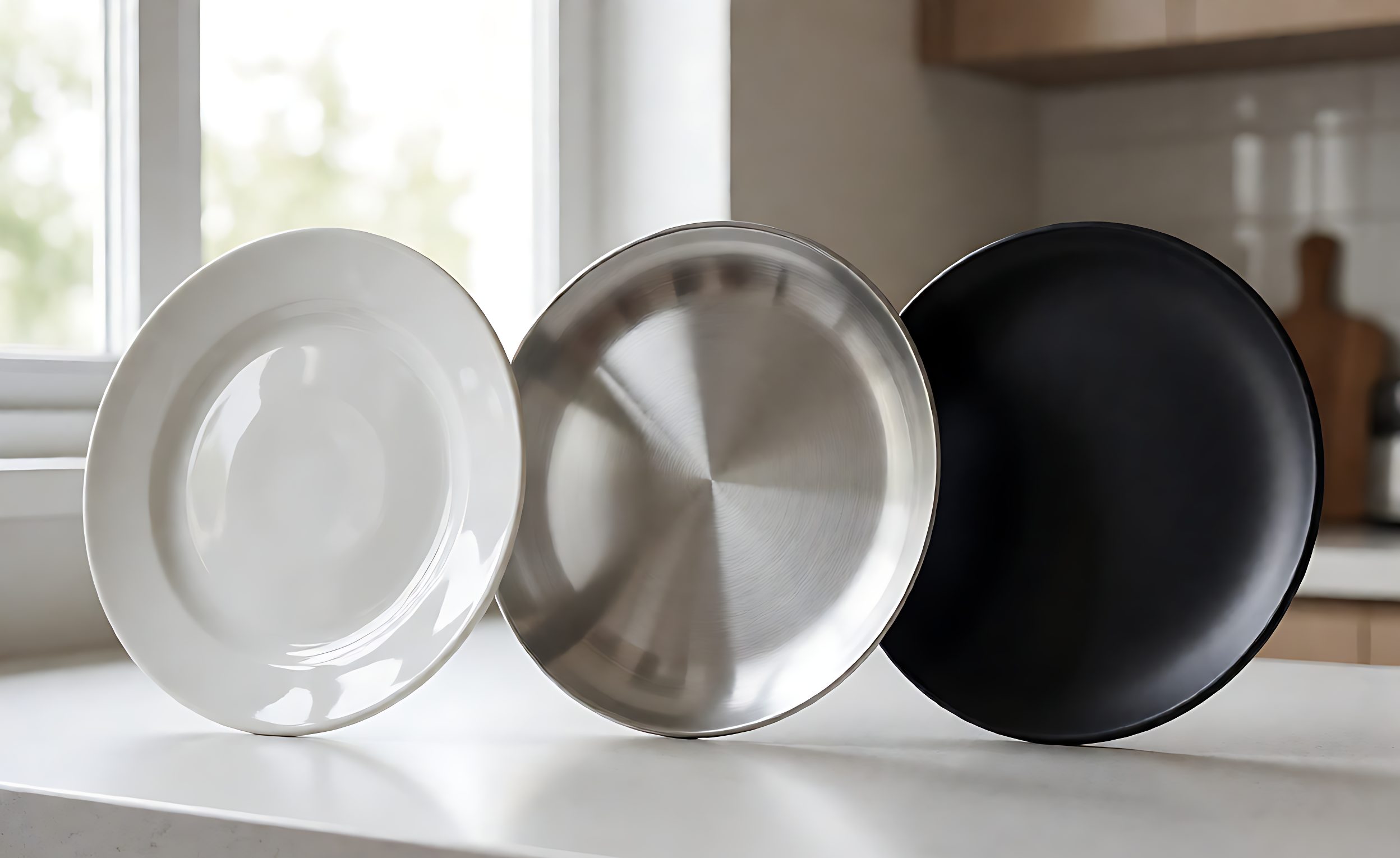
Tableware material choice is usually made on look and unit cost, and then paid for in three other places: what happens in a dishwasher, what happens with hot food, and what a regulator says about the composition. Those three consequences are predictable from the material, which is why the decision belongs at the start of a programme rather than at the quotation stage.
Three families dominate everyday tableware, and each has a clear home channel.
Melamine: Hard, Glossy, and Misunderstood
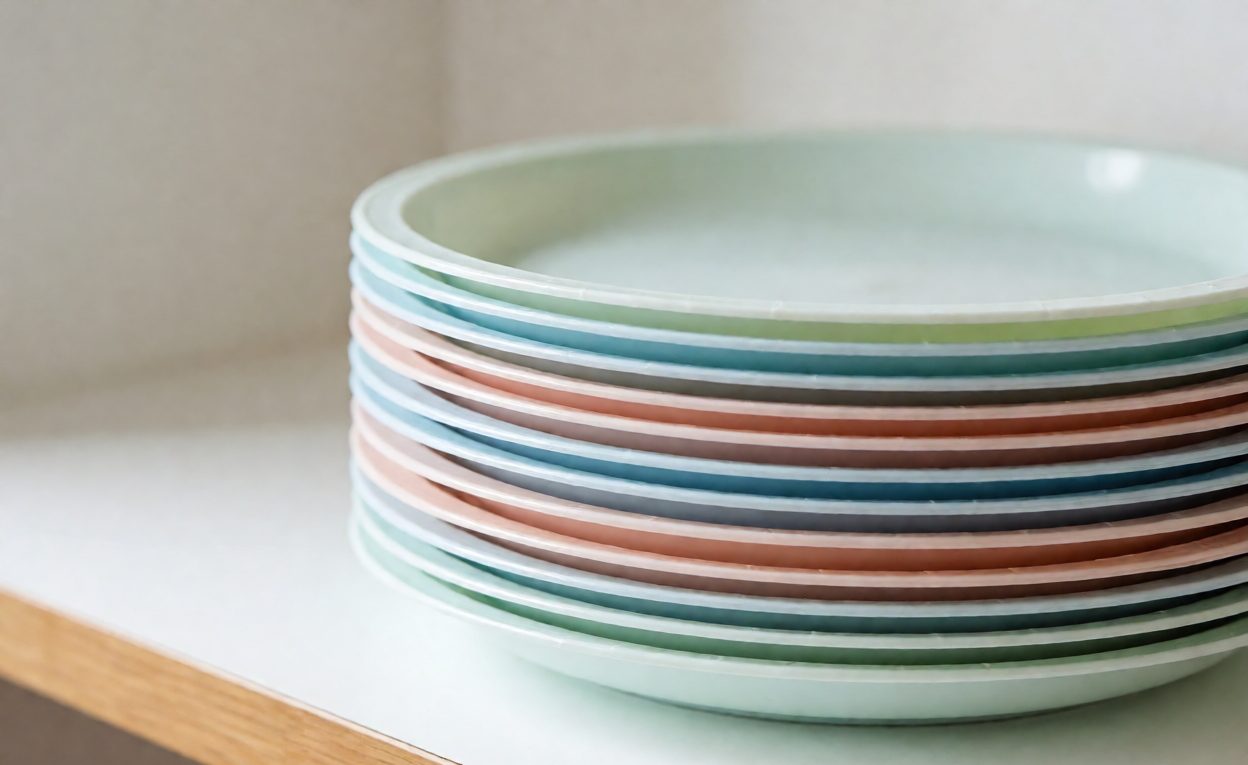
Melamine tableware is rigid, hard-surfaced and holds a glossy printed decoration well, which is why it dominates institutional and casual dining. It resists scratching far better than polypropylene and it feels substantial in the hand.
The constraints are real and they belong on the packaging. Melamine is not for microwave use, and it has a defined regulatory position on migration that requires testing to the applicable standard and, in some markets, specific restrictions on who may sell it and for what use. A buyer importing melamine should confirm the destination’s position before ordering rather than after.
Breakage behaves differently too: melamine chips and cracks rather than deforming, and a chipped item in a food service setting is a replacement and a hazard rather than a cosmetic issue.
Polypropylene: The Safe Generalist
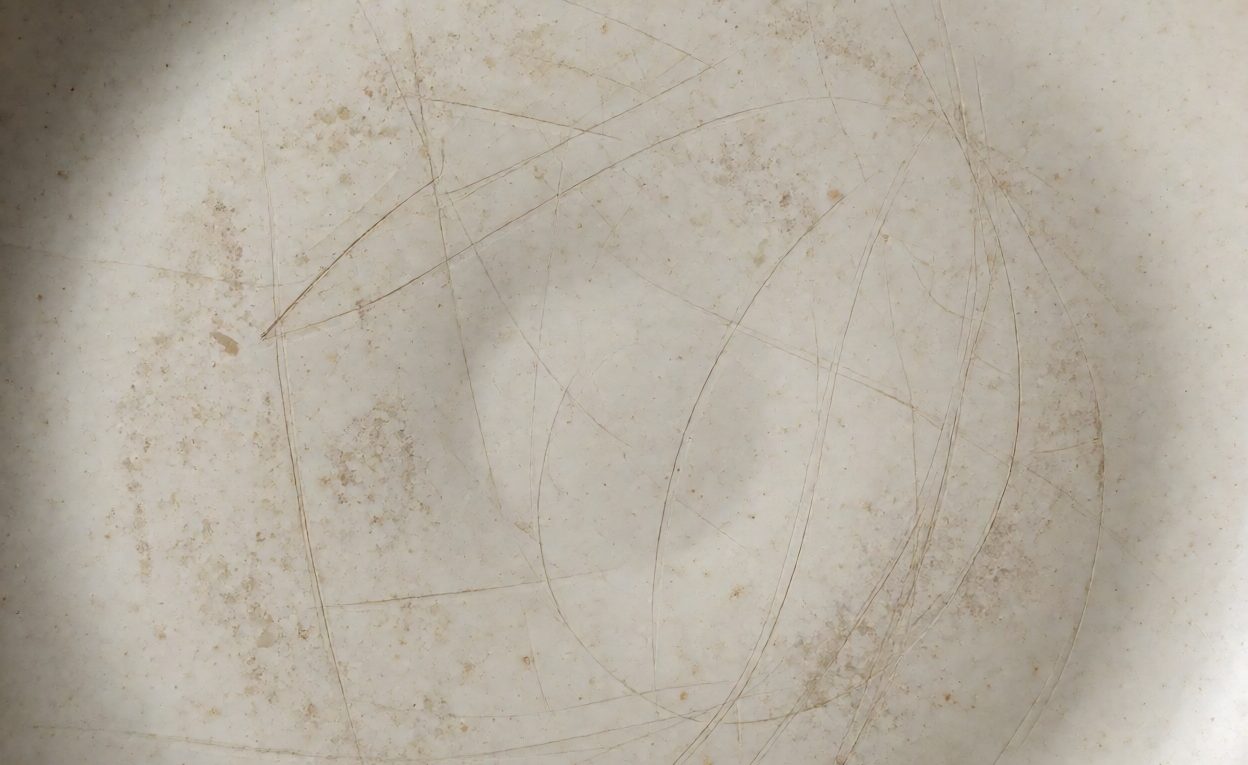
Polypropylene is the default for children’s and everyday tableware for good reason: it is light, tough, microwave-suitable, dishwasher-tolerant and has a comparatively straightforward food contact position. It takes decoration less brilliantly than melamine and it scuffs, but it fails safely – it deforms rather than shattering.
The specification points are wall thickness, which drives both rigidity, perceived quality and cycle time, and the colourant system, which must be assessed for the food contact conditions. Where a programme includes a printed graphic, the print system and its durability in a dishwasher matter as much as the substrate.
Bamboo Fibre and Plant-Fibre Composites
Plant-fibre composites are usually a plant filler in a polymer binder, marketed on renewable content. They look and feel distinct, which is the commercial appeal, and the regulatory position is the catch: the binder is still a polymer, and several markets have taken enforcement action on composites whose composition or migration behaviour was not adequately supported.
Plant-fibre composites also vary considerably between suppliers, so a sample that performs well tells you about that supplier rather than about the category.
For a buyer, the requirement is documentation: a clear statement of the binder and filler, and migration testing appropriate to the claimed use. Where a supplier cannot state the binder system, that is the point to stop rather than proceed.
Technical Background
All three are assessed as food contact materials, with migration testing appropriate to the food type and contact conditions. Melamine tableware is based on melamine resin, a thermoset whose hardness and printability explain its institutional use. Polypropylene is the widely used polypropylene thermoplastic chosen for toughness and microwave suitability.
Heat and Dishwasher Behaviour in Service
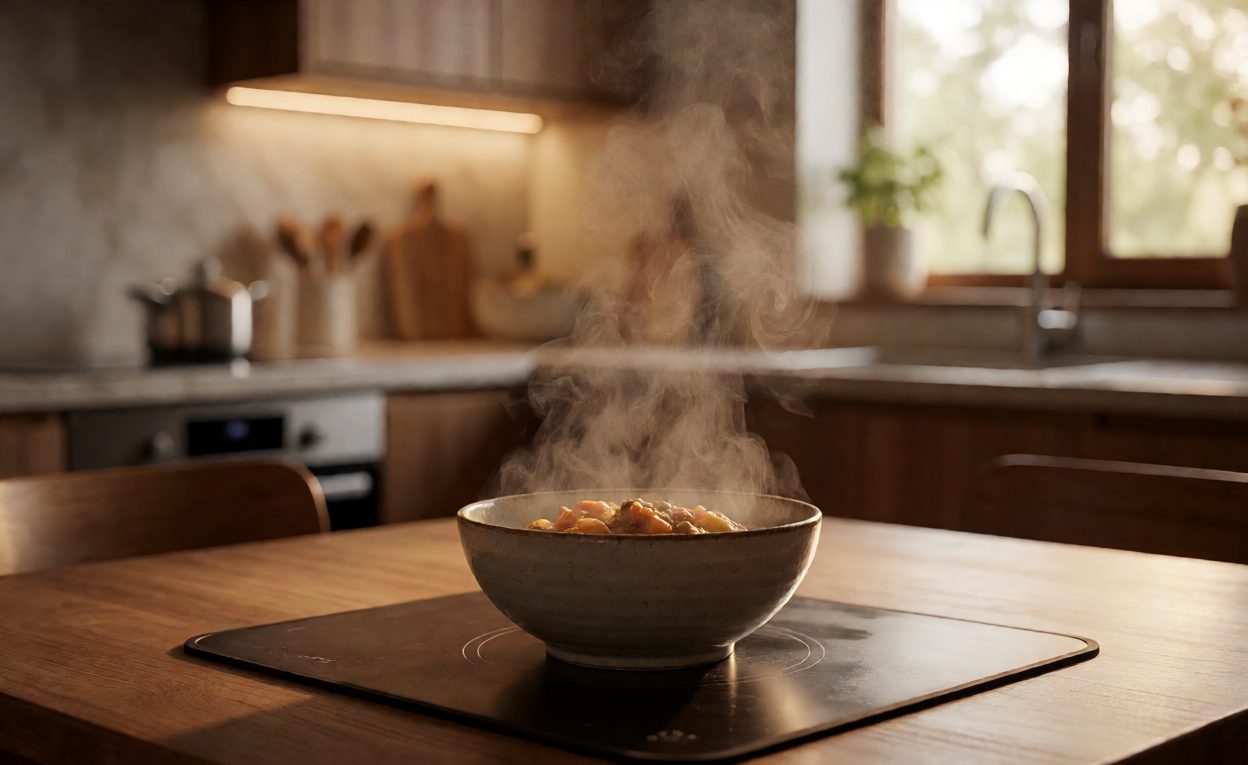
The temperature question is usually asked about the plate and answered about the resin, but the failure customers see is different. A plate that survives a hot meal can craze after repeated dishwasher cycles, because the exposure is not one hot contact but hundreds of shorter ones combined with detergent and drying heat. That is a test, not an inference.
Decoration is the other element that fails. A printed graphic may be perfectly durable on one substrate and start lifting or fading on another after the same number of cycles, and the print system is a separate specification from the moulding. Ask for a dishwasher test on the decorated article rather than on a plain sample.
Where a range includes both microwaveable and non-microwaveable items, the marking has to be unambiguous on the article itself rather than only on the packaging, because the packaging is discarded and the article is what the consumer heats.
Choosing by Channel
Institutional and casual dining favour melamine for surface durability, with microwave use excluded and stated. Children’s and household programmes favour polypropylene for safety margin and microwave convenience. Plant-fibre composites suit buyers with a sustainability story who are prepared to hold the documentation, and they should be treated as a documentation-heavy option rather than a simple substitute.
Weight and feel are worth specifying as well, because they are what a customer judges in the hand. A plate that is technically sound but too light reads as cheap, and a set that differs in weight between pieces reads as mismatched.
Where a range spans materials, keep the compliance file per material and per colourant set. Mixing evidence between materials is the fastest route to a gap that surfaces in an audit.
Material behaviour is discussed further in ABS versus PP versus PC and in choosing a resin grade. Safety requirements for children’s tableware are covered in children’s tableware safety, set composition and packaging in children’s dinnerware sets, and decoration options in branding and surface finishes.
Câu hỏi thường gặp
Can melamine go in a microwave?
No. Microwave use should be excluded and stated on the packaging, alongside dishwasher guidance.
Why choose polypropylene?
It is light, tough, microwave-suitable and dishwasher-tolerant, and it fails by deforming rather than shattering.
Are bamboo fibre products plastic-free?
Usually not. They are typically plant filler in a polymer binder, which is why the binder must be declared and tested.
What documentation should I require?
A stated binder and filler system plus migration testing appropriate to the claimed food contact conditions.
Which material lasts longest in service?
Melamine resists scratching best but chips; polypropylene scuffs but deforms safely. The answer depends on the setting.
Do colourants affect compliance?
Yes. Colourants are part of the material system assessed for migration, so evidence should cover them.
Should each material have its own compliance file?
Yes. Mixing evidence between materials and colourant sets is a common audit gap.