



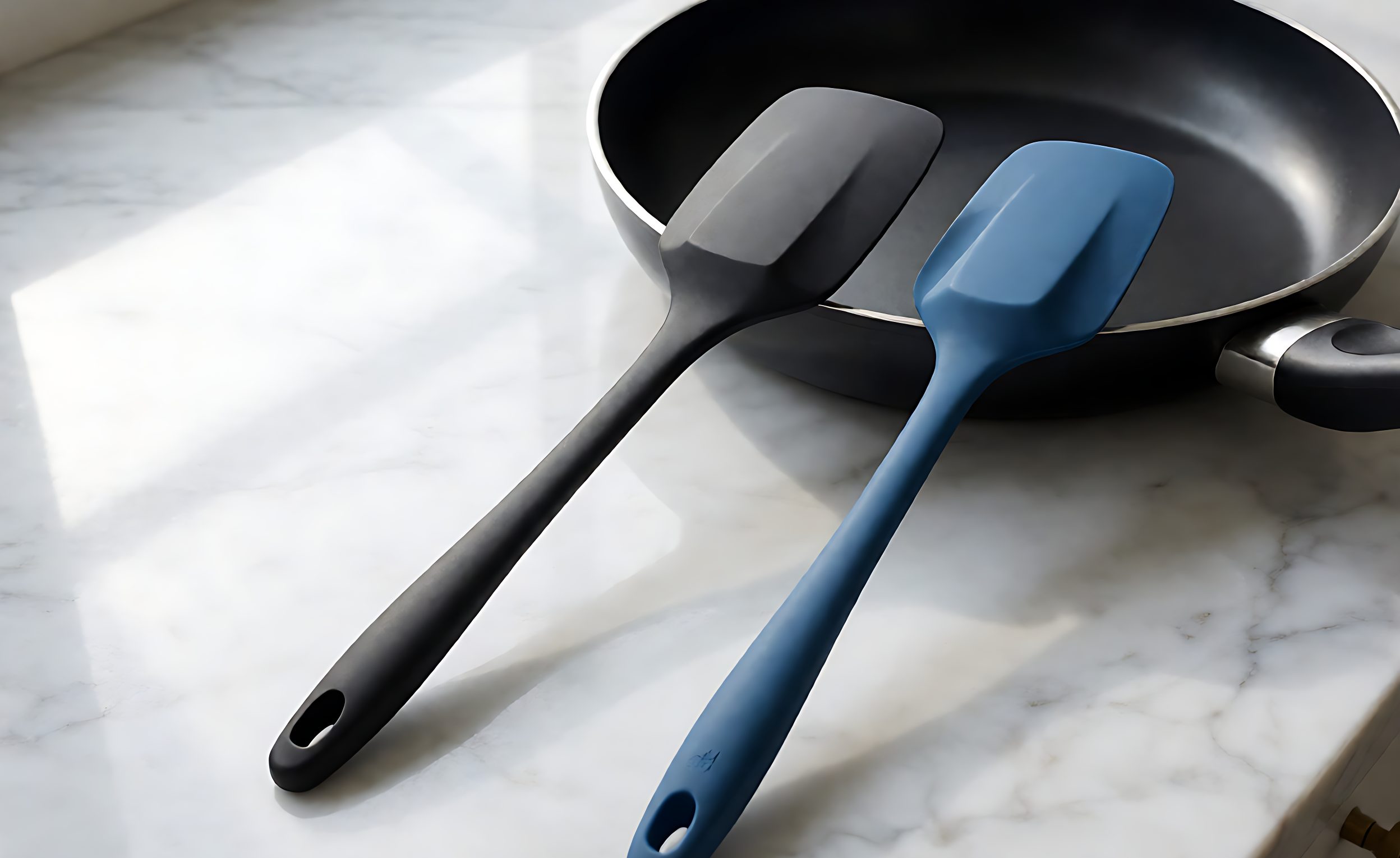
Almost every kitchen utensil range splits into two material camps at the working end: nylon and silicone. The choice is not cosmetic. It sets the heat claim on the packaging, decides whether the tool is safe on nonstick cookware, changes how the tool feels in the hand, and defines where each SKU sits on the price ladder. For a buyer building or extending a utensil programme, getting the split right is the difference between a range that covers its customers’ pans and one that generates the same complaint over and over.
The good news is that the trade-offs are well understood and cleanly specifiable. The bad news is that neither material is “better”, and ranges that pick one and drop the other usually leave a channel underserved.
Nylon: Stiffness and the Edge
Nylon – typically glass-filled engineering nylon in tool heads – is the stiff option. It holds a firm, thin edge, which makes it the better material for turners and spatulas that actually get under food: burgers, eggs, cookies coming off a sheet. A silicone edge that flexes too much frustrates exactly the tasks a turner exists for, and this single mechanical fact decides most of the assortment logic.
The heat limits are real and need honest packaging. Nylon heads are generally comfortable to roughly 200 degrees Celsius, sometimes a little more for filled grades, which covers most stovetop work but not resting a tool against a hot pan edge for minutes or leaving it in oil. Above its limit, nylon softens and can permanently deform; the failure is visible and unambiguous, and customers report it precisely. The specification should therefore state the temperature claim and test the head in contact with a pan at that temperature for a defined dwell, not just in ambient air.
Silicone: Heat Headroom and Cookware Kindness
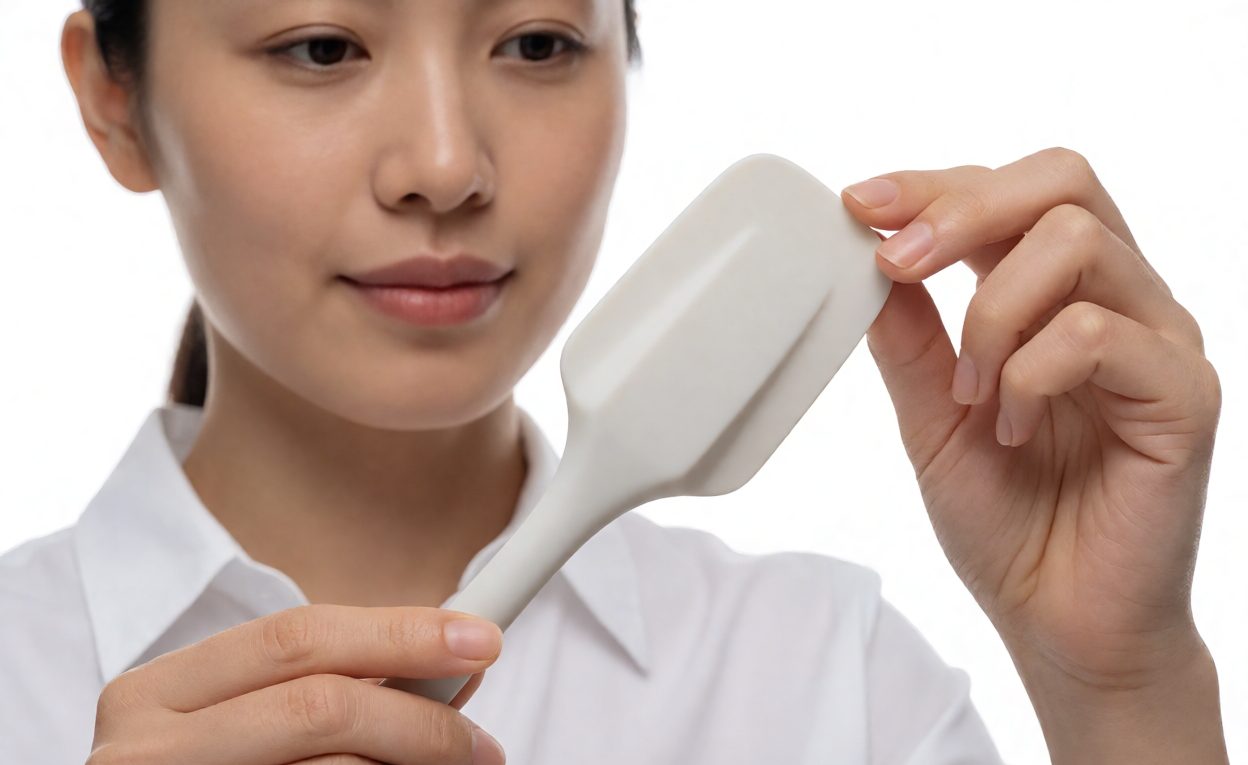
Silicone heads tolerate significantly higher temperatures – typically 230 to 260 degrees Celsius – and shrug off resting against a hot pan, which is how people actually use utensils. They are gentle on nonstick and ceramic coatings, they do not scratch, and they neither stain from tomato-based sauces the way some plastics do nor transfer odours the way worn nylon eventually can.
Their weaknesses are the mirror image of nylon’s: flexibility and edge quality. A spatula head that is too soft cannot lift a firm piece of food, and cheap silicone that is over-soft or that tears at the neck after a season is a standard category complaint. The specification should include shore hardness for the head, a tear-resistance requirement at the neck – the point where head meets handle, where failures concentrate – and a flex test that defines how much bend is acceptable. Internally reinforced silicone, with a nylon or steel core inside the head, is the usual answer and should be named explicitly on the drawing, because it changes both behaviour and cost.
Food Safety and Coating Compatibility
A supplier’s “food-grade” label does not by itself establish that a nylon or silicone utensil complies for every market and use. Check the actual formulation, food types, temperature and contact conditions against the applicable rules; the FDA explains the U.S. substance- and use-specific approach, and the EU framework is separate. Do not treat platinum curing or one report per colourway as universal legal requirements. Declare fillers and colorants in the bill of materials, and ask the compliance lab whether the formulation change affects existing evidence.
Coating compatibility is the commercial half of safety. Nonstick and ceramic pans are the reason the category shifted away from metal heads at all, and the packaging claim “safe for nonstick cookware” should be backed by a simple abrasion test: a defined number of strokes of the tool head on a coated test panel, inspected for marking. Both materials pass this in good grades; worn, roughened or over-filled nylon heads can fail it, which is why the test belongs on the finished article rather than on the datasheet.
Staining, Odour and Dishwasher Life
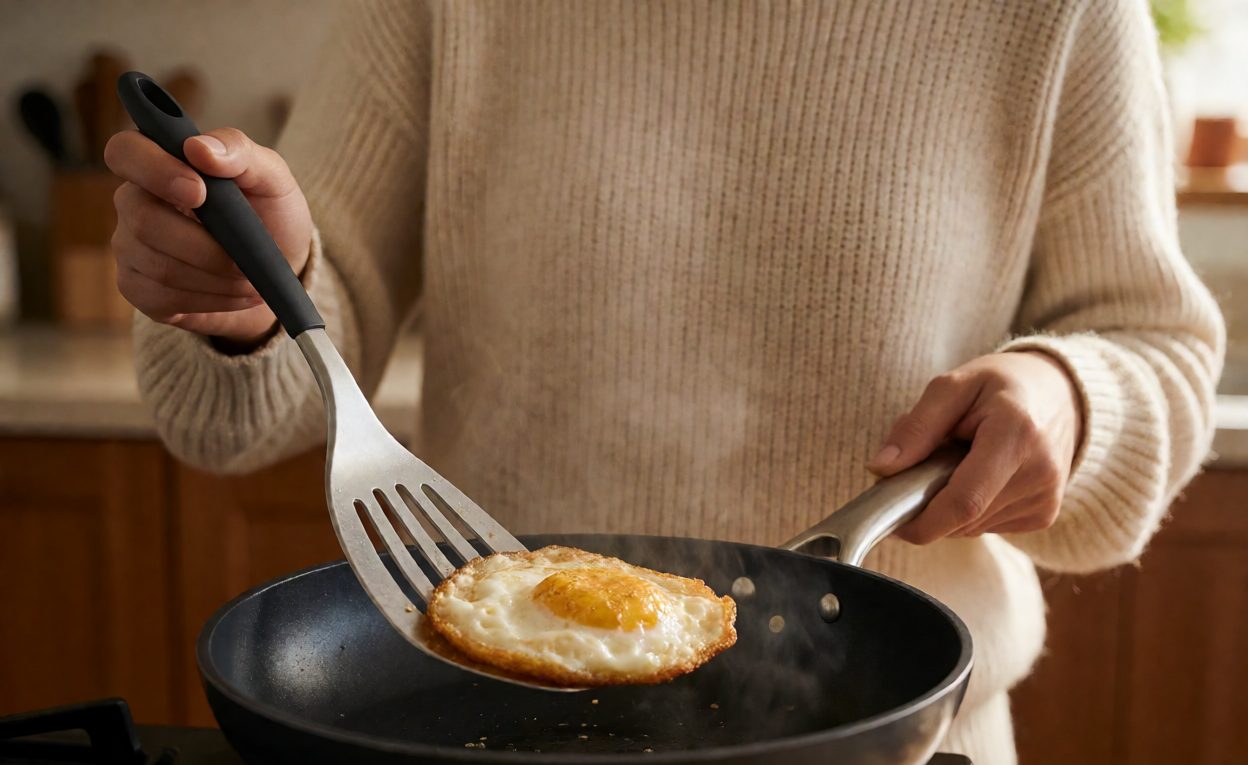
Nylon is more prone to staining with strongly coloured food and to holding odours as its surface wears; silicone resists both, though pale silicone can stain with turmeric and similar pigments, which is a colour-choice question rather than a material failure. In the dishwasher, both survive cycles well, but decorated or two-material tools fail at their joints and prints rather than at their heads – the same principle as every other housewares category, tested on the finished article over repeated cycles.
Odour retention deserves one line in the specification: after a defined exposure to a strongly aromatic cooking oil, the tool should return to neutral after normal washing. Customers notice smell long before they notice hardness numbers.
Building the Range
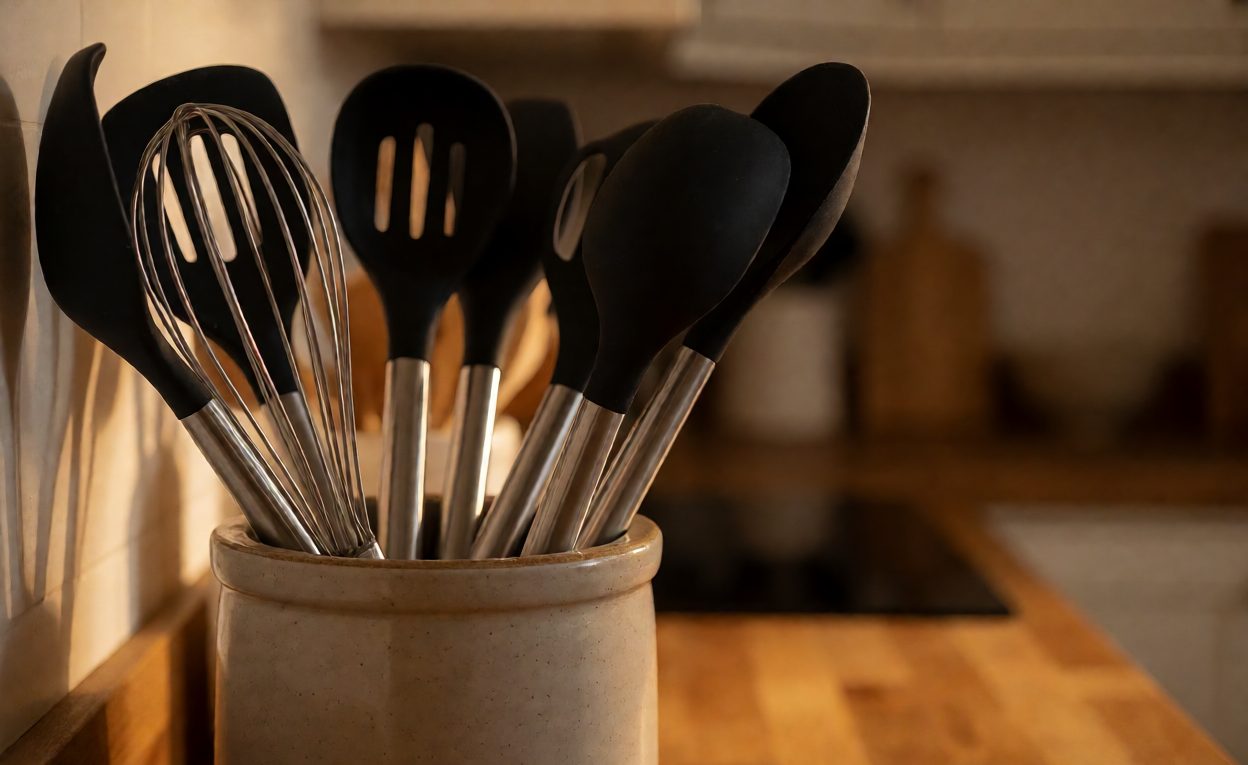
The practical assortment rule that works across channels: silicone where the tool touches pans for long periods or scrapes bowls – spoons, ladles, spatulas, tongs tips, scraping spatulas – and nylon where a firm edge does the work – turners, firm spatulas, and value-tier lines where cost matters most. Handles can be stainless, which reads as premium and survives dishwasher life, with the head material carrying the cookware story.
Price laddering follows naturally: nylon as the accessible tier, reinforced silicone as the core, and fully silicone-plus-stainless as the step-up. A three-tier ladder built on this split is easy to explain on shelf and easy for a factory to quote.
What to Specify on the Order
- Head material and grade: food-contact grade, platinum-cured silicone or declared filled nylon, per colourway reports.
- Temperature claim: tested in pan contact at the stated limit, with dwell time defined.
- Hardness and flex: shore hardness for silicone heads; a defined flex limit at the neck.
- Neck tear resistance: the failure point of every head, tested as a requirement.
- Coating compatibility: stroke test on nonstick panels for the finished head.
- Odour and stain behaviour: defined exposure test, plus colour choices that limit visible staining.
Technical Background
Nylon and silicone grades can differ in stiffness, heat performance and wear. Compare the specific compound and finished utensil under the temperature, cleaning and cookware-contact conditions stated for the product; polymer-family descriptions alone do not establish those performance claims. Food-contact suitability must be assessed separately for the intended use and destination market.
Related Buying Decisions
For material selection across a utensil range, see the published resin selection guide and the ABS, PP and PC comparison. If the range extends into infant feeding, review food-contact evidence for that product’s own intended use and market; the silicone feeding-set guide is a product-specific reference, not a universal transfer rule. Handle decoration is covered in the branding and surface-finishes guide.
Frequently Asked Questions
Which material is better for nonstick pans?
Silicone, marginally – it never scratches in any grade. Quality nylon is also coating-safe, but worn or over-filled nylon heads can mark panels over time.
Which tolerates higher heat?
Silicone, typically to 230-260 degrees Celsius versus roughly 200 for nylon heads, which is why pan-resting tools should be silicone.
Why do serious cooks still want nylon?
Stiffness. A firm thin edge lifts food, and nylon holds one better than soft silicone – hence reinforced silicone as the premium compromise.
What fails first on a silicone tool?
The neck, where head meets handle. Tear resistance there is the single most important mechanical requirement.
Do nylon utensils stain and hold odours?
More than silicone, especially as the surface wears; pale silicone can stain with turmeric but stays neutral in odour.
Is glass-filled nylon safe for food contact?
Declare the filler and colorants in the drawing and bill of materials, then ask whether the applicable food-contact assessment and test evidence cover that exact formulation and intended use.
How should a range split between the two?
Silicone for pan-contact and scraping tools, nylon for firm-edged turners and value tiers, with the price ladder built on that split.