




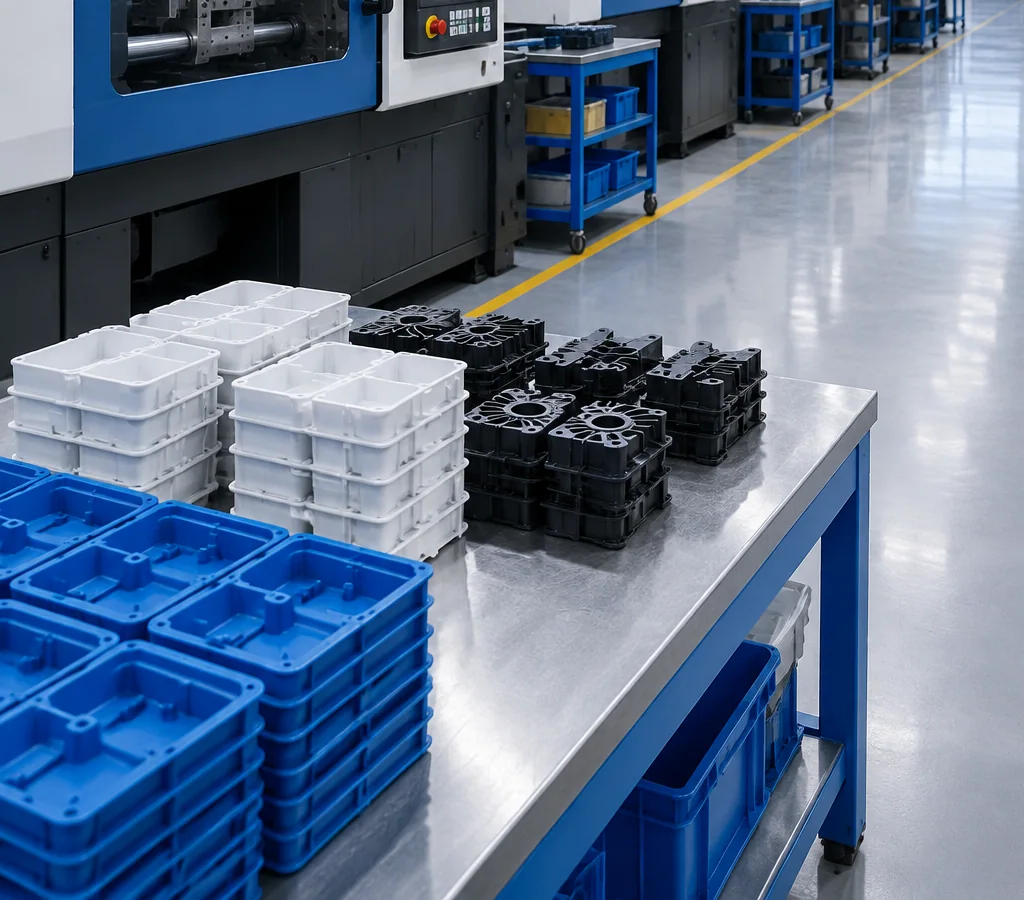
Việc lựa chọn các công ty khuếch nhựa không chủ yếu là so sánh giá. Nhà cung cấp phù hợp với dự án của bạn là nhà cung cấp có năng lực kỹ thuật khuôn, phạm vi máy móc, khả năng xử lý vật liệu, hệ thống chất lượng và quy trình hoàn thiện phù hợp với hình học chi tiết, khối lượng hàng năm, dung sai và yêu cầu bề mặt — và vẫn có thể hỗ trợ chương trình khi nó chuyển từ phê duyệt mẫu sang sản xuất hàng loạt.
Đối với người mua OEM và sản xuất theo yêu cầu, cách tiếp cận khả thi là xác định các yêu cầu của chính bạn trước tiên, sau đó kiểm tra từng nhà cung cấp theo các yêu cầu đó bằng cách sử dụng tài liệu, mẫu và câu trả lời kỹ thuật thay vì các tuyên bố tiếp thị. Các mục bên dưới đề cập đến những gì cần kiểm tra, những gì cần gửi, cách định giá được cấu trúc như thế nào và những nơi rủi ro dự án phổ biến nhất xuất hiện.
Xác định yêu cầu của bạn trước khi liên hệ với các nhà cung cấp
Hầu hết các cuộc so sánh nhà cung cấp thất bại vì người mua chưa xác định rõ các đầu vào của chính họ, khiến mọi báo giá đều dựa trên các giả định khác nhau. Trước khi yêu cầu báo giá, hãy thu thập:
- Định nghĩa chi tiết: Tệp 3D (STEP hoặc IGES) và bản vẽ 2D với dung sai và phương án gốc, hoặc mẫu vật lý nếu chưa có bản vẽ.
- Vật liệu: ABS, PC, PC/ABS, PP, PA, POM, PMMA, TPE hoặc nhựa kỹ thuật, cùng với bất kỳ ràng buộc nào như yêu cầu tiếp xúc thực phẩm, chất cháy chậm, phơi tia UV hoặc khả năng chống hóa chất.
- Khối lượng: Số lượng hàng năm dự kiến, số lượng ra mắt và cách khối lượng có thể tăng lên trong vòng đời sản phẩm.
- Mong đợi về chất lượng: Lớp trang trí, kích thước quan trọng đối với chất lượng, mức độ khiếm khuyết có thể chấp nhận được cho thị trường của bạn.
- Phạm vi ngoài khuếch: Decor, hàn, điện tử, lắp ráp phụ, lắp ráp cuối cùng và đóng gói.
- Cấu trúc thương mại: Ai sở hữu khuôn, MOQ dự kiến, điều khoản giao hàng và ngày ra mắt mục tiêu.
Một nhà cung cấp nhận được thông tin này có thể báo giá trên cơ sở so sánh được. Một nhà cung cấp chỉ nhận tệp 3D thường sẽ báo giá một ước tính thô thay đổi sau này.
Các năng lực cốt lõi cần xác minh ở một công ty khuếch nhựa
Năng lực thiết kế và chế tạo khuôn
Khuôn là nơi phần lớn rủi ro về chi phí và lịch trình của chương trình nằm ở đó. Các câu hỏi hữu ích bao gồm: thiết kế khuôn được thực hiện trong nhà hay gia công bên ngoài? Các công cụ phân tích dòng chảy khuôn nào được sử dụng? Thiết bị gia công và hoàn thiện nào có sẵn cho chính khuôn (CNC, EDM, cắt dây, đánh bóng)? Đội ngũ xây dựng bao nhiêu khuôn mỗi năm? Có kinh nghiệm với khuôn đa hốc, khuôn gia đình, runner nóng, khuôn chèn và khuôn bọc không?
Bạn không tìm kiếm nhà máy khuôn lớn nhất. Bạn tìm kiếm đội ngũ mà kinh nghiệm của họ phù hợp với loại chi tiết của bạn — một vỏ bọc mỏng, một chi tiết trang trí bóng cao và một chi tiết chức năng dung sai chặt chẽ mỗi loại đặt ra các yêu cầu khác nhau đối với thiết kế khuôn.
Công suất khuếch và phạm vi máy
Phạm vi lực kẹp cho biết kích thước chi tiết mà nhà máy thực sự có thể sản xuất. Một nhà cung cấp chỉ có máy ép nhỏ sẽ không thể kinh tế khi đúc khuôn một vỏ lớn, và một nhà cung cấp chỉ có máy ép lớn sẽ lãng phí năng lực cho các chi tiết chính xác nhỏ. Hãy yêu cầu cung cấp dải tải trọng, xem máy ép là thủy lực, hoàn toàn điện hay hybrid, và xem liệu có tự động hóa như robot lấy sản phẩm, băng tải xử lý và giám sát quy trình đóng vòng không.
Ngoài ra, làm rõ phạm vi quy trình: đúc khuôn tiêu chuẩn, đúc khuôn thành mỏng tốc độ cao, đúc khuôn đứng cho chi tiết chèn, đúc khuôn hai lần hoặc nhiều vật liệu, và đúc khuôn các nhựa kỹ thuật chịu nhiệt độ cao. Nếu bất kỳ quy trình nào trong số này được ủy thác, hãy hỏi đối tác nào thực hiện và ai chịu trách nhiệm về chất lượng.
Cuối cùng, hỏi về cách lập kế hoạch và theo dõi sản xuất: khuôn di chuyển từ thử nghiệm và phê duyệt mẫu đến kiểm tra sản phẩm đầu tiên và sau đó đến sản xuất theo lịch trình như thế nào, và điều gì sẽ xảy ra khi sản lượng của bạn vượt quá năng lực hiện tại.
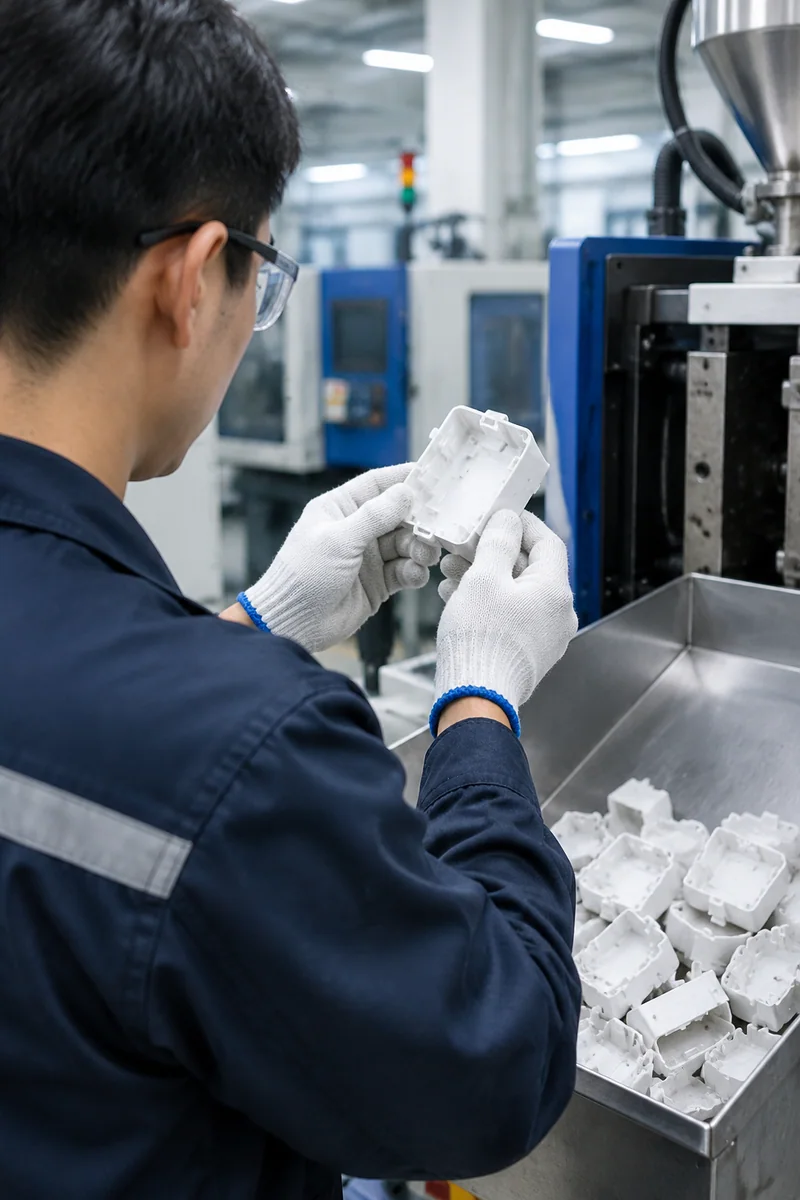
Tài liệu về vật liệu và quy trình
Đối với mỗi nhựa bạn dự định sử dụng, nhà cung cấp nên có thể nêu rõ yêu cầu sấy khô, khoảng thời gian xử lý, dự kiến co ngót và liệu vật liệu có sẵn có hay đặt hàng theo dự án. Nếu sản phẩm của bạn sẽ được bán vào các thị trường có quy định, hãy xác nhận rằng có thể cung cấp chứng chỉ vật liệu và khả năng truy xuất lô.
Minh bạch cơ sở vật chất
Hợp lý khi yêu cầu một cuộc kiểm toán, một video tham quan, hoặc tối thiểu là danh sách nhà máy với số lượng thiết bị, khu vực đúc khuôn, dây chuyền lắp ráp và năng lực phòng thí nghiệm. Một nhà cung cấp không thể mô tả sàn nhà của họ một cách cụ thể sẽ khó đánh giá. Các bên mua hàng tại nước ngoài nên coi việc xem xét cơ sở trực tiếp hoặc có ghi hình là một bước chuẩn, không phải là một yêu cầu bất thường.
DFM và phân tích dòng chảy khuôn: giai đoạn quyết định chi phí dự án
Phản hồi Thiết kế cho Sản xuất (DFM) là một trong những chỉ báo rõ ràng nhất về chiều sâu kỹ thuật. Một nhà cung cấp có năng lực sẽ xem xét chi tiết của bạn về độ dày thành, góc thoát, thiết kế gân và trụ, vị trí cổng, vị trí đường hàn, vết lõm, rủi ro cong vênh, khả năng thoát và tính khả thi của khuôn — và trả lời bằng bình luận viết kèm báo giá hoặc ngay sau đó.
Một nhà cung cấp chỉ trả giá, không có bình luận kỹ thuật, đang cung cấp cho bạn ít thông tin hơn và chuyển rủi ro làm lại sang bạn. Phân tích dòng chảy khuôn có giá trị nhất đối với các chi tiết có độ phẳng chặt chẽ, thành mỏng, đường dẫn dòng dài hoặc yêu cầu thẩm mỹ cao, nơi nó dự đoán sự điền đầy, đóng gói, làm mát và cong vênh trước khi cắt thép.
Khi so sánh các phản hồi DFM, hãy xem xét liệu các đề xuất có cụ thể và được ưu tiên không, và liệu nhà cung cấp có giải thích sự đánh đổi (ví dụ, góc thoát bổ sung cải thiện việc thoát nhưng thay đổi ngoại hình) không.
Hệ thống chất lượng, thử nghiệm và tài liệu
Năng lực chất lượng được xác minh tốt nhất bằng phương pháp chứ không chỉ bằng chứng chỉ. Hãy hỏi:
- Có các giai đoạn kiểm tra nào (vật liệu đầu vào, trong quy trình, cuối cùng, trước khi giao hàng)?
- Các thiết bị đo lường nào có sẵn — máy đo tọa độ (CMM), đo quang học, thước đo, đo màu, ánh sáng kiểm tra bề mặt?
- Các cuộc kiểm tra sản phẩm đầu tiên và nghiên cứu năng lực được báo cáo như thế nào?
- Những thử nghiệm chức năng hoặc độ tin cậy nào có thể được thực hiện tại cơ sở, và những thử nghiệm nào được gửi cho bên thứ ba?
- Các lỗi được kiểm soát như thế nào, và quy trình hành động khắc phục là gì khi phát hiện sai lệch?
- Các chứng chỉ hệ thống quản lý nào được giữ, và phạm vi cùng cơ quan cấp chứng chỉ là gì?
Yêu cầu xem báo cáo kiểm tra mẫu và bộ hồ sơ tài liệu theo kiểu PPAP. Định dạng sẽ cho bạn biết nhanh chóng nhà cung cấp thường xuyên làm việc với khách hàng OEM hay chủ yếu với người mua bán buôn địa phương.
Gia công thứ cấp và lắp ráp: một cửa so với nhiều nhà cung cấp
Hầu hết các chi tiết đúc không được giao hàng dưới dạng đúc trần. Phạm vi xử lý dòng điển hình bao gồm hoàn thiện và tạo vân bề mặt, sơn, in, ép nhiệt, khắc laser, hàn siêu âm, hàn nhiệt, hàn quay, lắp ráp điện tử, lắp ráp sản phẩm cuối cùng và đóng gói.
Người mua thường đối mặt với sự đánh đổi ở đây:
- Nhà cung cấp tích hợp: ít hơn các khâu chuyển giao, ít hơn thiệt hại do vận chuyển và xử lý, thời gian giao hàng tổng thể ngắn hơn, một bên chịu trách nhiệm cho lắp ráp hoàn thiện.
- Các nhà cung cấp riêng biệt cho từng bước: potentially more competitive pricing on each operation and easier switching of a single step, but more coordination work, more inventory movement and split responsibility when a defect appears.
Which is better depends on your product’s complexity and your internal engineering resources. Products that combine plastics, electronics and final assembly — a household appliance or a robotic cleaning product, for example — usually benefit more from integration, because the interfaces between parts, electronics and housing are where quality problems concentrate. Suppliers that offer integrated OEM/ODM manufacturing services can typically take a concept or drawing through tooling, molding, post-processing, assembly and testing under one quality system.
Where the factory is located
Manufacturing location affects duty exposure, logistics cost, lead time, communication hours and supply-chain depth. China and Vietnam both host mature plastics supply chains, and many buyers now evaluate both. Points worth weighing:
- Supply-chain depth: resin, hardware, electronics and packaging availability near the plant.
- Market access: applicable tariffs and trade rules for your destination country, which change over time and should be confirmed for your case rather than assumed.
- Engineering depth: whether tooling and DFM expertise sits in the same organization or is subcontracted.
- Communication: time-zone overlap with your engineering and sourcing team.
- Continuity: whether the supplier has more than one site, which can matter for capacity expansion or risk spreading.
Some suppliers operate in both countries, which allows a program to be tooled in one location and molded or assembled in another. DAYIN, a B2B manufacturing partner founded in 1989, runs manufacturing operations in China and Vietnam with more than 100 injection molding machines, in-house mold development, assembly lines and laboratory and quality-control capability — its company background and manufacturing base describe that setup in more detail.
How injection molding pricing is actually structured
A single “price per part” figure is not comparable between suppliers unless the same elements are included. Typical cost elements are:
| Cost element | Main drivers | How to compare fairly |
|---|---|---|
| Tooling / mold | Cavity count, steel grade, hot runner, mold standard, part complexity | Compare at the same cavity count and expected tool life; ask what is excluded |
| Unit part price | Part weight, material, cycle time, machine tonnage, yield | Request pricing at two or three volume tiers |
| Gia công hai lần | Painting, printing, welding, engraving, labor content | Confirm whether quoted per part or per batch |
| Assembly and test | Component count, test coverage, packaging | Confirm whether components are supplied by you or sourced by the supplier |
| Engineering / NRE | DFM, mold flow, prototype iterations, fixtures | Ask for a clear list rather than a lump sum |
| Logistics and duties | Incoterms, packing method, destination | Specify the Incoterm before quoting |
| Mold maintenance | Tool life target, service interval, spare parts | Ask what is included and what is charged separately |
The cheapest tool quote is not automatically the lowest total cost. A tool built below the required specification may need repair, produce higher scrap, or limit cycle time — all of which appear later as unit cost. Conversely, an over-specified tool on a low-volume product carries unnecessary upfront spend. Match the tool specification to realistic lifetime volume.
MOQ, tool ownership, IP and contracts
Document these before the mold is cut:
- Tool ownership: state in writing who owns the mold, whether it can be transferred, and under what conditions.
- MOQ: minimum order quantity depends on cavity count, material minimums, color changes and setup time. Low MOQ is neither automatically good nor bad; confirm what it includes.
- IP protection: mutual NDA, ownership of drawings and tooling data, and restrictions on subcontracting your parts to third parties.
- Change control: how engineering changes are quoted and approved after tooling starts.
- Warranty and liability: what happens if a non-conformance is found after shipment.
Project management and communication
Ask who your named engineering contact will be, whether they can communicate in your working language, and how often you will receive updates during tooling — photographs of mold progress, trial schedules and sample reports are common practice for OEM programs.
Clarify the sample approval sequence: when the first trial samples are expected, how many rounds are typically included, and what evidence accompanies the approval sample. Programs usually fail on schedule when this sequence is left vague rather than when the molding itself is difficult.
What to send when requesting a quotation
- 3D files (STEP/IGES) and 2D drawings with tolerances, or a physical sample.
- Intended material and any regulatory or environmental requirements.
- Annual volume, launch volume and expected growth.
- Cosmetic and functional requirements, including color and surface finish references.
- Scope list: molding only, or molding plus finishing, welding, electronics and assembly.
- Target launch date and any fixed milestones.
- Delivery destination and preferred Incoterm.
- Whether you already have a mold, or need one designed and built.
Suppliers who receive this package generally respond with a usable DFM review, a tooling proposal and volume-tiered pricing. Suppliers who receive a partial package respond with a placeholder price and a long list of open questions.
Common warning signs during evaluation
- No DFM comments or technical questions returned with the quotation.
- Tool price far below every other bid with no explanation of what is omitted.
- Vague answers about machine tonnage, cavity count or measurement equipment.
- Refusal to allow a facility visit or video review.
- Unclear or undocumented mold ownership.
- No stated maintenance policy and no spare-cavity arrangement.
- Slow or inconsistent responses during the pre-sales stage, when the commercial incentive is highest.
None of these alone disqualifies a supplier, but a pattern of several together usually predicts a difficult project.
How to compare a shortlist objectively
Weight the criteria that matter for your product and score each supplier, rather than deciding on price alone. A workable weighting for a typical OEM project might treat technical capability (tooling and molding) and quality systems as the highest-weight groups, with cost, lead time, location and communication filling the rest. Score with evidence: a DFM report, a machine list, an inspection sample, a reference program.
A shortlist of three suppliers is usually enough for a first comparison. Request the same information from all three, and ask each to comment on the same drawing so that the engineering responses can be read side by side. Additional background on tooling, molding and product development is available in DAYIN’s manufacturing articles if you need terminology or process references before shortlisting.
FAQ
How many plastic injection molding companies should I request quotes from?
Three is a practical number for most projects. Fewer limits your ability to benchmark tooling and part pricing; more adds coordination time without much additional insight unless your product is highly specialized.
Should I always choose the lowest tooling price?
No. Tool cost should be judged together with tool specification, expected tool life, unit price at your real volumes and the supplier’s maintenance policy. The lowest quote may exclude items such as slides, hot runners or spare components.
Can one supplier handle molding, decoration and assembly?
Many can, and integrated programs reduce handoffs and split responsibility. Whether integration suits you depends on product complexity and how much engineering resource you have internally to coordinate multiple vendors.
What MOQ should I expect?
MOQ varies with cavity count, material minimum order quantities, color changes and setup time, so no universal figure applies. Ask each supplier to explain how their MOQ is calculated rather than only stating a number.
Do I own the mold after paying for it?
Ownership depends on the contract. If ownership matters to you, state it explicitly in writing, including transfer conditions and access to maintenance records.
How long does a molding project usually take?
Timeline depends on part complexity, tool design, cavity count, trial rounds and approval speed. A simple single-cavity tool with a straightforward part typically takes far less time than a multi-cavity cosmetic tool requiring multiple trial rounds. Ask for a schedule with milestones rather than a single total figure.
Next step
The evaluation process works best when it starts with your own defined requirements, then moves through DFM review, tooling proposal, sample approval and volume production with a clear owner at each stage. If you have drawings, a sample or a concept and want a technical review before shortlisting, you can send your files for evaluation and receive feedback on mold feasibility, molding approach and the downstream processes your product will need.