





In the process of mold manufacturing and injection molding in Vietnam, some degree of pollution is inevitable. Particularly in fields such as electronics, aerospace, and construction, despite rapid industry growth, environmental pollution remains an issue. This presents a series of challenges for the injection molding process.
Currently, the manufacturing and production of injection molds generate significant amounts of waste gas and wastewater. National environmental agencies are continuously raising environmental requirements for manufacturers. Although some processing models are quite stringent, in practice, environmental standards across industries and the plastic particles produced during processing still vary.
The plastic particles generated during injection mold processing are typically formed in a molten state, which has a relatively minimal impact on the atmosphere. For example, the Xubang brand effectively manages pollution during processing. The water used not only cools down the system but is also sprayed onto the product surface, reducing wastewater’s environmental impact.
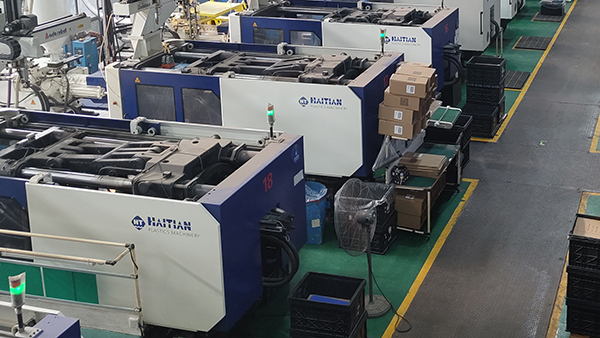
Contamination: The Invisible Defect Generator
Contamination generates defects without leaving its address. The sources and their housekeeping answers:
| Source | Defect signature | Control that works |
|---|---|---|
| Regrind carryover | Black specks in cosmetic parts | Dedicated lines per colour family |
| Hopper and dryer residue | Char and discolouration | Scheduled purge, sealed transfer |
| Airborne dust at press | Inclusions on glossy faces | Press-area zoning, closed conveyance |
| Mold release buildup | Blemishes, paint adhesion loss | Measured application, not habitual |
The regrind row is where economics meets cosmetics, and the compromise is zoning rather than abstinence: regrind runs structural and internal parts on dedicated lines, cosmetic faces run virgin — and the colour-family discipline prevents the black speck that haunts every white housing program. The release-agent row is the subtlest: agents applied by habit rather than by measurement build up on steel, and their signature — blemishes today, adhesion failures at the paint line tomorrow — traces back to a spray habit nobody logged. Contamination control is therefore less a technology than a housekeeping culture, visible on any walk-through: what the floors, hoppers and transfer containers look like predicts the defect log better than the defect log itself. The quality-identification skills are in identifying molded part quality, and the transparent-part stakes in transparent molding. Reference: contamination control practice and particulate behaviour.