



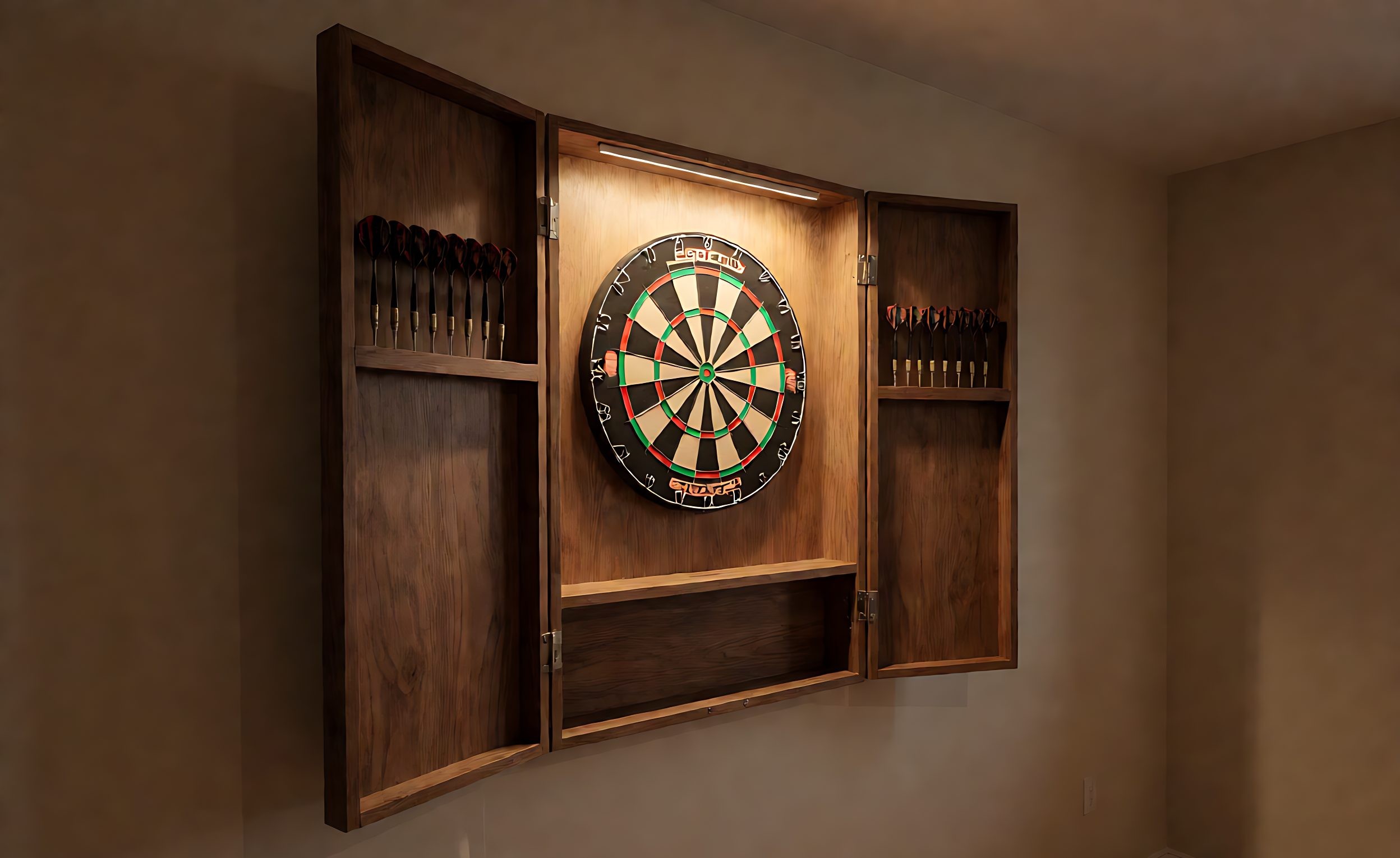
A dartboard cabinet is bought as furniture and shipped as freight, and the material choice sits right on the line between the two. On a showroom sample, a well-finished fibreboard cabinet and a solid wood cabinet can look almost identical. Three months later, in a basement games room with seasonal humidity, or two weeks into a container voyage, they behave like different products. For a buyer specifying a cabinet programme, material is the decision that sets weight, hinge reliability, finish durability and landed cost at the same time.
The board itself is the part players care about, and it is usually specified separately. The cabinet is what customers actually touch every evening – the doors that swing, the chalk holder, the hinges, the surface that takes a scuff from a dart point. Getting the material right is mostly about predicting those ordinary interactions rather than about any single laboratory property.
What MDF Does Well
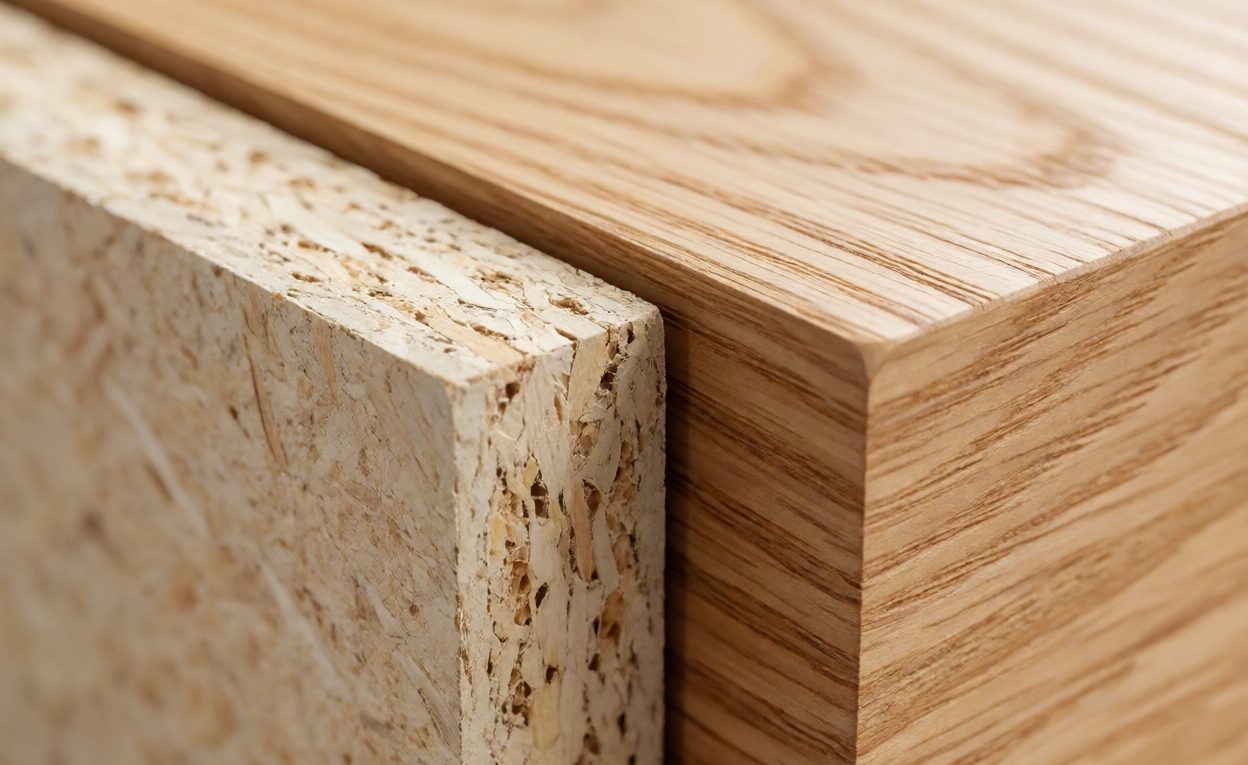
Medium density fibreboard is an engineered panel made from wood fibres bonded under heat and pressure. Its advantage for a cabinet is dimensional consistency: it is flat, uniform in density, and free of the grain direction, knots and voids that make natural material unpredictable. That consistency is why it takes a painted or laminated finish so evenly, and why a fibreboard door stays flat when a solid one might cup.
It also behaves well at the machine. Edges can be profiled and painted cleanly, screw-holding is a known and repeatable quantity when the specification calls for the right fasteners and inserts, and colour match across an order is much easier to hold than with a natural material. For a programme shipping thousands of painted or veneered units, that repeatability is worth more than any single property.
Where MDF Fails, and How to Prevent It
The failure mode is moisture, and it is not subtle. Unguarded edges and unsealed backs absorb water, the fibres swell, and the swelling does not reverse when the panel dries. A cabinet against a damp basement wall shows it at the bottom edge and around hinge bores first – the places that carry load.
The second failure mode is fastener pull-out. Repeated door cycles work screws loose in a fibre panel faster than in wood, and a sagging door is the most common cabinet complaint in the category. Both problems are cheap to design out, and both should be written clauses rather than assumptions:
- Seal every face and edge – including the back panel and the bottom edge, which are the surfaces that meet damp walls and floors.
- Specify hinge fasteners for engineered board – confirmat-style screws or threaded inserts with machine screws, not ordinary wood screws driven into edge fibre.
- Set a moisture test on the finished unit – a defined humidity exposure followed by a door-sag and edge-swelling check.
- Define the finish system – primer, topcoat and edge treatment as a system, since the edge is where a good finish fails.
What Solid Wood Buys You
Solid wood cabinets are bought for the reason any solid wood furniture is bought: the material itself is the finish. Grain, warmth and the way the surface takes a mark all read as premium, and a stained hardwood cabinet supports a price position that a painted panel does not. Screw-holding on a solid rail is better, and a hinge that has been re-tightened once tends to stay tight.
The costs are real. Solid material moves with humidity – it expands and contracts across the grain, and a door built without allowance for that movement will cup or bind seasonally. Natural variation means colour and grain match across an order has to be managed rather than assumed. Weight rises, which matters twice: once in the freight calculation, and once when the customer has to lift the unit onto a wall bracket. And good hardwood is the most expensive line in the bill of materials, with the most volatile pricing.
Veneered and Engineered Alternatives
The middle path is common in this category and often the right answer commercially: an engineered or fibreboard substrate carrying a real wood veneer face. The customer sees and touches wood; the panel underneath stays flat and stable; the unit weight and cost stay closer to the engineered end of the range. For a buyer, this is frequently the best blend of shelf appeal and container economics.
The specification point is thin and important: veneer thickness and the edge treatment. A thin veneer over a stable substrate performs well; a paper-thin face over a poorly sealed core takes impact badly at corners. Ask what happens at the door edges, because that is where the veneer meets the first dart point or the first knock in a hallway.
Weight, Freight and Hanging
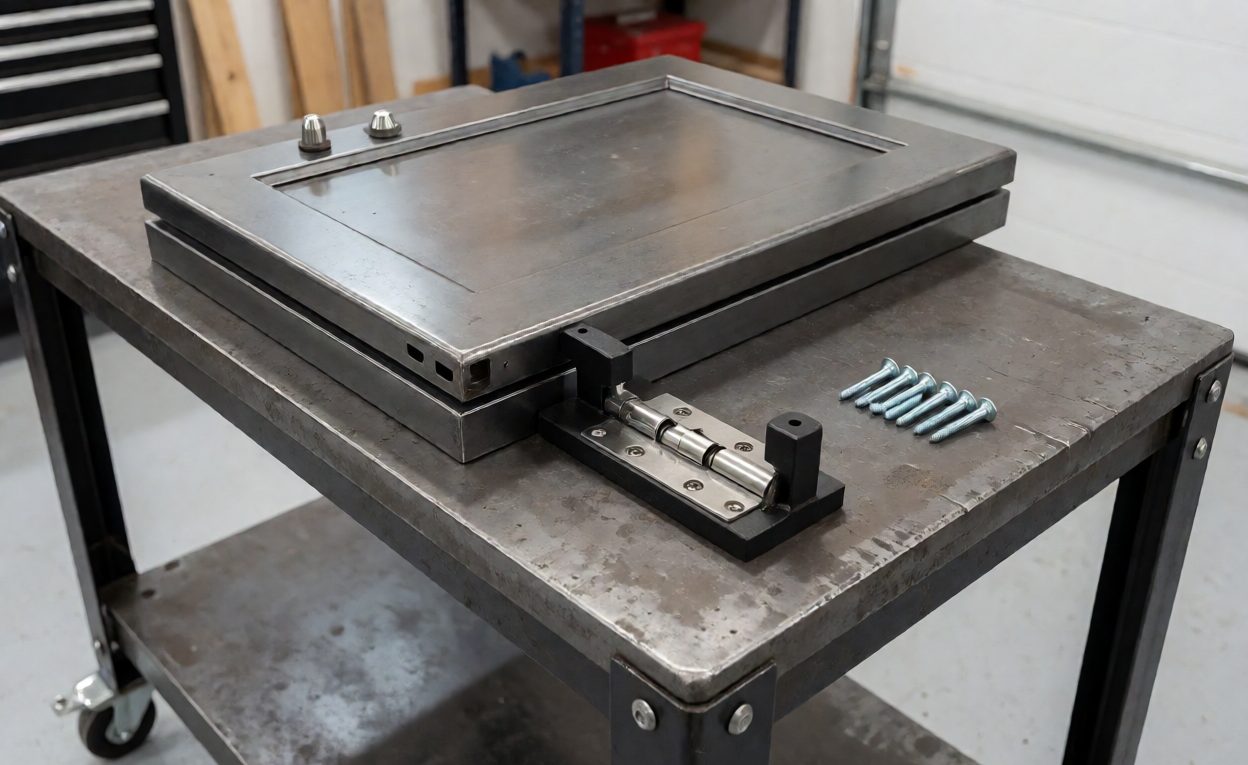
Cabinet material decides two numbers a buyer feels directly. The first is unit weight, which flows into carton weight, pallet count, container loading and, for parcel channels, the shipping tier the product falls into. A heavier cabinet can quietly move a SKU into the next freight bracket, and that difference is margin rather than revenue.
The second is the wall. A heavier cabinet needs a more serious hanging system, and the specification should cover the bracket, the fixings supplied in the box and the wall types the instructions cover – plasterboard, brick, timber stud. A cabinet that pulls out of a wall is a safety complaint, not a quality complaint.
- State finished unit weight on the specification, and check it on production units rather than on the prototype.
- Specify the hanging hardware as part of the programme, with wall-type coverage in the manual.
- Confirm the door cycle rating on the finished cabinet with the actual hinges fitted.
How to Choose for Your Programme
Choose fibreboard or an engineered substrate with a quality finish when the programme is price-led, when the finish is painted or laminated, when the units ship long distances through variable humidity, and when consistency across a large order matters more than material story. Choose solid wood when the retail position is premium, when the destination climate is stable or the selling channel is domestic, and when the price point supports both the material and the heavier freight.
Whichever way the decision goes, the specification should name the substrate, the density or species, the finish system including edges and back, the hinge fastener type, the moisture and door-cycle tests, and the finished weight. Those six lines are what turn a material preference into something a factory can quote against honestly.
Technical Background
The engineered panel at the centre of this comparison is medium-density fibreboard, a fibre-and-resin composite whose uniformity is the reason it finishes so evenly and the reason it swells irreversibly once water reaches unprotected edges. Solid material carries the anisotropy of wood itself, which is why humidity moves it across the grain and why a door needs allowance for that movement. The compromise most cabinets actually ship with is a thin real-wood veneer face bonded to a stable engineered core.
Where This Fits in the Cabinet Programme
Material is only one clause of a cabinet specification. The hardware that has to survive it – hinges, catches, locks and their fasteners – is treated in the cabinet hinge and lock hardware specification, and the surround and backboard that share the wall with the cabinet in the cabinet, surround and backboard bundling guide. Wall protection around the unit, which is often bought alongside, is covered in the wall protection and surround ring guide. For the playing surface the cabinet holds, see the dartboard segment material comparison, for the room geometry the dartboard distance guide, and for long-term care expectations the dartboard maintenance guide.
Những Câu Hỏi Thường Gặp
Is MDF strong enough for a dartboard cabinet?
Yes, when the specification covers edge sealing and hinge fasteners. Most cabinetry in this category is engineered board, and failures trace to unsealed edges or wood screws in fibre, not to panel strength.
Does solid wood justify the extra cost?
It does for a premium position where the material is the finish and the destination climate is stable. For price-led or long-distance programmes, engineered board with a good finish usually wins.
What is the first thing to fail on a fibreboard cabinet?
The bottom edge and the hinge bores. Both take moisture and load, so seal the edges and specify insert-style hinge fasteners.
How does material affect shipping cost?
Directly through unit weight. A heavier cabinet changes carton and pallet weights, container loading and the parcel shipping tier the SKU lands in.
Are veneered panels a good compromise?
Often the best one. A real wood face over a stable core gives the shelf appeal of wood with the flatness and weight of an engineered panel – but specify veneer thickness and edge treatment.
What should the hanging hardware specification include?
The bracket, the fixings supplied in the box, and instructions covering plasterboard, brick and timber stud walls, sized for the finished weight of the unit.
Which tests should be required before a bulk order?
A humidity exposure followed by edge-swelling and door-sag checks, plus a door-cycle test on a finished unit with the production hinges fitted.