





As the global market raises its standards for the quality and performance of plastic mold manufacturers’ products, export and domestic injection molds exhibit distinct characteristics and requirements in practical applications.
- Stringency of Quality Standards
Export injection molds must adhere to more stringent international standards during the design and production processes. These molds often require ISO certification or compliance with other internationally recognized quality management systems to ensure their compatibility and compliance across different global markets. In contrast, while domestic molds also prioritize quality, their standards may not be as rigorous as those for export molds. - Consideration of Design Details
The design of export injection molds needs to take into account the specific demands of the target market, including cultural differences, usage habits, and local regulations. Designers must possess a global perspective, blending innovative ideas with market needs to create molds that are both aesthetically pleasing and practical. On the other hand, the design of domestic molds primarily focuses on meeting the aesthetic preferences and usage habits of domestic consumers.
- Selection of Materials and Processes
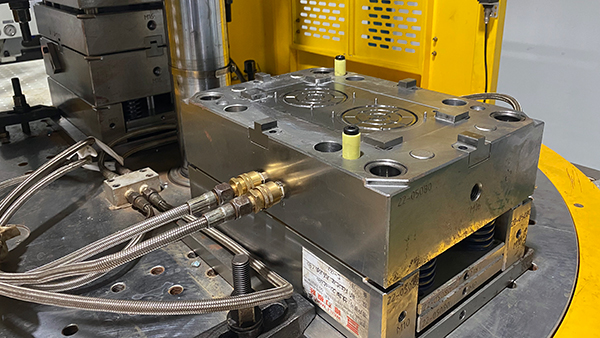
For choosing materials and processes, export injection molds tend to use higher-quality raw materials and advanced manufacturing techniques to enhance the durability and stability of the molds. While this may increase production costs, it offers greater value to customers. In contrast, domestic molds focus more on cost-effectiveness to meet the price sensitivity of the domestic market.
By implementing these differentiated practices, plastic mold manufacturers can better meet the demands of different markets, ensuring their products’ competitiveness and reliability in the global marketplace.
As a mold injection OEM/ODM service provider, the company offers one-stop solutions, excelling in product structure optimization to reduce mold injection costs. With a complete product design and manufacturing team, DAYIN provides excellent design services and has extensive experience in mold making, backed by state-of-the-art equipment.
Global Reach, Local Feet: How Mold Makers Expand Without Sinking
Mold manufacturers expand globally through recognisable patterns, and each pattern carries its own anchor:
| Expansion pattern | What transfers | What must root locally |
|---|---|---|
| Service office abroad | Sales, language, timezone cover | Engineering stays at the toolroom |
| Partner network | Capacity peaks, category reach | Quality standards, audited yearly |
| Satellite factory | Processes, documentation | Tooling maintenance, local suppliers |
| Full local build | Brand, systems | Everything — the expensive way |
The satellite row is where expansion most often stalls: processes transfer on paper while tooling maintenance depends on a local supplier network that takes years to build — and the first major repair exposes the gap. The partner row rewards buyers and sellers differently: for the mold maker it is capacity elasticity; for the buyer it is a due-diligence multiplication, since the partner’s standards need the same audit the primary factory received. Expansion patterns also age differently — offices scale cheaply, satellites scale with capital, partners scale with trust — and the honest question for any expanding maker is which resource it actually has. The Vietnam route illustrates the satellite stage well: the Vietnam footprint, and the appliance-scale outcome in Roborock-scale production. Reference: global production networks and manufacturing strategy.