



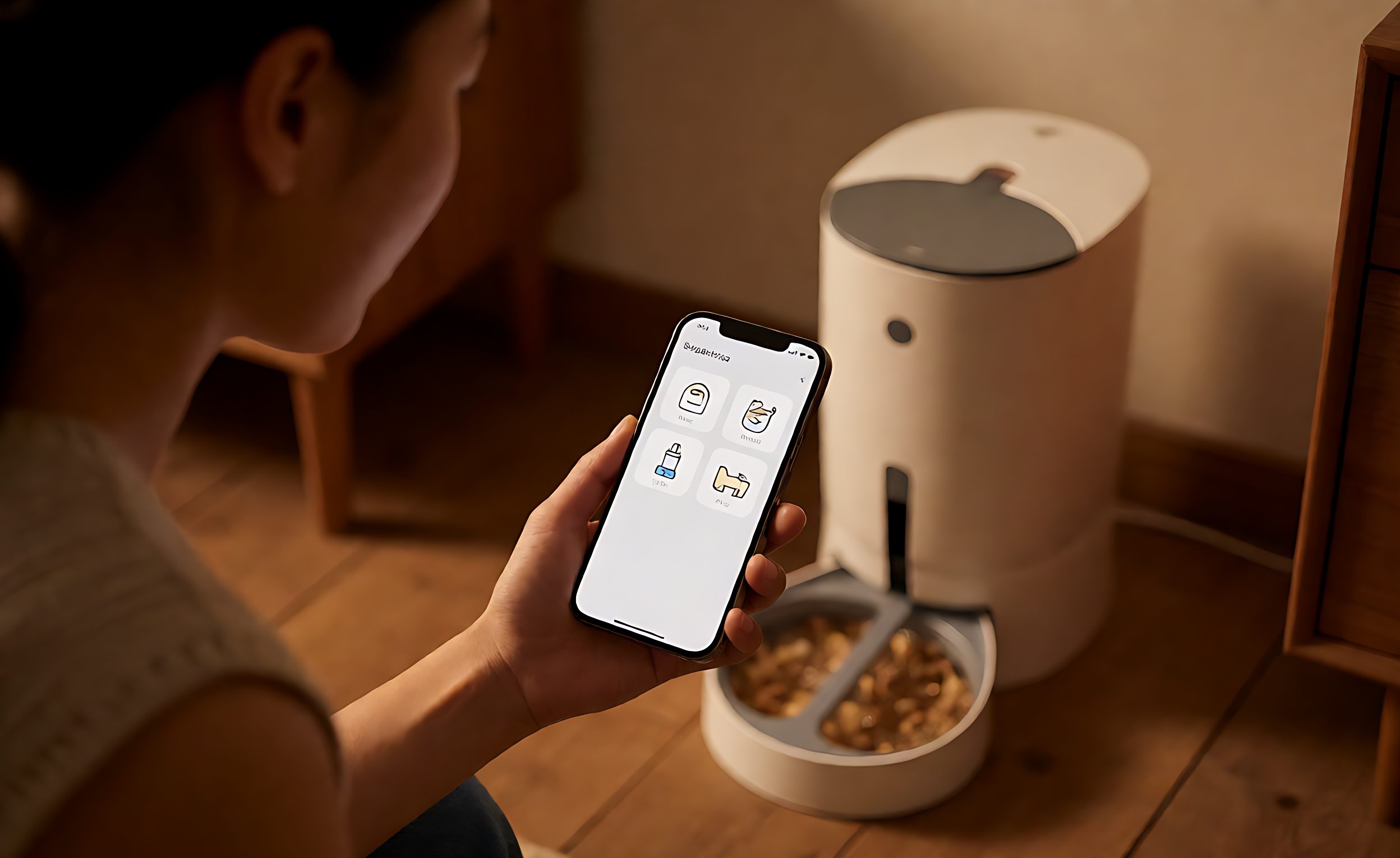
A connected pet feeder carries a second product inside it: the app. Buyers negotiate the hardware carefully and then discover that the app is shared with other brands, that firmware updates are outside their control, or that user data sits on a server they have no agreement about. None of these are hardware problems, and all of them land on the brand owner when a customer complains.
The decisions are commercial rather than technical, and they are cheapest to settle before the programme starts.
Who Owns the App Experience
Three models exist, and they differ substantially in what the buyer gets:
- Supplier’s shared app. Fastest and cheapest to launch. The buyer’s brand appears as a device type inside someone else’s application, which means the customer experience, the update cadence and any outage belong to the supplier.
- White-label app. The supplier’s application rebranded for the buyer. Faster than bespoke development, with the brand carried on the surface, but the roadmap is still the supplier’s.
- Bespoke application. Full control of experience, roadmap and data, at a substantially higher cost and with an ongoing maintenance obligation.
The right choice depends on where the brand intends to be in three years. A buyer testing the category should take the shared or white-label route; a buyer building a connected product range should treat the app as a platform decision and budget accordingly.
Firmware, Updates and What You Inherit
Ask three questions about firmware. Who controls update release? What is the commitment to maintaining compatibility when a phone operating system changes? And what happens if an update introduces a fault – is there a rollback path?
The second question is the one that causes product deaths. A feeder that works today stops working when a mobile platform changes a networking permission, and if nobody has committed to maintaining the firmware, the brand owns a bricked product and a refund queue.
Get the maintenance commitment in writing with a term. A defined support period for firmware and app compatibility is worth more than a lower unit price.
Data, Accounts and Privacy
Where does user data go, under whose privacy policy, and what happens to accounts if the supplier relationship ends? For a private label brand these are reputational questions, and they sit with the brand in the customer’s mind even when the server belongs to someone else.
Confirm which jurisdictions the service operates in and whether the destination market’s data rules are satisfied. A connected product sold into a market with data residency expectations needs an answer before launch, not after a complaint.

Maintenance is the part of the ownership experience buyers underestimate. Filters need cleaning or replacing, brush rolls need clearing, and sensors need wiping – and a product that requires an hour of maintenance a week will be described as broken by owners who expected none. Specify the maintenance interval honestly, and prefer designs where the common tasks are tool-free.
Multi-pet homes deserve their own performance expectation. Hair load scales with the number of animals, and a unit specified for one pet may need twice the bin capacity and twice the brush clearing for three. Where the programme targets those homes, the specification should be set for the heavy case rather than the typical one.
Bối cảnh kỹ thuật
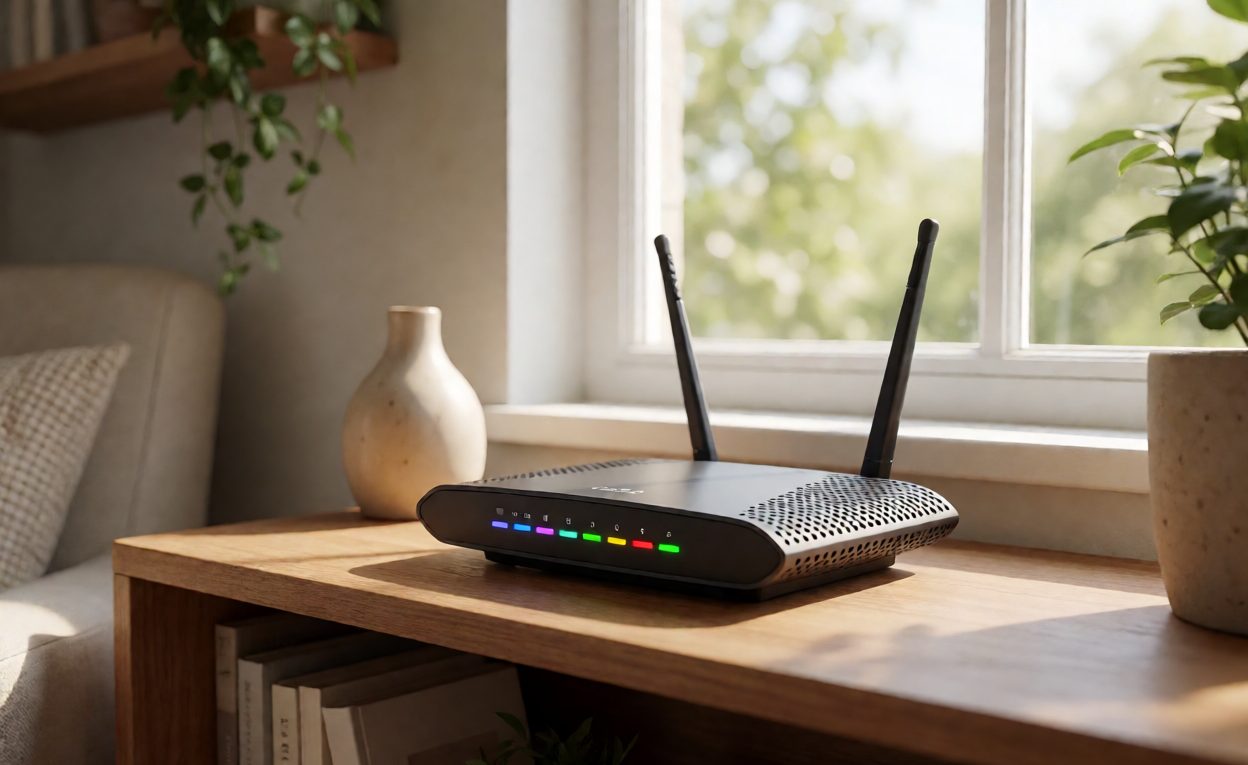
Connected products of this kind are part of the Internet of things, where the device is only one component of a system that includes an application and a cloud service. The device software is firmware, whose maintenance determines how long the product keeps working as platforms change. The home network dependency is typically Wi-Fi, and it is the most common single cause of connection complaints.
Planning the Launch
A connected launch has dependencies a hardware launch does not. The app listing has to exist and pass review before stock arrives, the account and device registration flow has to work at scale rather than in a demo, and the support team needs to have seen the failure cases before customers do. Each of these is a schedule item, and each is the kind of thing that slips because nobody owns it.
Run a pilot before the full buy. A small quantity placed with a handful of real users surfaces the connection and setup problems that laboratory testing never finds, and it is far cheaper to fix a setup flow before a container ships than to support a full launch through it.
Setting Support Expectations
Connection issues dominate support volume for these products, and most are environmental: band mismatch, weak signal at the feeder’s location, or a network change the customer made. Decide in advance who handles first-line support, and require documentation the buyer’s team can actually use.
Ask for the support material, not just the product: setup instructions that cover the common failure cases, a troubleshooting flow, and the data needed to diagnose a specific unit. Without those, the brand’s support team inherits problems it cannot resolve.
Connectivity background is covered in Wi-Fi connection problems và smart home integration. Mechanical behaviour is in portion accuracy and jam testing, product definition in the OEM guide, and programme-level partner selection in consumer product development partners.
Câu hỏi thường gặp
Can I put my brand on the supplier’s app?
Often yes through a white-label arrangement, though the roadmap and infrastructure remain the supplier’s.
When is a bespoke app worth it?
When the brand is building a connected range and needs control of experience, roadmap and data – and accepts the maintenance obligation.
What should the contract say about firmware?
Who releases updates, the commitment to maintain platform compatibility, a support term, and a rollback path.
Why do connected feeders stop working?
Often because a phone platform changed a networking permission and nobody maintained the firmware.
Who owns the customer data?
Settle it in writing: where data is stored, under whose policy, and what happens to accounts if the relationship ends.
What drives most support tickets?
Connection issues – band mismatch, weak signal, or a network change – rather than product faults.
What should I ask for besides the product?
Setup documentation covering common failures, a troubleshooting flow, and diagnostic data access.