



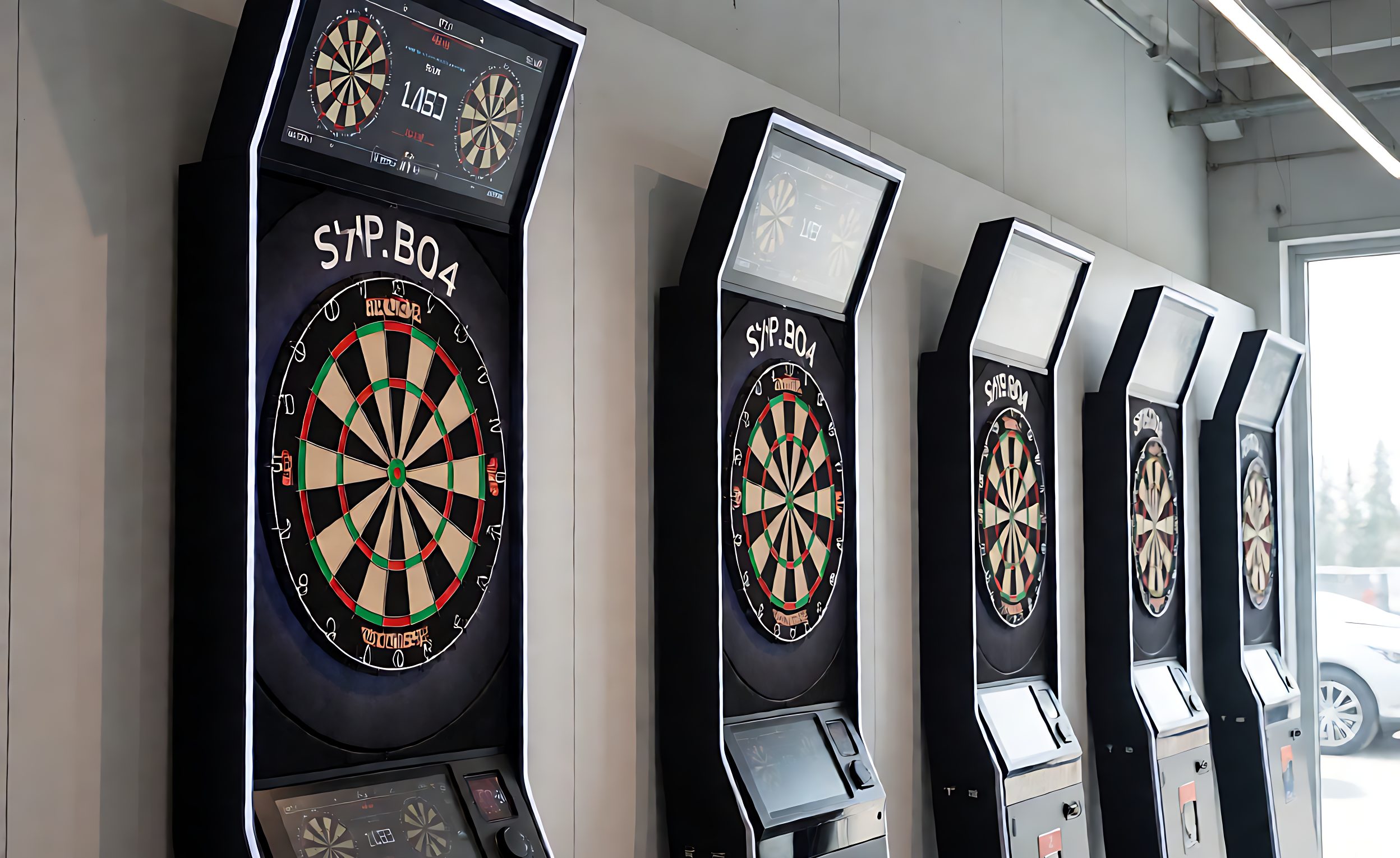
Sourcing an electronic dartboard under your own brand looks deceptively simple: the category is mature, tooling exists, and every factory showroom shows a competent board. The differences that decide your customer reviews sit underneath — in the sensor matrix, the scoring firmware and the plastics that survive a pub wall for two years. This checklist covers the ten things to verify before you commit to a manufacturer, written for brand buyers and distributors commissioning OEM or private label runs.
If you are still deciding which board types belong in your catalogue, start with the dartboard type comparison, then come back to this list for the electronic segment. The same factory visit can also cover cabinets and accessories, which is usually how a commercial dart machine line gets added later.
The Ten Points
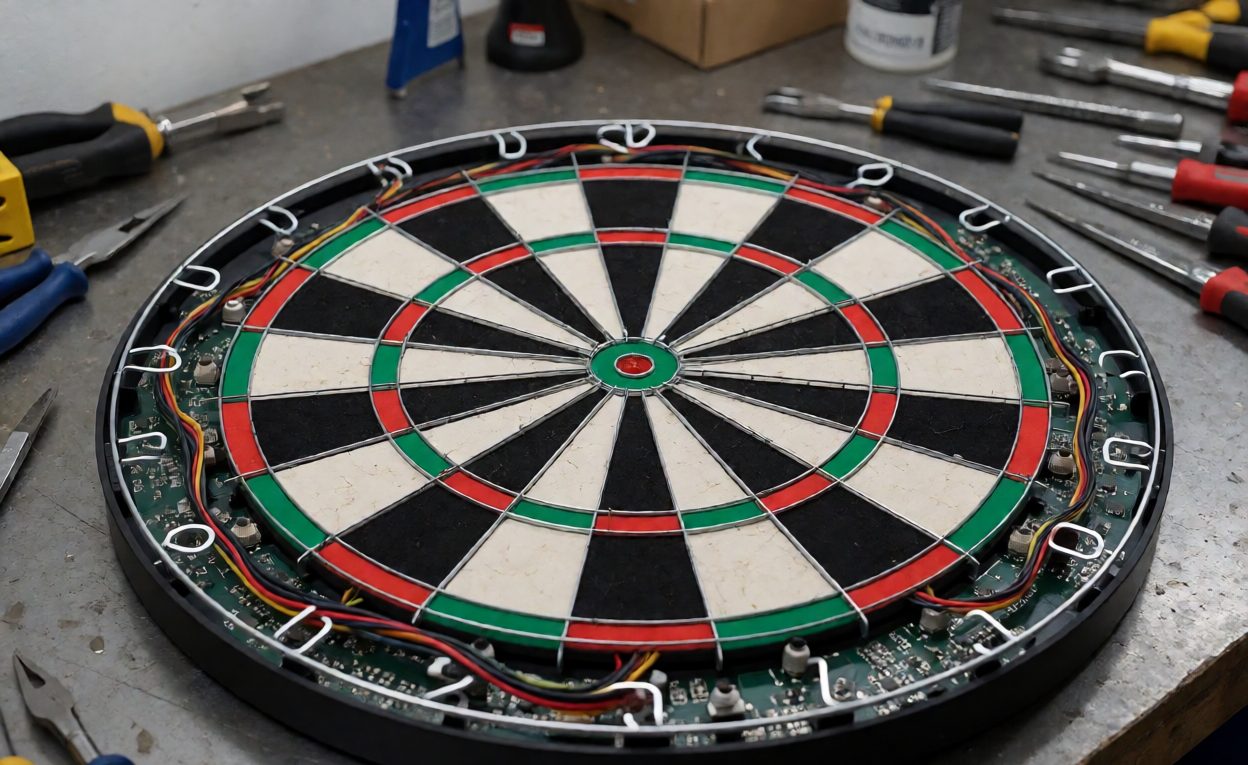
- 1. Sensor matrix construction. Open a sample. Segmented matrix boards with individual segment contacts register far more reliably than membrane-style layouts. Ask how mis-registration — darts landing between segments — is handled in scoring.
- 2. Bounce-out behavior. Throw fifty darts at the segment-ring boundary in the sample room. Bounce-outs are the number one consumer complaint in reviews of cheap boards.
- 3. Firmware and scoring software ownership. Who owns the scoring UI? Can your brand get localized languages, your logo on the boot screen, and bug-fix updates? If the factory licenses scoring software from a third party, your private label is hostage to their roadmap.
- 4. Sound and display quality. Cheap speakers and dim segment LEDs are the two most visible cost cuts. Test at shop noise levels, not in a quiet office.
- 5. Power and compliance. Adapters and electronics must match destination market requirements, and the AC adapter is usually the component that fails compliance first. Confirm which certificates the factory holds per market and which you must fund.
- 6. Plastics and cabinet build. The segment bed takes thousands of dart impacts; the cabinet takes bar-room treatment. Ask about ABS grade and UV stability if boards will sit near windows.
- 7. Sample discipline. A real manufacturer builds your sample from production tooling or at least production-intent parts. A trading company sends you a showroom piece and hopes. This one question filters half the market.
- 8. Pilot run terms. Before a full container, order a pilot batch of 50 to 100 units through the same line and packaging. Treat the pilot as the real quality gate, with your own AQL inspection on arrival.
- 9. Spares and after-sales. Ask for the spare-part list — power adapters, segment boards, complete cabinets — and stock plan. Retailers judge brands by how fast a replacement reaches an end customer.
- 10. Test reports. For electronics, ask what safety and EMC testing has been done, in which lab, and get the reports in your hand before the deposit, not after.

Sample Testing That Predicts Reviews
Two weeks of sample testing tells you more than any audit report. Run the board through the patterns that match your buyers: a family playing casual games in the evening, a pub running tournaments all weekend. Count mis-scores per hundred darts, listen for segment rattle, and cycle the power adapter connection a hundred times — the DC jack is a known weak point on low-cost boards.
Compare against the boards you consider category benchmarks. If your sample cannot match a mainstream retail board on scoring reliability, the price advantage is not an advantage; it is a refund liability. Our overview of what makes electronic dartboards good lists the attributes reviewers actually score.
Technical background: the scoring layer of an electronic board is essentially a switch matrix read by an embedded system that translates dart impacts into throws, and the physics of a 飛镖 impact — angle, energy and wire geometry — is what decides bounce-outs. Understanding those three layers helps you ask sharper questions in the sample room.
From Approval to Container
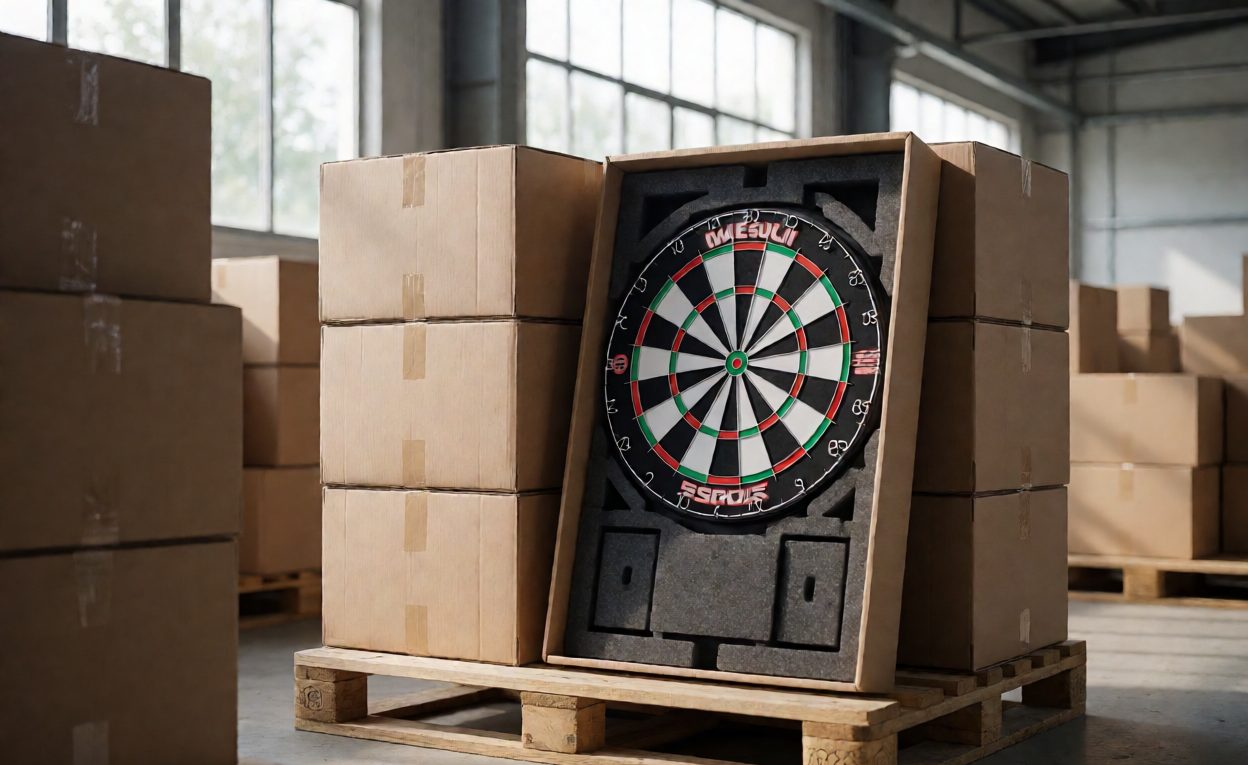
Once the sample passes, lock three things in writing: the golden sample (sealed and signed by both sides), the packaging spec with drop-test grade for your channel, and the pilot-run acceptance criteria. The typical sample-to-shipment timeline for an OEM dartboard program runs six to ten weeks depending on tooling changes; anything quoted faster usually means the factory plans to ship you their standard board with a sticker.
Finally, plan the product line, not the single SKU. The factories that do electronic boards well usually also build commercial machines and cabinet sets, and consolidating those orders with one vetted partner is where the real margin lives.
我在訂購 OEM 電子飛鏢靶時,應預期多低的 MOQ?
For private label on existing platforms, 300 to 500 units is common; for a custom cabinet or housing with new tooling, expect 1000 or more plus tooling cost. Pilot runs of 50 to 100 units are usually accepted at a higher unit price and are worth paying for.
How do I test sensor quality in a sample?
Open the board to inspect the matrix construction, then throw at least a few hundred darts with emphasis on segment boundaries. Count mis-registered scores per hundred darts and compare against a benchmark retail board. Consistency across segments matters more than one perfect area.
Who should own the scoring software?
You should at least have contractual rights: your branding in the UI, your target languages, and a bug-fix commitment. If the factory licenses third-party scoring software, ask what happens if that license ends — boards in the field losing updates is a brand-killer.
Which certifications matter for electronic dartboards?
For the electronics: safety and EMC per destination market, plus the AC adapter’s own approvals. For plastics, the toy-adjacent rules apply if you market to families. Confirm per market in writing which certificates the factory holds and which you fund.
What is a bounce-out and why does it matter?
A bounce-out is a dart that strikes the wire or segment edge and falls out instead of sticking. Boards with thin wires and well-designed segment beds bounce out less. High bounce-out rates dominate negative reviews in this category.
Why order a pilot run before a full container?
The pilot comes off the actual production line with actual packaging, exposing assembly drift and packing weaknesses that a hand-built sample never shows. Inspect the pilot on arrival at AQL before releasing the bulk order.
Can one factory supply boards, cabinets and accessories together?
Often yes, and you should ask. Consolidating the electronic board, cabinet set and accessories with one vetted manufacturer simplifies QC, container loading and spares planning — and usually improves pricing across the line.