



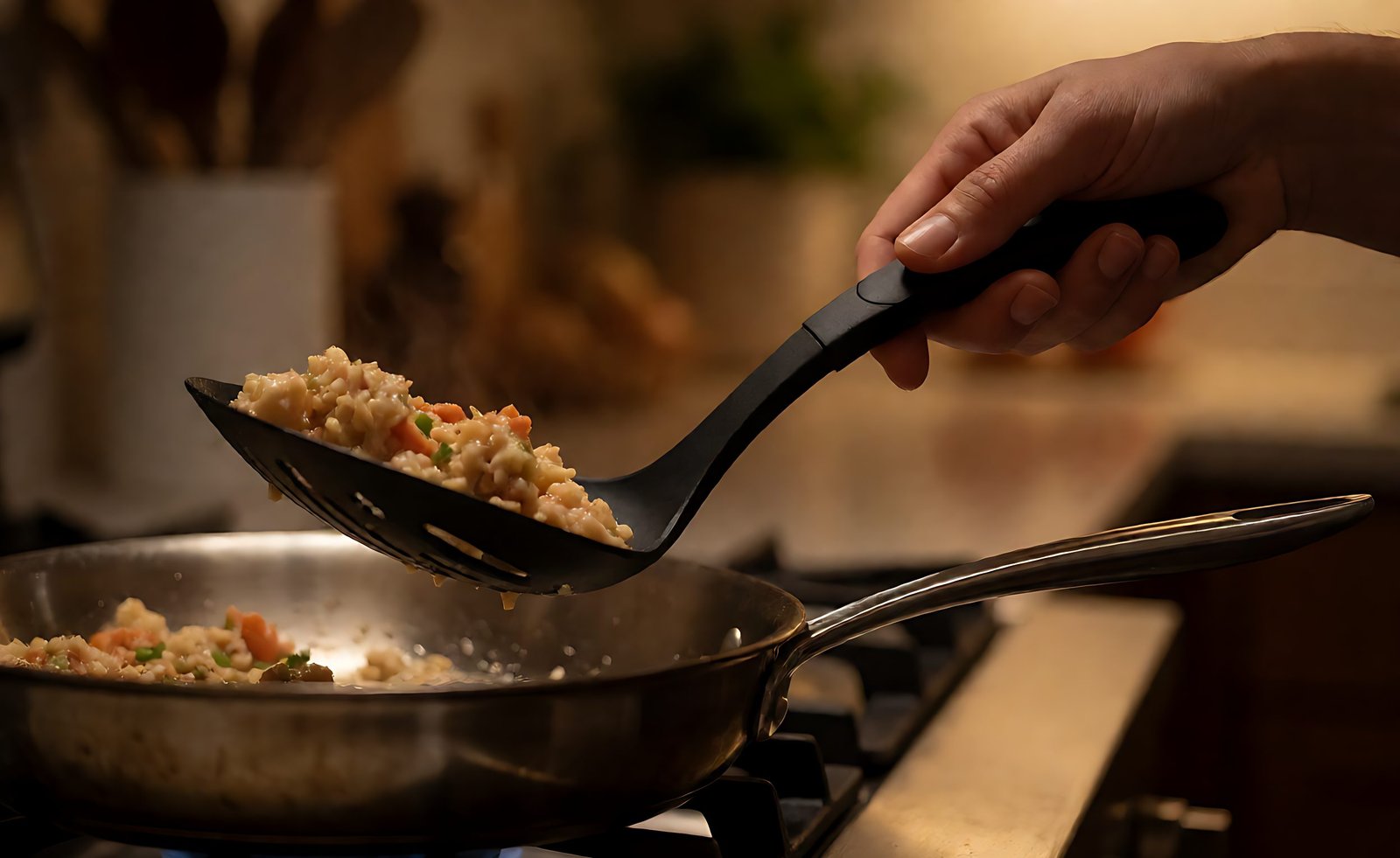
Handle discomfort, slipping, awkward balance, and excessive effort can contribute to poor reviews or returns. For a retail or private-label programme, include handle usability in the product brief and test it with the intended users and tasks.
The category is also unforgiving about hand variation. A handle that fits a buyer’s hand comfortably in a sourcing meeting may be genuinely painful for the smaller hands it will actually be sold to, and no amount of quality elsewhere compensates for that. Ergonomics is one of the few product areas where testing across a realistic spread of hand sizes is cheaper than the returns it prevents.
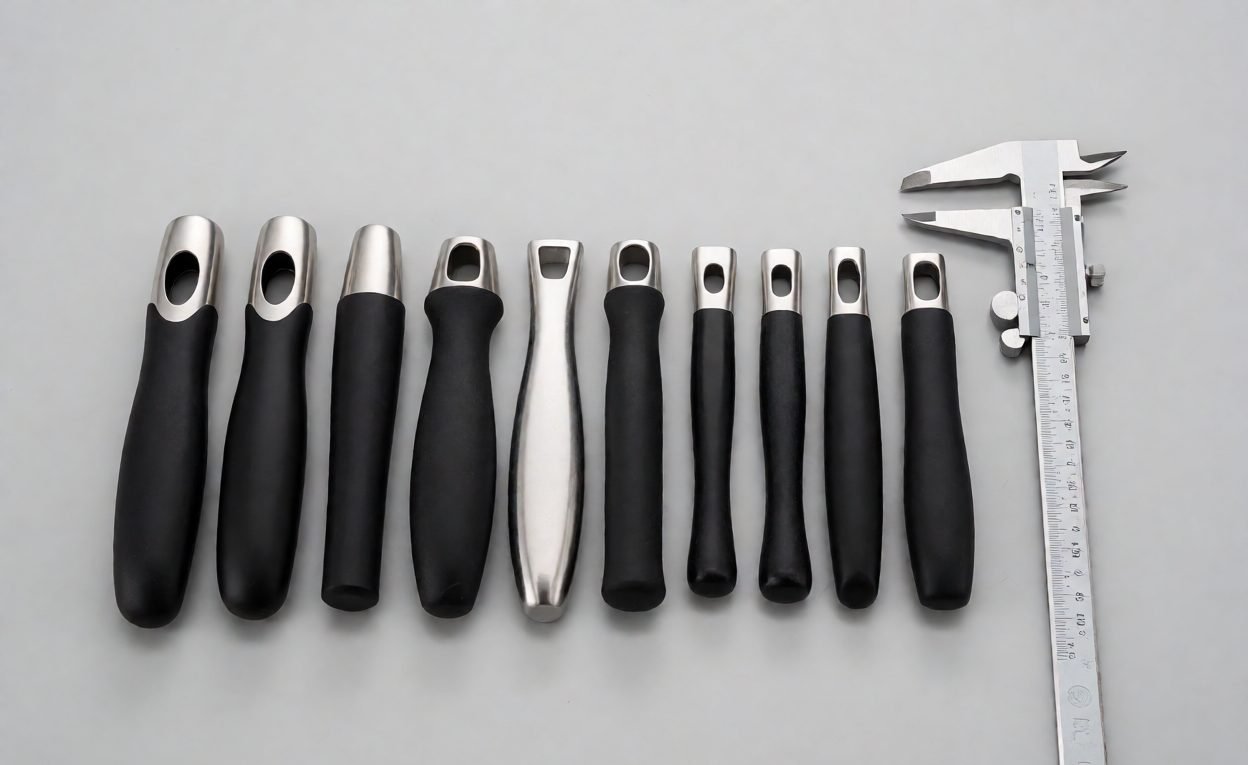
Grip Diameters That Fit Real Hands
Handle diameter is one important parameter alongside cross-section, length, surface, balance, head weight, and the task. Its effect depends on the grip and motion used, so compare candidate designs with representative users.
Do not apply one universal handle diameter to every kitchen utensil. Power-grip and precision tasks can call for different geometry, and occupational hand-tool guidance is only a starting point; validate cooking tools with representative users, hand sizes, and actual food-preparation tasks.
If a range includes both forceful and precision tasks, compare whether separate handle profiles improve control and comfort. Choose the variants from task-based sample testing rather than assigning sizes by price tier.
Cross-Section, Length and Contact Area
A round handle is not automatically comfortable, and an oval one is not automatically better. What matters is the match between the cross-section and how the tool is held. A power grip, where the whole hand wraps the handle, rewards a rounder, slightly flattened section that spreads load across the palm. A precision grip, where thumb and fingertips control the angle, rewards flattened sides that stop the tool rotating unintentionally.
- Flattened or oval sections resist unwanted rotation, which matters for spatulas and anything used at a consistent angle.
- Deeper, more circular sections suit sustained stirring, where the hand moves around the tool rather than holding one position.
- Cross-section consistency should hold along the gripped length; a sudden taper creates a pressure point that becomes uncomfortable over a long cook.
- Handle length has to be specified together with the head, because it sets how far the hand sits from the pan edge and therefore how hot the hand gets.
Contact area is the hidden variable: spreading the same load over more surface lowers pressure and delays fatigue. A contoured swell where the palm sits is doing genuine work, not decoration.
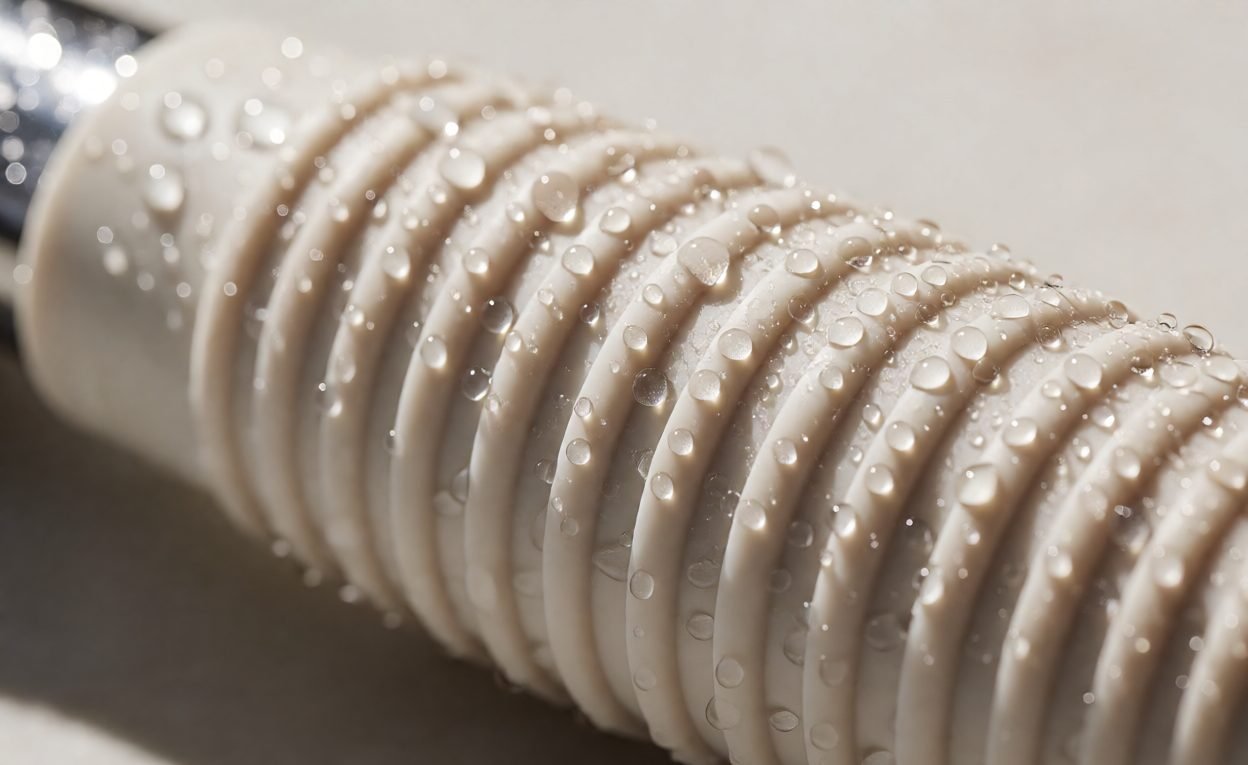
Texture, Overmould and Wet-Hand Behaviour
Wet hands, greasy hands and hands covered in flour are the reality of the category, and they are exactly the conditions most studio photography hides. A polished handle that feels fine dry becomes slippery the moment it meets oil. Some texture is therefore not cosmetic – it is functional.
A textured or compliant overmould can improve perceived grip for some materials and tasks, but wet- or oil-grip performance depends on the compound, surface, and use conditions. If the product is marketed for dishwasher cleaning, test the finished assembly through the intended cycles and check for bond failure, tackiness, peeling, or staining.
If you stay with a single rigid material, texture depth becomes the whole story. Too shallow and it does nothing wet; too deep and it abrades the hand during repetitive use and traps food residue at the same time.
Balance, Weight and Wrist Effort
Customers describe balance imprecisely but reliably. A tool that is head-heavy feels tiring because the wrist works continuously to hold the angle. A tool that is too light is read as flimsy even when it performs perfectly, which is a perception problem rather than an engineering one and still costs reviews.
Specify the balance point as a distance from the grip rather than leaving it to emerge from wherever the tooling lands, and check it on production units, because material density differences between colours and grades shift it measurably. The target is a tool that rests level in the hand with minimal corrective effort.
Total mass should sit in a band appropriate to the tool. A heavy-duty turner can carry more weight and read as durable. A whisk or a fine spoon that is too heavy is uncomfortable within minutes, since those tools are used with small repetitive movements where inertia is felt directly.
Heat at the Hand
Heat transfer to the grip depends on the material, wall thickness, geometry, distance from the pan, contact time, and any internal reinforcement. Specify the intended cooking scenario and an acceptable grip-surface temperature, then test the finished tool under that protocol.
Use a repeatable heat test that defines pan, contents, cooking setting, utensil position, contact time, and grip measurement point. Set the acceptance limit for the intended use; a single short check is a screening step, not proof for every cooking condition.

How to Test Handles Before the Order
A useful session requires no laboratory. Recruit eight to ten people spanning the realistic range of hand sizes, including the smaller end, since that is where generic handles fail most often. Give each person three or four candidate handles and the actual task – stirring a thick sauce for two minutes, flipping something heavy, reaching into a deep pot – then ask two questions: which did you reach for again, and where did you feel it. Repeat the same trials with wet hands, because wet is what separates acceptable handles from good ones.
The output should be written into the specification as a preference ranking plus notes on specific pressure points, then validated on production samples rather than prototypes alone.
Contexto Técnico
Occupational hand-tool guidance emphasizes matching grip design to the task and user, but its dimensional recommendations should not be copied directly to kitchen utensils. Use it as background, then validate cooking tools with representative users and real preparation tasks: CCOHS hand-tool ergonomics guidance.
Related Kitchen Buying Decisions
Ergonomics interacts with the rest of the utensil brief. Compare the working end in the nylon-versus-silicone head guide and review whole-set heat behaviour in the utensil material and heat-resistance guide. If a handle or overmould is within food-contact scope, map its actual materials and intended use to the destination-market rules; the FDA component guidance explains the U.S. approach. Handle decoration is covered in the surface finishes and printing guide, and assembly choices in custom plastic product assembly optimisation.
Perguntas Frequentes
What handle diameter suits most users?
There is no universal diameter for every kitchen utensil. Grip, task, hand size, balance, and head weight all matter, so validate candidate designs with representative users.
Is a soft-touch overmould worth it?
It may improve grip or comfort for some materials and tasks. Evaluate wet and oily use, cleaning conditions, bond durability, and cost on the finished assembly.
Why does a handle feel tiring even when the tool is light?
Balance, handle shape, wrist posture, grip force, and the task can all affect effort. Compare the finished tool in representative preparation tasks.
Does handle texture have to be deep?
Choose texture by testing grip, cleanability, comfort, and residue retention under the intended dry, wet, or oily conditions; no single depth suits every utensil.
Should handles be round or oval?
Choose the cross-section for the grip and motion. Compare candidate shapes in the intended task rather than assuming one shape suits a whole range.
How do I check heat at the hand?
Use a repeatable test that defines the pan, cooking setting, utensil position, contact time, and grip measurement point; set an acceptance limit for the intended use.
How many people should try a handle before ordering?
Use a representative target-user panel and realistic preparation tasks. Set panel size to the project risk and document the users and conditions tested.