



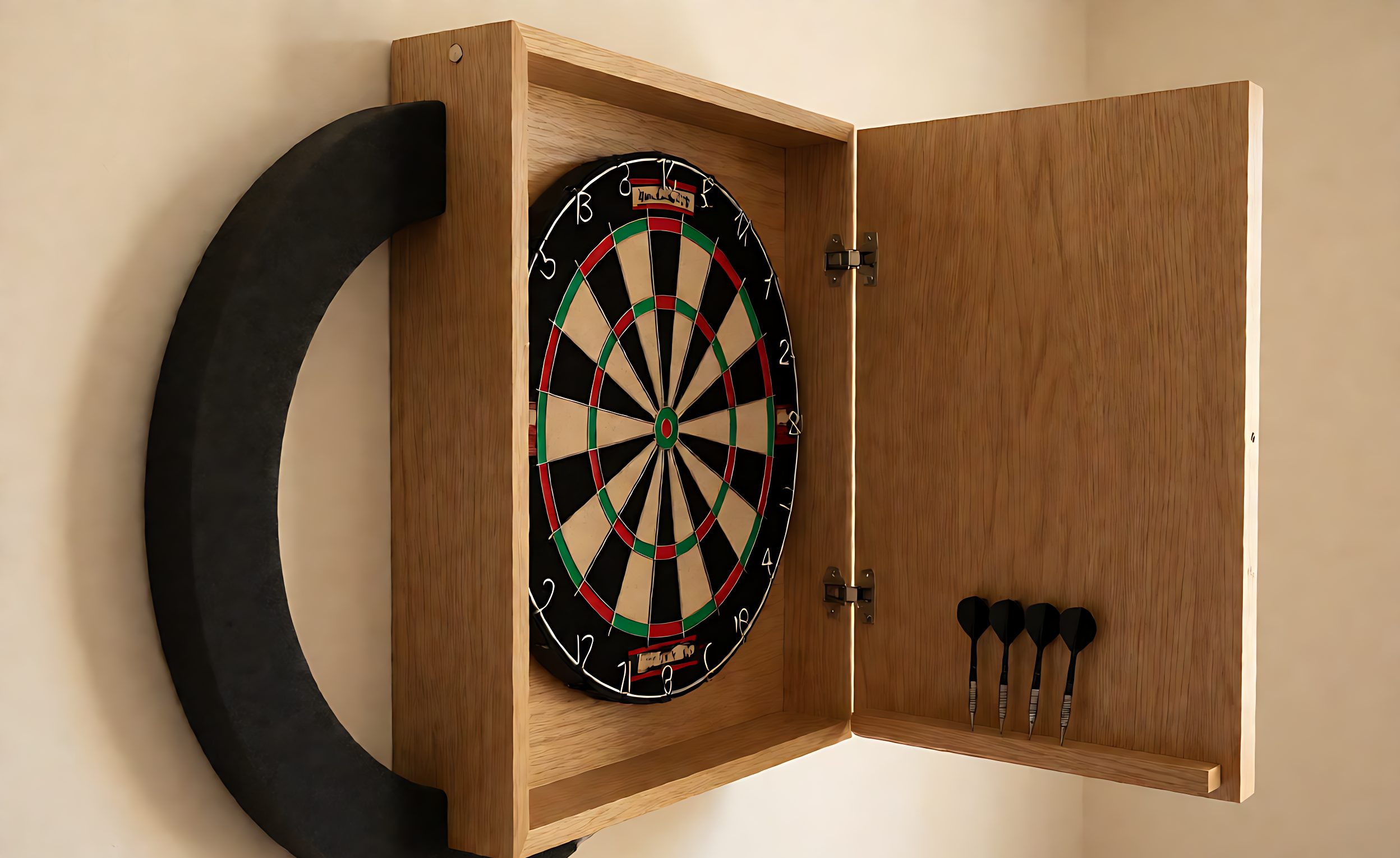
Selling a dartboard is a price comparison. Selling a dartboard inside a cabinet with a surround and a set of darts is a retail programme, and the difference shows up in margin, returns rate and shelf presence. Buyers who treat the cabinet as an accessory miss the point: the cabinet is what turns a wall-damaging sports item into a piece of furniture a household will actually hang in a living room.
This guide is written for distributors, retail buyers and brands assembling a dart bundle. It covers what belongs in the bundle, how each component is specified, where returns come from, and how the cost structure behaves as volume changes.
What Belongs in a Bundle
Bundles work when each added component solves a problem the buyer already anticipates. Dart players anticipate three: the wall gets damaged, the darts get lost, and the board needs somewhere to live. A well-built bundle answers all three.
- Cabinet: encloses the board, protects it from light and dust, and provides a door surface that can carry branding.
- Surround: a foam ring around the board that catches stray darts before they reach plaster.
- Backboard panel: a rigid panel behind the board for walls that cannot take a surround, or where the cabinet is mounted on a stud wall.
- Dardos: six is the retail norm, steel tip or soft tip depending on the board.
- Oche mat or throw line marker: cheap to add, and it removes the most common setup question.
- Scoreboard and chalk or dry-wipe panel: usually printed on the inside of the cabinet doors, which costs almost nothing and photographs well.
Darts themselves are worth a specification line. Shafts, flights and soft-tip points are molded plastic parts, and the choice between ABS, PP and PC decides whether a shaft snaps on the first bounce-out or survives a season. Softer PP flexes and survives impacts; ABS is stiffer and breaks more cleanly; PC is the toughest and the most expensive.
The bundle should also include a mounting kit with the correct anchors for plasterboard, brick and concrete. Skipping it is a false economy: a customer who has to make a second trip to a hardware store writes a review about it.
Cabinet Construction
Three constructions dominate the market, and the choice is a cost and weight trade rather than a quality one. For a soft-tip or electronic board the cabinet is usually a surround-and-mounting frame rather than an enclosed box, which is a different product from the wall cabinet described here; the buying guide for coin-operated dart machines covers that format.
MDF with a paper or melamine finish is the volume standard. It is flat, takes print well, and machines cleanly. The weakness is moisture: an MDF cabinet in a damp garage or a cellar will swell at an unsealed edge. Sealing the back face and the door edges is the difference between a cabinet that lasts and one that delaminates.
Solid wood or wood veneer costs more and looks better in a living room, but it moves with humidity. Door alignment has to allow for seasonal movement, which means slotted hinges rather than fixed screw holes.
Fabric-lined interiors with a velvet or felt lining are a premium cue. They also dampen the sound of a dart hitting the surround, which customers notice more than they expect.
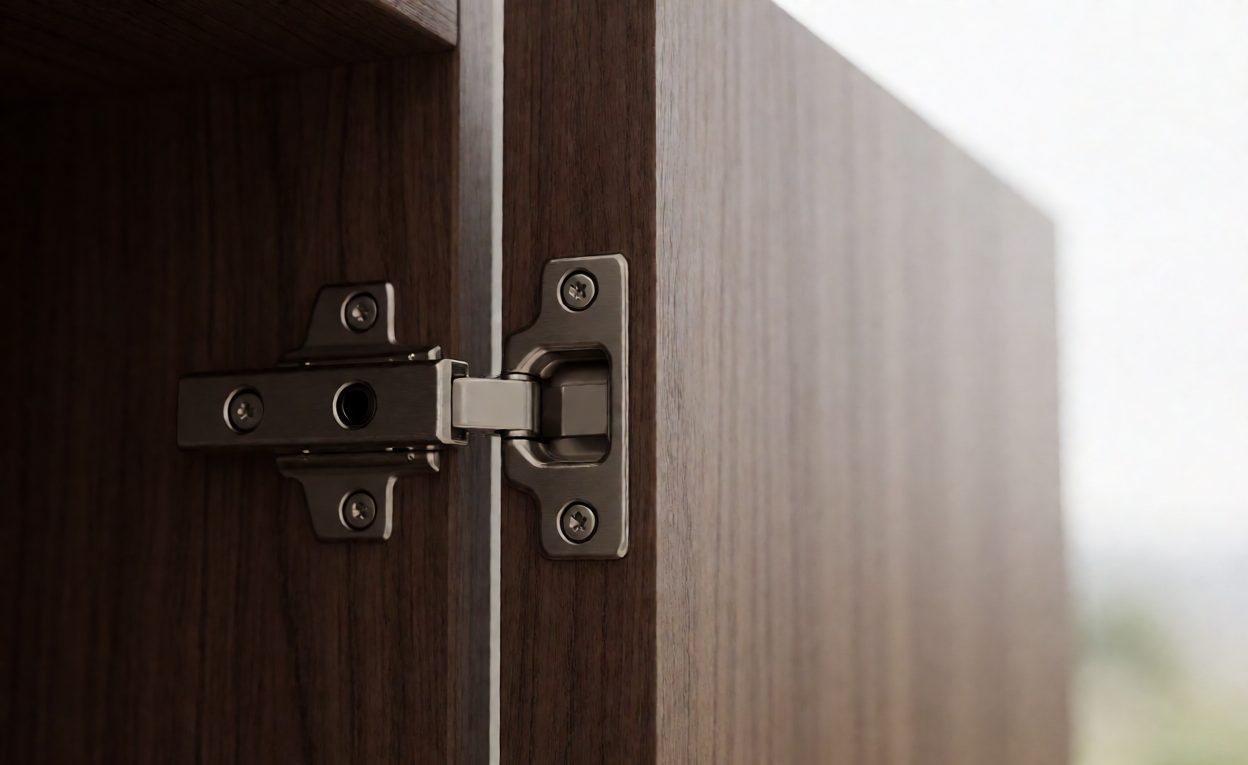
Hinges deserve their own line in the specification. A piano hinge spreads load but cannot be adjusted; two butt hinges allow adjustment but concentrate load at four screw points in a material that strips easily. Magnetic catches are near-universal now, and a weak magnet that lets the door swing open in use is one of the most common complaints on a cabinet at a low price point.
Surround: Foam Density Is the Whole Specification
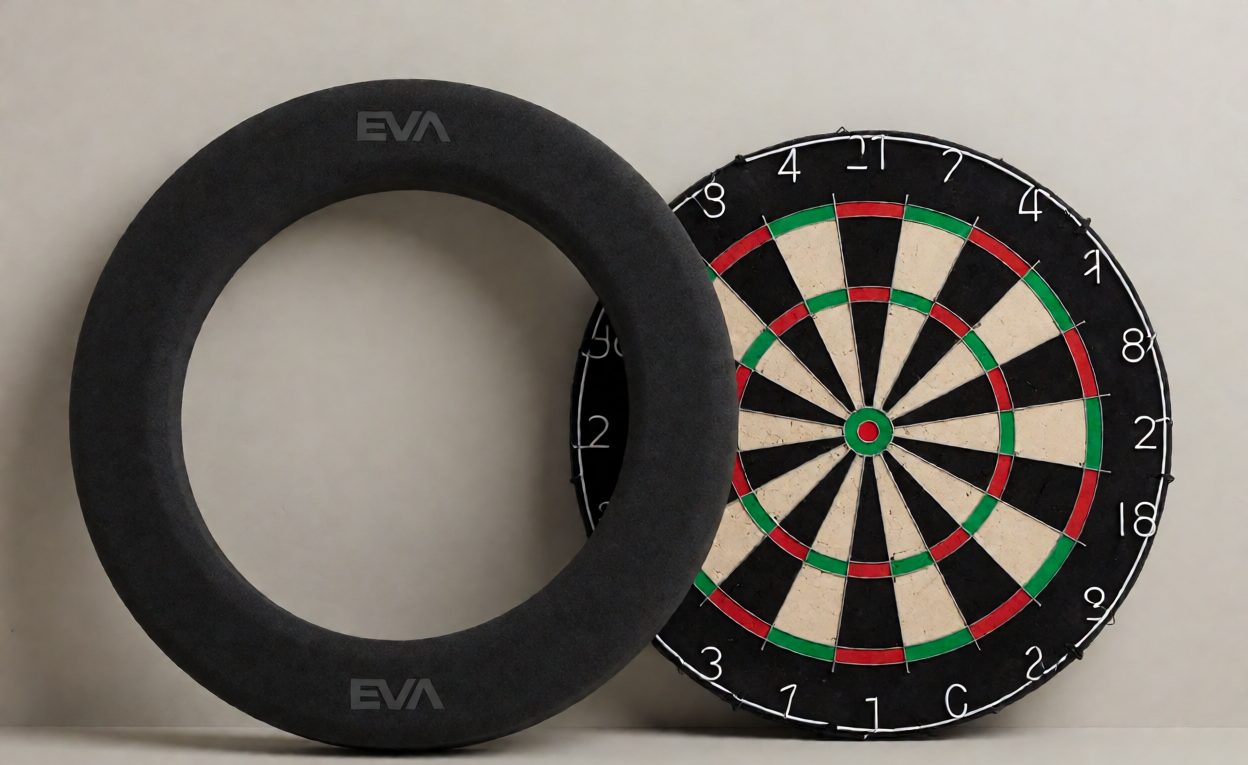
Surrounds are sold as EVA foam or PU foam, and the difference is not cosmetic. EVA is denser, holds a dart without tearing, and recovers its shape. PU is lighter and cheaper but crumbles at the entry point over time, which leaves a ring of debris and a surround that stops gripping.
Specify density rather than the material name, because “EVA” covers a wide range. A surround that holds a steel tip dart and closes the hole needs enough density that a fingernail pressed into it leaves a shallow mark, not a crater. Thickness matters too: twenty-five to thirty millimetres gives a useful catch depth without making the board sit too far from the wall.
Diameter is driven by the board. A standard bristle board is about 450 millimetres across, and a surround with an inner diameter that matches plus an outer diameter of 650 to 700 millimetres covers the realistic miss zone. A surround that is too small is worse than none, because it advertises protection it does not provide.
Comparing dartboard types matters before you fix the surround, because a soft-tip electronic board has a different diameter and a different mounting depth from a bristle board.
Wall Protection Is Where Returns Come From
The single most common reason a dart product is returned is wall damage, and it is entirely preventable in the bundle design. Three details do most of the work.
- Surround coverage: the ring must extend far enough that a badly thrown dart lands in foam rather than plaster at normal throwing distance.
- Backboard size: if a rigid panel is included, it should be larger than the surround, not the same size.
- Mounting hardware: the anchors must match the wall type the customer actually has, and the instructions must say which anchor goes with which wall.
A backboard also solves a structural problem. A cabinet full of board and surround can weigh several kilograms, and hanging that from plasterboard alone requires proper anchors. A panel that spans two studs distributes the load, and it lets the customer mount the assembly without hunting for studs at the exact height they want.
Carton Cube, Flat Pack and Damage Rate
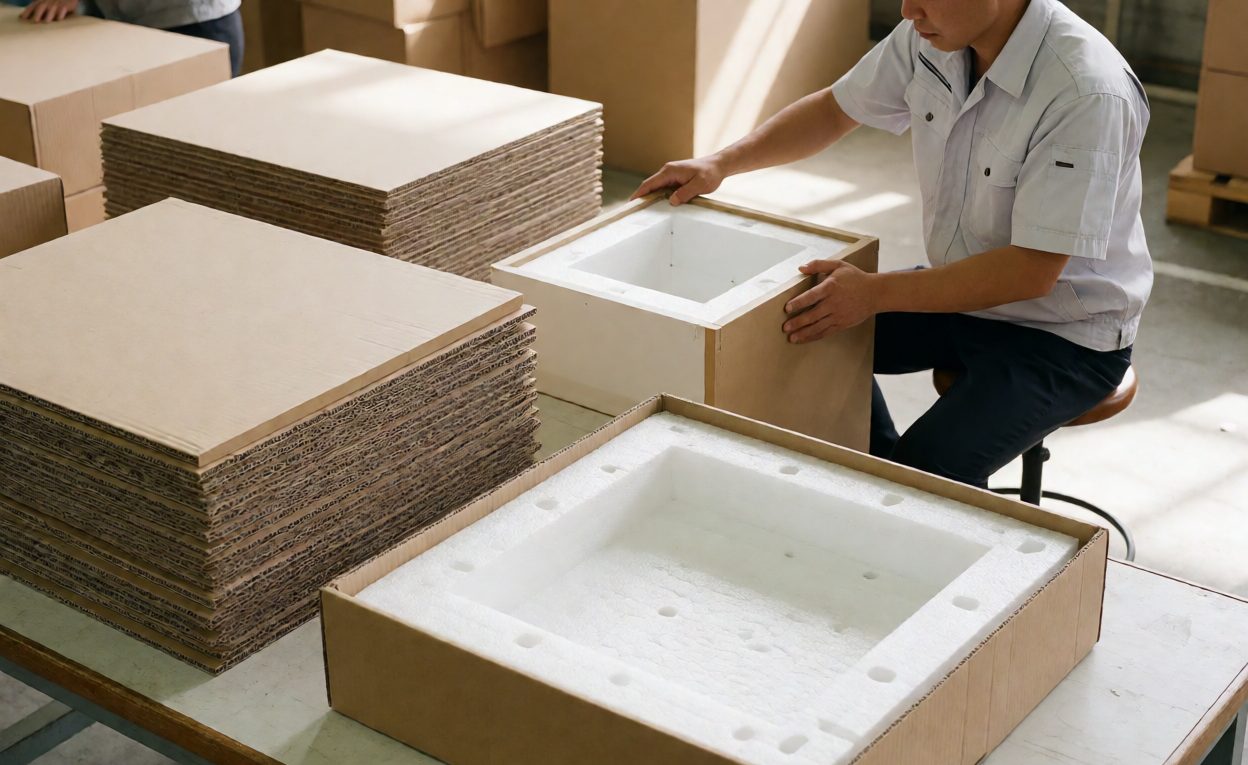
A cabinet bundle is a volumetric product, not a heavy one, so freight is decided by cube. Flat-packing the cabinet is standard for a reason: an assembled cabinet wastes the internal volume that could hold the surround, the darts and the backboard.
Flat pack introduces its own risk. Panel corners chip in transit, and a chipped corner on a visible face is a return. The fix is corner protection inside the carton plus a foam or moulded pulp insert that keeps panels from rubbing. Moulded pulp has become the default in markets that restrict expanded plastic foam, and it doubles as a brand surface.
Board care instructions belong on the carton or in a leaflet, not just on the website. A bristle board that is stored in a damp garage and never rotated generates complaints that read as product faults.
Cost and MOQ Structure
Four cost drivers set the floor price, and knowing which one binds tells you where to negotiate.
- Panel cutting: standard cabinet sizes can use existing tooling, so there is little or no setup cost. A non-standard size or a shaped door adds tooling.
- Print: paper or melamine print has a minimum run, and a custom design on a small order usually means a surcharge rather than a refusal.
- Foam surround: die-cut from sheet, so cost scales with area and density. Custom diameters need a new die.
- Embalagem: printed colour cartons carry their own minimum, frequently higher than the cabinet itself.
Practical MOQ for a standard-size cabinet with a stock surround and custom print typically starts in the low hundreds per SKU, and rises to around a thousand when the surround diameter, print design and carton are all custom. The cheapest way to reach volume is to keep the cabinet and surround standard and spend the customisation budget on print and darts, which are the parts a customer actually sees.
Quality Control Points
Inspect at the points where the failure is still cheap to fix.
- Panel dimensions and squareness on a sample of ten, because a cabinet that is out of square will not close cleanly.
- Edge sealing on every exposed MDF face, checked by eye and by a water drop test.
- Hinge screw pull resistance, tested by hand torque rather than visual inspection.
- Magnet pull force on the door catch, measured rather than felt.
- Surround density and recovery, tested by inserting a dart and checking the hole closes.
- Drop test on a packed carton, then a full unpack and assembly check for damaged corners and missing hardware.
Technical Background
Bristle dartboards are made from compressed sisal fibres, bound and pressed into a dense disc so that a dart point parts the fibres rather than cutting them. That property is why a bristle board self-heals, and it is also why the board must be rotated: repeated hits in one segment compress the fibres permanently and create a soft spot.
The cabinet itself is usually built from medium-density fibreboard, chosen for flatness and printability rather than strength. Its weakness is edge swelling, which is a manufacturing problem rather than a user problem: a sealed edge survives a humid room, an unsealed one does not. The third component, the dart, determines the impact energy the surround has to absorb, which is why a bundle designed around steel tip darts needs a denser foam than one built for soft tip.
A Bundle Specification Template
Send this to a supplier and quotations become comparable line by line.
- Cabinet outside dimensions, board size supported, door type and hinge type, catch type and pull force.
- Panel material, thickness, edge sealing method, print process and finish.
- Surround material, density, thickness, inner and outer diameter, colour.
- Backboard dimensions, thickness and mounting hole pattern.
- Darts: quantity, tip type, barrel material, weight.
- Mounting kit contents by wall type, with an anchor specification.
- Carton type, insert material, drop test standard and target damage rate.
- Carton cube and gross weight, so freight can be modelled before the order is placed.
Qual tamanho de aro se encaixa em um tabuleiro de dardos de cerdas padrão?
Um padrão de vassoura tem cerca de 450 milímetros de diâmetro. Uma borda com um diâmetro interno correspondente e um diâmetro externo de 650 a 700 milímetros cobre a zona de erro realista.
Is EVA better than PU foam for a surround?
Yes for durability. EVA is denser, holds a dart without tearing and recovers its shape, while PU crumbles at the entry point over time. Specify density, not just the material name.
Should the cabinet ship assembled or flat packed?
Flat packed, almost always. An assembled cabinet wastes the internal volume that could carry the surround, darts and backboard, and freight is driven by cube rather than weight.
Why do MDF cabinets swell at the edges?
Unexposed MDF edges absorb moisture and expand. Sealing every cut edge during manufacturing is the fix, and it should be a specified process step rather than an assumption.
What MOQ should I expect for a custom dart cabinet?
Standard size with stock surround and custom print typically starts in the low hundreds per SKU. Fully custom cabinet size, surround diameter and carton usually requires around a thousand units.
Do I need a backboard if I include a surround?
Not always, but a backboard solves load distribution on plasterboard and adds protection beyond the surround. If included, make it larger than the surround rather than the same size.
What is the most common return reason for dart bundles?
Wall damage and missing mounting hardware, followed by chipped cabinet corners after transit. All three are preventable in the bundle and packaging specification.