



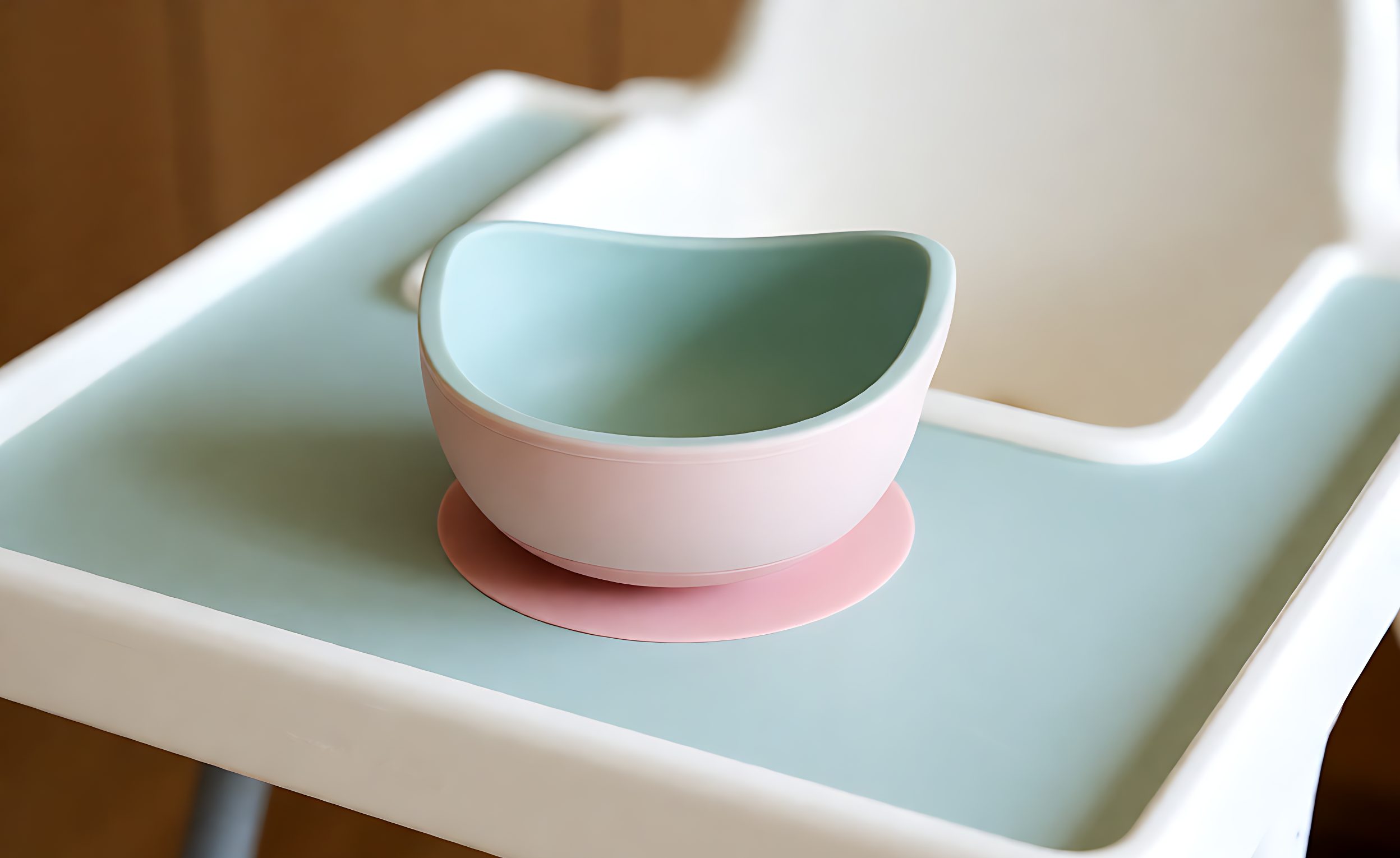
Suction is the reason a parent reaches for one bowl over another, and it is the most overclaimed feature in children’s tableware. Packaging promises a bowl that sticks to any surface, the bowl arrives, it holds beautifully on the glass table and releases instantly on the wooden one, and the review writes itself. For a buyer specifying a children’s bowl programme, suction has to move out of the marketing column and into the test column.
That shift is not difficult. Suction is a physical mechanism with a small number of variables – the lip, the surface, the stiffness of the bowl above the base and the way the child pulls. Each can be specified and measured, and a bowl specified this way performs consistently rather than impressively on one particular table.
What “Strong Suction” Has to Mean on a Spec Sheet
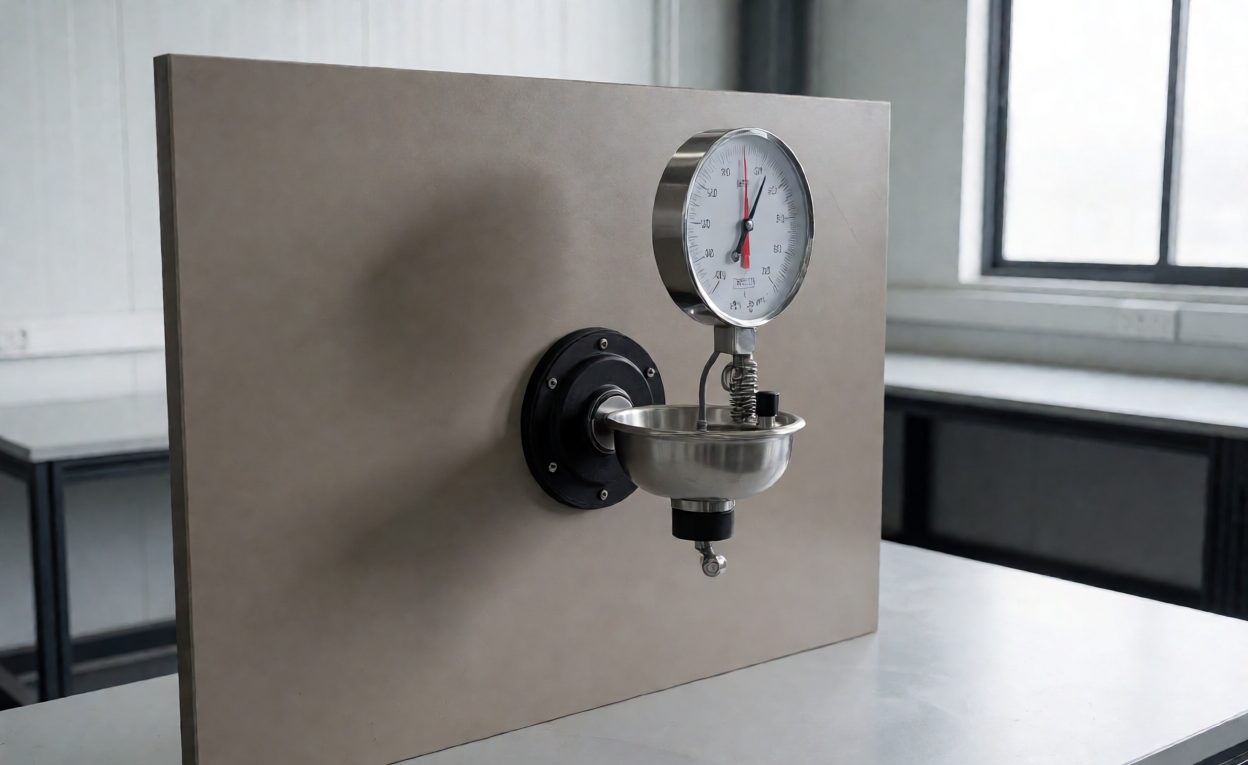
The natural instinct is to ask for stronger suction, and the more useful question is: stronger against what, measured how, on which surface. A suction base holds because a flexible lip expels air and the resulting pressure difference presses the bowl down, and the force a child must apply to defeat it is a number that can be written into the specification and measured on a bench.
- Pull-force target – a measured force on a defined surface, in a defined direction, on the finished bowl.
- Surface definition – smooth, non-porous surfaces such as glass, sealed laminate or a highchair tray.
- Direction of force – vertical lift, lateral drag and rim peel are three tests with three results.
Surface Matters: Where Suction Works and Where It Does Not
Suction requires a seal, and a seal requires a smooth, non-porous, clean surface. Glass, glazed ceramic, sealed stone, laminate and most plastic highchair trays seal well. Oiled or waxed wood, textured plastic, unfinished timber, tiles with grout lines under the lip and any table with a cloth underneath do not – air leaking past the lip destroys the pressure difference within seconds.
This is where honest packaging protects the product. A bowl sold as sticking to any surface will be tested on the worst surface in the house; a bowl sold as holding firmly on smooth surfaces, limitation stated, gets judged where it actually works. The same bowl generates a four-star or a one-star review depending on that one sentence. Trays deserve specific attention too, since many have slight texture or a moulded lip pattern, so test on the trays target retailers sell rather than only on laboratory glass.
Base Geometry: Lip, Flexibility and Wall Stiffness
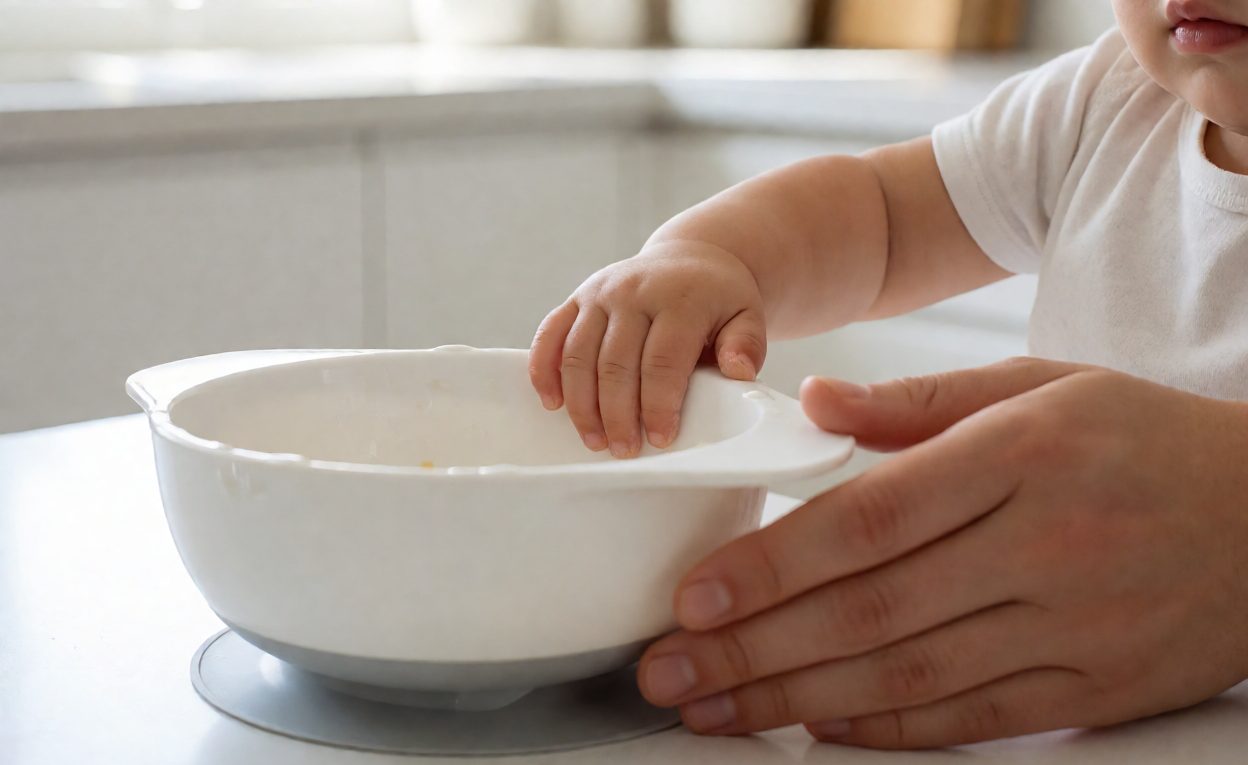
A suction base works or fails on three geometric decisions. The lip must be wide enough and soft enough to conform to the surface and expel air when pressed. The base must be stiff enough not to collapse inwards under load, which would break the seal from the inside. And the bowl wall above the base must be rigid enough that a child gripping the rim cannot flex the base enough to let air in at one edge.
Most suction failures trace to the third point. A bowl with a generous soft lip and a thin flexible wall seals perfectly and then releases the moment a toddler leans on the rim, because the wall transmits the pull into the base and peels one side of the lip up. The fix is wall stiffness and base thickness – a design specification, not a material upgrade. Softer lips seal better but peel easier, which is why two-durometer designs, a soft lip over a stiffer body, usually outperform single-durometer ones.
Release Behaviour and Durability
A bowl a child cannot move is only half the requirement; an adult has to remove it without a struggle. A release tab – a small extension of the lip that an adult lifts to break the seal – is the standard solution and the one to specify, because without it adults prise the bowl off by the rim, which is exactly the loading that deforms the lip over time.
Durability is the second half. A base is used several times a day, washed daily and exposed to food acids, detergent and heat, and the failure is gradual: the lip takes a permanent set, stops conforming and the bowl that held beautifully in week one lifts easily in month three. Specify a defined number of application and release cycles, plus dishwasher cycling on the finished decorated article, with pull force re-measured afterwards.
Test Protocol to Require Before a Bulk Order
- Defined surface panel – smooth glass or laminate, cleaned the same way before each test.
- Pull-force measurement – vertical lift, lateral drag and rim peel, on production bowls.
- Application and release cycling – pull force re-measured at intervals to catch lip set.
- Dishwasher cycling – the finished decorated bowl cycled, then re-tested for suction retention.
Contexto Técnico
A suction base should be evaluated on named surfaces and after repeated application, release, washing, and drying cycles. Record the pull or release method, surface condition, and acceptance limit so a package claim matches the tested bowl and use conditions.
Related Children’s Tableware Decisions
For a feeding set, review materials and food-contact status against the intended use and destination market; do not assume one universal certificate covers every SKU. The FDA explains its substance- and use-specific approach, e o European Commission summarizes the EU framework. Related buyer guides cover children’s tableware sourcing e dinnerware set composition. For shipment release sampling, see the AQL inspection guide; validate the finished bowl in its shipper against the intended route.
Perguntas Frequentes
Como a força de sucção é especificada?
As a measured pull force on a named smooth surface, in a defined direction – vertical lift, lateral drag or rim peel – on production bowls.
Why does the bowl hold on glass but not on wood?
Suction needs a non-porous seal. Oiled or textured wood leaks air past the lip and destroys the pressure difference.
What makes a suction base fail after a few weeks?
The lip takes a permanent set from cycles, heat and detergent. Cycle and dishwasher testing catches it before launch.
Should the bowl have a release tab?
Yes. Without one adults prise the bowl off by the rim, which is the loading that deforms the lip over time.
Does bowl wall stiffness matter for suction?
It matters more than the lip. A flexible wall transmits a child’s pull into the base and peels the seal up.
Should suction be tested on real highchair trays?
Yes. Trays are the primary use case and often textured, so test on the trays target retailers sell.
How should packaging describe suction honestly?
State that it holds firmly on smooth, clean, non-porous surfaces and name the limitation plainly.