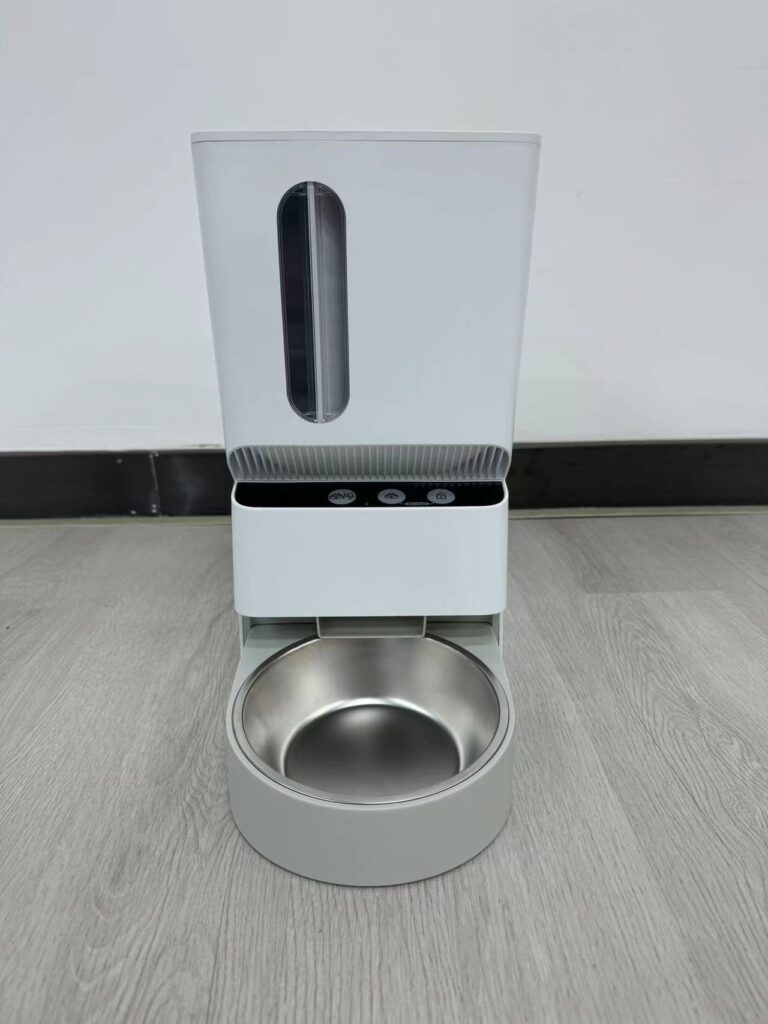



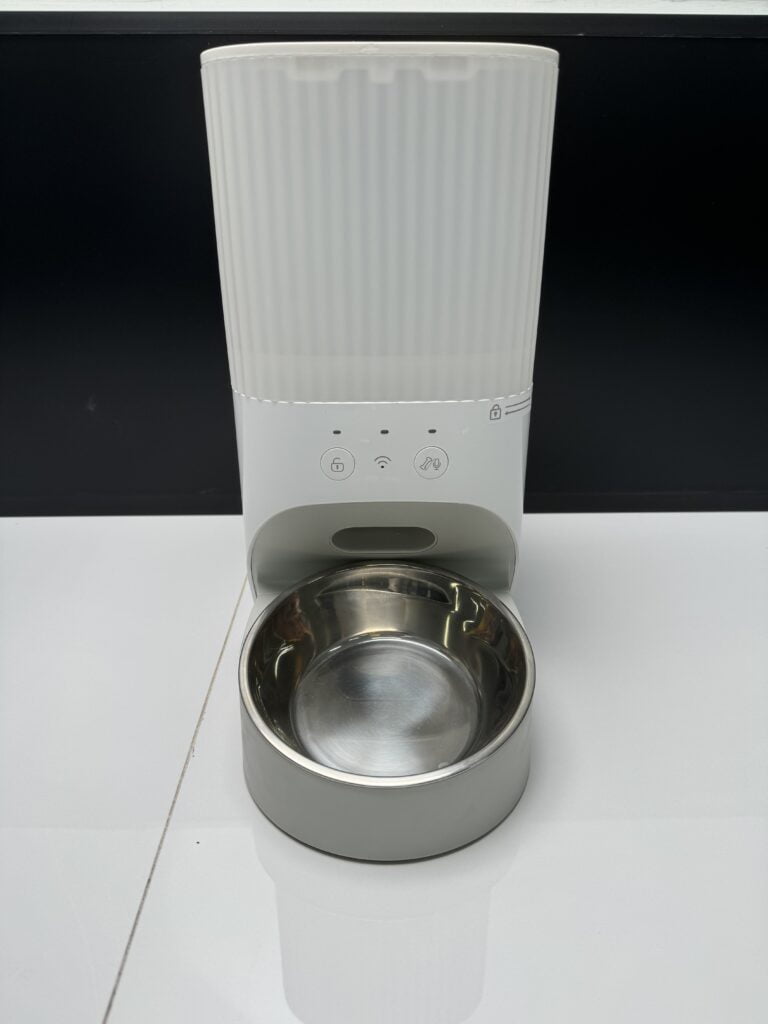
Automatic Pet Feeder

 English
The current catalog includes single-bowl Wi-Fi feeder listings with different bin configurations. Product records describe model-specific controls and functions, including app and button control; the single-bowl listing also includes portion settings, food-level detection, remote feeding, voice recording and a lock function. Confirm the exact SKU, hopper and bowl materials, backup-power runtime, portion-validation method, app localization, branding, packaging, MOQ and destination-market requirements before ordering.
Review the single-bowl Wi-Fi feeder and double-bin Wi-Fi feeder, then discuss your private-label requirements through Contact.
The two Wi-Fi feeders share app and button control but differ in bin configuration. The single-hopper model is a 5.5 L entry SKU; the double-bin model splits capacity into 2.2 L and 3.3 L hoppers for two food types. Compare portion size, schedule capacity, food-level detection, backup power, bowl material, app language and carton packing.
Yes. The two hoppers are separate, so the schedule can assign different portions to each bin. Confirm the firmware and app support the split schedule.
The backup configuration is model-specific. Ask for the battery type, expected backup runtime and whether the schedule is retained after power returns.
Pet feeders are sold with a power adapter, bowl and manual, so the accessory count drives the carton. Confirm the adapter plug type, manual language, backup batteries or power bank, and the spare-parts kit. A missing adapter or wrong manual is a common reason a container is held at the destination.